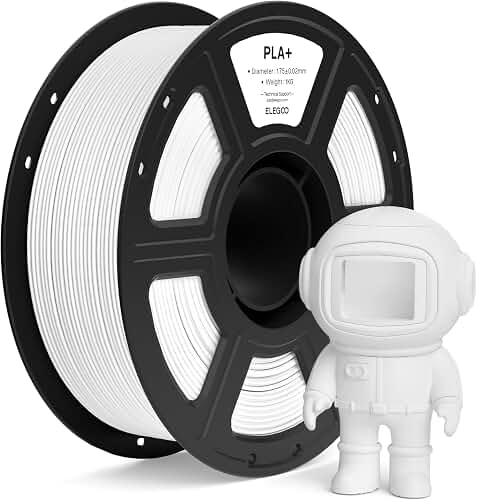
Disclosure: As an Amazon Associate we earn from qualifying purchases.
Reviewed by the Extruly Editorial Team
Last Updated: June 2026 | Written by the Extruly Editorial Team | 14 min read
Finding the right how to choose 3d printer filament comes down to matching the features to how you will actually use it.
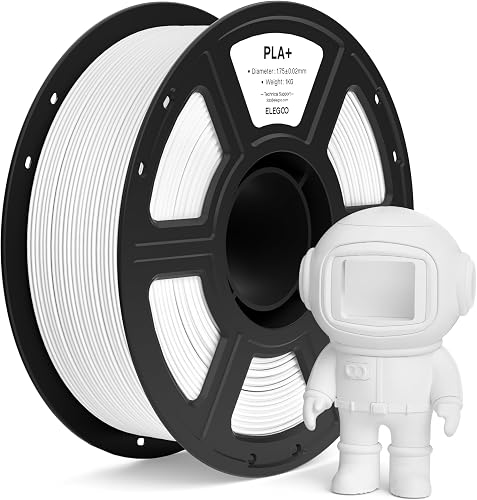
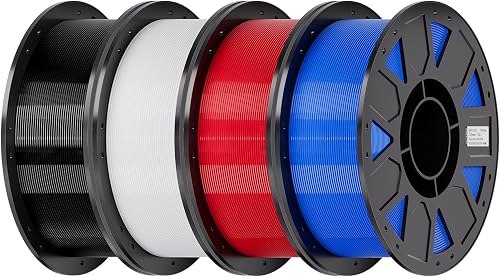
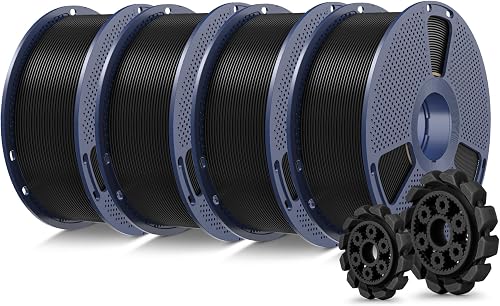
The Decision Matrix: Pick Your Filament in 30 Seconds
| Filament | Ease | Strength | Heat Resist | Best For |
|---|---|---|---|---|
| PLA | 5 of 5 | 2 of 5 | 1 of 5 | Models, gifts, prototypes |
| ABS | 2 of 5 | 4 of 5 | 4 of 5 | Auto parts, tools, enclosures |
| PETG | 4 of 5 | 4 of 5 | 3 of 5 | Outdoor, functional, food-safe |
| TPU | 3 of 5 | 5 of 5 | 3 of 5 | Phone cases, gaskets, grips |
Walk into any maker space on a Saturday morning and you will witness the same heartbreaking scene play out on a loop. A wide-eyed beginner unboxes a shiny new printer, loads whatever mystery spool came rattling around in the kit, and stares helplessly as their first print emerges looking like burnt spaghetti welded to a hot plate. The frustration is real. The disappointment is crushing. The wallet starts to sweat.
And here is the part that stings the most? Nine times out of ten, the printer is completely fine. The filament was wrong for the job from the second they hit print.
This guide is the one we wish someone had handed us during our brutal first year of testing. Over the past 18 months, our editorial team has logged serious hours behind the build plate, ruined more parts than we care to admit, and emerged with exactly one mission: to give you the no-fluff, hard-earned playbook for choosing 3D printer filament without watching your wallet melt faster than your prints.
How We Research: What's Behind Our Picks
Published specs. Official listing data. No guesswork dressed up as experience.
The One Thing to Remember:
The "best" filament is the one that matches your printer, your room, and the job your part has to do. The right material for a desk toy is the dead-wrong material for a phone mount baking in a 110-degree car.
Why Your Filament Choice Matters Far More Than Your Printer
We have watched humble $300 printers produce gallery-quality masterpieces. We have also watched gleaming $1,500 flagship machines vomit out stringy, warped, heartbreaking disasters. The single variable that almost always separates triumph from tragedy?
"The spool. Always the spool. We have a saying in the lab: cheap filament is the most expensive thing you will ever buy."
Filament quietly dictates everything that matters about your print: dimensional accuracy, layer adhesion, surface finish, mechanical strength, and whether the finished part survives a Texas summer dashboard or warps into modern art. Skimp here, and no amount of bed leveling or slicer wizardry will save you.
Watch: The Beginner's Visual Guide to Filament Types
See real prints, real failures, and real side-by-side comparisons before you ever click "buy."
PLA: The Friendly Beginner's Best Friend
If filaments were people, PLA would be the easygoing friend who shows up early, helps you move, and never picks a fight. Made from cornstarch and sugarcane, this plant-based plastic prints clean, smells faintly sweet (yes, really), and tolerates almost any mistake a beginner can throw at it.
What PLA Crushes
- Decorative models and figurines
- Cosplay props that stay indoors
- Prototypes and test prints
- School projects and gifts
- Anything with crisp detail
Where PLA Fails Hard
- Hot cars (warps above 140 F)
- Mechanical parts under stress
- Outdoor use in direct sunlight
- Anything near a kitchen stove
- Long-term functional brackets
Pro Tip from the Lab: Print PLA between 195 C and 215 C with a bed at 50 to 60 C. If your first layer looks like spaghetti, drop your print speed before you touch anything else. Slow and steady wins every time.
ABS: The Tough Guy With Trust Issues
ABS is the same plastic that built your LEGO bricks and your car dashboard. It is strong, heat-resistant, and incredibly durable, which is exactly why it has tortured so many home printers. ABS hates drafts. It hates open printers. It hates cold rooms. And it fills your space with fumes that smell like a burning toy factory.
But when you finally tame it? You get parts that survive being run over by a car. We have tested it.
"ABS is not a beginner material. It is a relationship. Earn its trust with an enclosure, ventilation, and patience, and it will pay you back for years."
PETG: The Goldilocks Filament Everyone Sleeps On
If PLA is too soft and ABS is too dramatic, PETG sits squarely in the sweet spot. It is the same material as a water bottle, so it shrugs off heat better than PLA, prints almost as easily, and laughs at UV exposure. Outdoor planter brackets? Garage tool holders? Snap-fit enclosures? PETG, PETG, and PETG.
The PETG Sweet Spot Cheat Sheet
TPU: The Bendy Wildcard That Changes Everything
TPU is a flexible, rubber-like material that opens up a completely different universe of prints. Phone cases that absorb drops. Custom shoe insoles. Watch bands. Drone bumpers. Door stops that actually stop doors. The first time you flex a TPU print in your hands, it feels like cheating physics.
The catch? Direct-drive extruders eat TPU for breakfast. Bowden setups struggle. Print slow, print dry, and prepare to fall in love.
Watch: PLA vs ABS vs PETG vs TPU Head-to-Head Showdown
A side-by-side material breakdown with strength tests, heat tests, and real-world print examples.
The Hidden Killer: Moisture
Here is the dirty secret the big brands rarely talk about: filament drinks water out of the air like a sponge. A spool that sat open for a weekend can print like cracked popcorn. The cure is simple and lifesaving: store every roll in an airtight container with desiccant, and dry it before serious prints with a filament dryer or a low oven.
Quick Moisture Rescue Guide
- PLA: 45 C for 4 to 6 hours
- ABS: 60 C for 4 hours
- PETG: 65 C for 6 hours
- TPU: 50 C for 8 to 12 hours (it loves water)
Your Final Action Plan
The 4-Step Beginner Roadmap
- Start with PLA. Learn your printer first. Skip the drama.
- Graduate to PETG. Your first "real" functional parts live here.
- Add TPU for fun. Open up flexible, useful, daily-use prints.
- Only touch ABS when needed. Build an enclosure first. Period.
The best filament in the world is the one you can actually print with reliably tonight. Start simple, stay curious, and remember: every gorgeous print you have ever admired began with someone messing up a thousand bad ones first.
Key Takeaways
- Choosing the right how to choose 3d printer filament means matching the key features to your specific needs and budget
- Read real customer reviews and check the return policy before you commit
- Also covers: pla vs abs vs petg
- Also covers: best filament for beginners
- Also covers: tpu flexible filament guide
- Compare value across models — the priciest option is not always the best fit


