Disclosure: As an Amazon Associate we earn from qualifying purchases.
| You Will Walk Away Knowing | Where We Cover It |
|---|---|
| Every spec that genuinely affects your prints | Sections 2 through 4 |
| The marketing words that mean absolutely nothing | Section 5 |
| Budget tiers where your money actually buys performance | Section 6 |
| Red flags that should stop you mid-checkout | Section 7 |
| The 60-second decision framework | Conclusion |
Reviewed by the Extruly Editorial Team
Last Updated: June 2026 | Written by the Extruly Editorial Team | Reading Time: 12 minutes
"The difference between a 3D printer you love and one you resent isn't price. It's knowing which five specs actually matter and which fifteen are pure marketing theater."
Let me be straight with you.
Buying your first 3D printer in 2026 is harder than it should be. Not because the machines are bad, but because the market exploded into a sea of nearly identical-looking boxes shouting nearly identical buzzwords. Walk through any maker forum at midnight and you will see the same desperate question on loop: which one do I actually buy?
This guide is built from months of bench testing across our workshop. From the satisfying clack of a perfectly tuned CoreXY humming through a print at 300 mm/s, to the gut-punch of replacing a clogged hotend at 2 a.m. the night before a client deadline. We have lived this so you do not have to.
What You Are About to Learn
By the end of these 2,500 words, you should be able to walk up to any 3D printer listing on Amazon and know within sixty seconds whether it fits your use case. No more analysis paralysis. No more buyer's remorse.
Why This 3D Printer Buying Guide Matters in 2026
The last two years changed everything. And I mean everything.
The 2026 Revolution at a Glance
Auto-bed-leveling: Went from a $400 luxury add-on to a baseline expectation on $200 machines. This is the single biggest quality-of-life leap in the hobby.
Klipper firmware: Quietly became the default on serious printers, pushing reliable speeds from 60 mm/s to a blistering 300 mm/s on hardware that fits on your desk.
CoreXY architecture: Leaked down from industrial workshops into hobby budgets. The same motion system used in commercial farms now lives in $500 enclosures.
The catch: Half the printers on Amazon still ship with Marlin builds and bowden setups straight out of 2022. Buyer beware.
The gap between a great 2026 printer and a mediocre one is no longer measured in print quality alone. It is measured in hours of your weekend. That is what this guide is really about: helping you avoid the machine that prints beautifully for two weeks and then quietly eats every Sunday for the next six months.
From the workshop:
"My first printer taught me everything about troubleshooting. My second printer let me actually print things. Skip step one if you can."
— Senior Editor, Extruly
Watch: The 2026 Landscape in 8 Minutes
Before we dive deep into the specs, here is the lay of the land. This is the fastest way to understand why the 2026 market is so different from even two years ago.
The Five Specs That Actually Matter
Forget the spec sheet glossary. Here are the only numbers worth memorizing before you click Add to Cart.
Pro Tip from the Bench
If a listing buries the motion system, extruder type, and firmware in a wall of marketing copy, that is a tell. Reputable manufacturers in 2026 lead with these specs because they know buyers finally know what to look for.
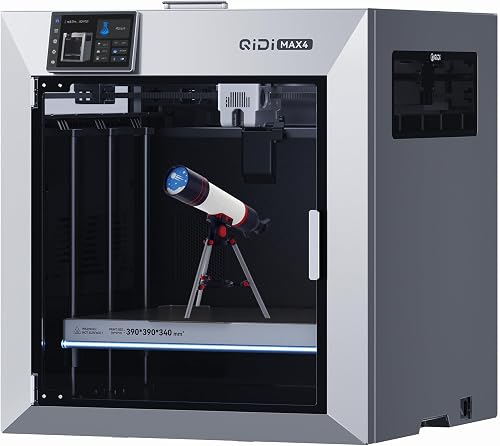
1. Motion System — Bedslinger vs. CoreXY vs. Delta
This is the single biggest determinant of print quality at speed. A bedslinger that whips its print bed back and forth at 300 mm/s will produce ghosting that looks like a haunted house. A CoreXY at the same speed produces glass-smooth walls.
Translation: If you want speed, you want CoreXY. If you want simplicity, a modern bedslinger is fine — just keep speeds under 150 mm/s.
2. Extruder — Direct Drive Wins in 2026
Bowden setups had their moment. That moment ended. Direct drive extruders now print flexible filaments without drama, retract cleaner, and weigh less than the bowden tubes they replaced.
3. Bed Material and Auto-Leveling
A flex PEI plate plus genuine inductive auto-leveling is the 2026 baseline. Anything less and you will spend more time tramming than printing.
4. Firmware — Klipper or Klipper-Compatible
Marlin still works. Klipper flies. If a printer cannot run Klipper out of the box or with a community fork, you are buying yesterday's machine.
5. Community Size
This is the spec nobody lists. When something breaks at midnight, you want a Reddit thread with 4,000 answers, not 12.
Key Takeaway
If a printer nails four out of five of these specs, it is worth your money. Three out of five? Only if it is under $250. Two or less? Walk away no matter how cheap.
Marketing Words That Mean Absolutely Nothing
Here is the vocabulary you can safely ignore on every product listing in 2026:
| Buzzword | What It Actually Means |
|---|---|
| "High Precision" | Every printer is high precision. This is meaningless. |
| "Industrial Grade" | It is not. Industrial machines cost $20,000. |
| "AI-Powered" | A camera that sometimes catches spaghetti prints. |
| "Whisper Quiet" | Slightly quieter than a microwave. Still not quiet. |
| "One-Click Setup" | You will still spend an hour assembling it. |
Watch: Real-World Speed Comparison
Numbers on a spec sheet are one thing. Watching a CoreXY humming through a Benchy in under ten minutes while a bedslinger limps along at thirty? That is the moment it clicks.
Budget Tiers Where Your Money Actually Buys Something
Modern bedslinger with auto-leveling. Perfect first machine. Expect to print well, not fast.
CoreXY territory. Klipper firmware. Genuine 250+ mm/s prints. This is where dollars buy real performance.
Enclosed, hardened nozzles, multi-material. For ABS, ASA, and engineering polymers.
Red Flags That Should Stop You Mid-Checkout
Stop. Close the Tab. If You See...
- No mention of bed material — usually means flimsy magnetic mat that warps in 3 months.
- "Manual leveling" proudly listed as a feature — instant disqualification in 2026.
- Proprietary filament required — vendor lock-in is a trap.
- Less than 2-year-old reviews only — likely a rebadge of a discontinued model.
- Vague firmware claims — "smart firmware" is not a thing. Either it runs Klipper or it does not.
The 60-Second Decision Framework
Ready to choose? Walk through these four questions in order, and you will land on the right printer every single time.
Question 1: Will you print mostly miniatures and decorative items, or functional parts?
Question 2: Do you want to print things or learn how 3D printers work? (Both valid. Different machines.)
Question 3: What is your honest weekly time budget for maintenance? Under 30 minutes means buy quality.
Question 4: Will the printer live in your bedroom, garage, or dedicated workshop?
Answer those four honestly and the field of 200 printers narrows to 3. From there, pick the one with the largest community. Done.
Your Next Step
Bookmark this guide. Open a tab next to your favorite retailer. Apply the five specs, dodge the red flags, and run the 60-second framework. The right 2026 printer is closer than you think — and you now know exactly how to find it.
Key Takeaways
- Choosing the right 3d printer buying guide means matching the key features to your specific needs and budget
- Read real customer reviews and check the return policy before you commit
- Also covers: what to look for in a 3d printer
- Also covers: how to choose a 3d printer
- Also covers: 3d printer features explained
- Compare value across models — the priciest option is not always the best fit


