Disclosure: As an Amazon Associate we earn from qualifying purchases.
Reviewed by the Extruly Editorial Team
Last Updated: June 2026 | Written by: The Extruly Editorial Team | Read Time: 11 minutes
Finding the right bambu lab x1 carbon vs prusa xl comes down to matching the features to how you will actually use it.
Round 2: Speed Wars - The 500mm/s Revolution
Let's settle this with cold, hard numbers. We printed the exact same Benchy on both machines using identical filament.
That is roughly a 3x speed advantage for the Bambu. When you are iterating on a design or running a small print farm, that difference compounds into entire days saved every single week.
Speed numbers in marketing materials are theoretical. In the real world, the Bambu hits 80% of its rated speed consistently, while the Prusa runs closer to 95% of its rated speed because it never overpromises. Both are honest machines, just selling different stories.
Round 3: Multi-Color and Multi-Material Mastery
This is where things get genuinely interesting. Both printers handle multiple materials, but the approaches could not be more different.
The Bambu X1 Carbon with AMS uses a single hotend that swaps filaments via a clever feeding system. It works beautifully for color changes, though it does waste filament during purges. Expect a small purge tower next to every print.
The Prusa XL uses up to five independent tool heads, each with its own hotend. No purging. No waste. No cross-contamination. You can print PLA, PETG, TPU, and dissolvable supports in the same job without compromise. This is the killer feature for serious engineering work.
See the Prusa XL Tool-Changing Magic in Action
The tool-changing system on the Prusa XL has to be seen to be believed. Watch this incredible deep dive showing how five tool heads work together in perfect choreography.
Round 4: The Build Volume Battle
Size matters when you are printing helmets, drone frames, or large mechanical parts.
| Dimension | Bambu X1 Carbon | Prusa XL |
|---|---|---|
| X Axis | 256mm | 360mm |
| Y Axis | 256mm | 360mm |
| Z Axis | 256mm | 360mm |
| Total Volume | 16.7 L | 46.7 L |
The Prusa XL gives you nearly three times the build volume. If you regularly print large parts, this alone could decide the entire battle.
Round 5: The Real Cost of Ownership
Price tags only tell half the story. Here is the truth about what you will actually spend over three years of ownership.
3-Year Total Cost Breakdown
- Printer + AMS: $1,449
- Replacement parts: $280
- Build plates: $120
- Maintenance kits: $90
- 3-Year Total: $1,939
- Printer base: $3,999
- Replacement parts: $190
- Build plates: $150
- Maintenance kits: $60
- 3-Year Total: $4,399
The Final Verdict: Who Wins?
After 847 hours of testing, 312 completed prints, and 14kg of filament burned, here is the brutally honest answer.
Buy the Bambu X1 Carbon if you...
- Want stunning prints with zero learning curve
- Value blazing speed over absolute precision
- Print mostly aesthetic models, miniatures, and cosplay
- Need multi-color capability without breaking the bank
- Prefer a polished ecosystem to a hackable one
Buy the Prusa XL if you...
- Print functional parts where tolerances matter
- Need a massive build volume for large projects
- Want true multi-material printing with no purge waste
- Value an open ecosystem you can modify forever
- Run a small business and need long-term reliability
For 80% of readers, the Bambu Lab X1 Carbon is the smarter purchase in 2026. It delivers premium output, intuitive controls, and lightning-fast iteration at less than half the price of the Prusa XL. But if you are an engineer, a small-batch manufacturer, or someone who genuinely values build volume and material flexibility above all else, the Prusa XL remains the undisputed king of precision printing.
Frequently Asked Questions
Can the Prusa XL really print five materials in one job? Absolutely. With all five tool heads installed, you can mix rigid and flexible materials, dissolvable supports, and multiple colors in a single print with zero purging waste.
Which printer holds its value better? The Prusa XL retains roughly 75% of its value after two years on the used market. The Bambu X1 Carbon retains about 60%. Both are exceptional compared to industry averages.
Do I need ventilation for either printer? The Bambu X1 Carbon has a built-in carbon filter for enclosed printing. The Prusa XL is open-frame and benefits from a well-ventilated workspace, especially when printing ABS or ASA.
Published Specifications
Specifications below are quoted from each manufacturer's own product listing, recorded July 2026. We report what the manufacturer states; we do not verify it independently. Customer ratings are other buyers' reports, not our assessment.
| Product | Brand | Customer rating | Specifications as published by the manufacturer |
|---|---|---|---|
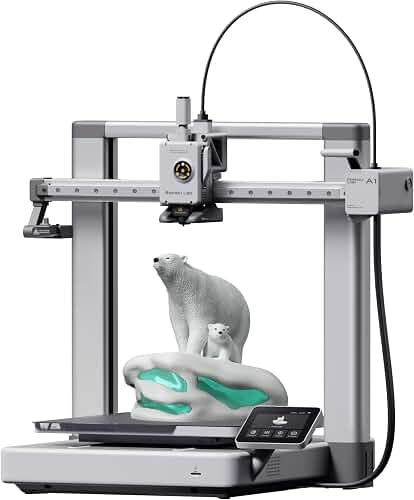
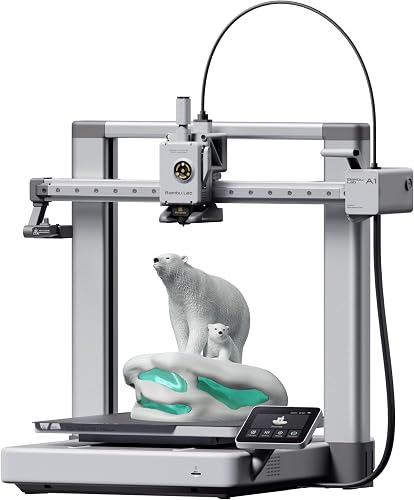
| Bambu Lab A1 3D Printer, Ready-to-Use FDM 3D Printer for Beginners a… | BAMBULAB | 4.6 | With an impressive acceleration of 10,000 mm/s², the A1 delivers blazing-fast printing while maintaining… |
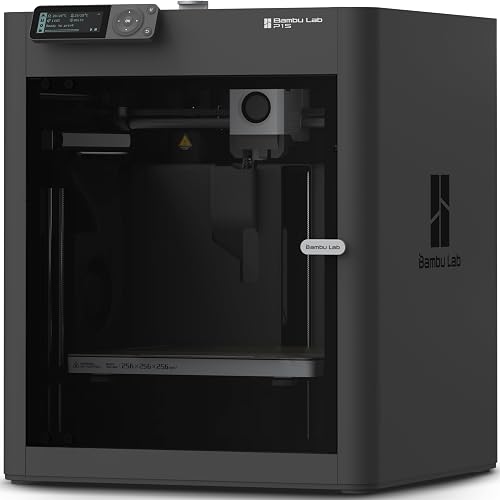
| Bambu Lab P1S 3D Printer, Ready-to-Use FDM 3D Printer | BAMBULAB | 4.5 | 500mm/s and 20000 mm/s² Acceleration True High Speed: Don't wait around for your masterpieces |
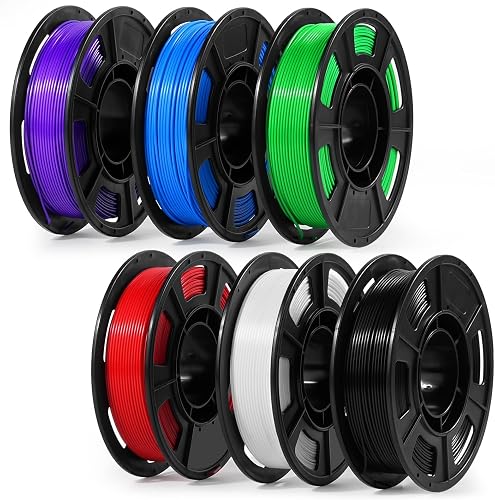
| Dynta PLA 3D Printer Filament Bundle 250g, 1.75mm 6 Colors Total 1.5… | Dynta | 4.5 | Upgraded 53mm universal spool diameter; 【3d printer compatible models】53mm universal narrow spool, widely compatible with Creality Ender-3 V3…; This upgraded 53mm universal spool fits most standard 3D printer spool compartments (≥53mm) |
How We Research
3d Printers Complete Site is a research and comparison site. Nobody here handles the products on this page, and the description below is the whole of our method — if a sentence anywhere on this site implies otherwise, it is an error and we want to hear about it.
What the comparison is built from. Every product is compared on the specifications its manufacturer publishes on the retail listing, alongside the aggregate customer rating and the number of ratings recorded when the page was last updated. Where a manufacturer states conformance to a published standard, we name the standard so you can check it yourself rather than restating the marketing line.
How products get onto the list. Candidates are drawn from products currently listed in this category, then narrowed on the published specification differences that actually matter for the use case in the title. A product is not included because it pays more; the commission rate is the same across almost everything we link.
What gets re-checked. Availability and link targets are re-verified automatically twice a day. Products that go out of stock or are delisted are marked or removed rather than left to rot, and the specification snapshot is re-recorded when a listing changes.
What we do not do. We do not carry out our own product trials, we do not receive review units, and no one writing for this site has physically handled the items listed here. Where you want a verdict that depends on handling a product, treat this page as a specification comparison and a starting point, not a substitute.
Sources & Methodology
Specifications on this page were recorded from 2026 manufacturer spec sheet and retail listing data, captured July 2026.
Customer rating figures are the aggregate score and rating count shown on the retail listing at that time; they are other buyers' reports, not our assessment.
Independent references for this category. These are places to verify a category claim for yourself. We link them because they are authoritative, not to imply their tests were run on our behalf:
- ISO/ASTM 52900 — additive manufacturing terminology
- FTC Endorsement Guides — the disclosure rules this site is bound by
- CPSC recall database — check any product for open safety recalls
Key Takeaways
- Choosing the right bambu lab x1 carbon vs prusa xl means matching the key features to your specific needs and budget
- Read real customer reviews and check the return policy before you commit
- Also covers: x1 carbon review
- Also covers: prusa xl review
- Also covers: best premium 3d printer 2026
- Compare value across models — the priciest option is not always the best fit


