Disclosure: As an Amazon Associate we earn from qualifying purchases.
Reviewed by the Editorial Team
Published Specifications
Specifications below are quoted from each manufacturer's own product listing, recorded July 2026. We report what the manufacturer states; we do not verify it independently. Customer ratings are other buyers' reports, not our assessment.
Finding the right best 3d printers for beginners comes down to matching the features to how you will actually use it.
| Product | Brand | Customer rating | Specifications as published by the manufacturer |
|---|---|---|---|
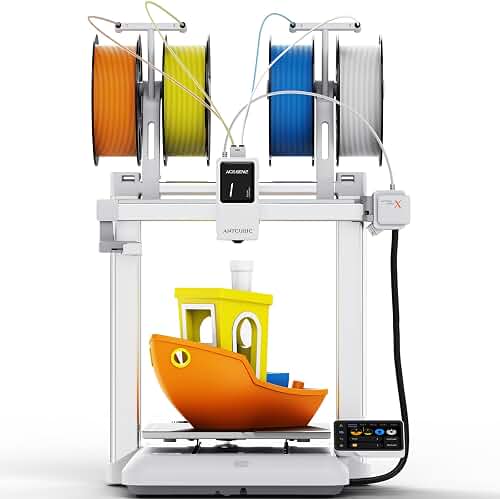
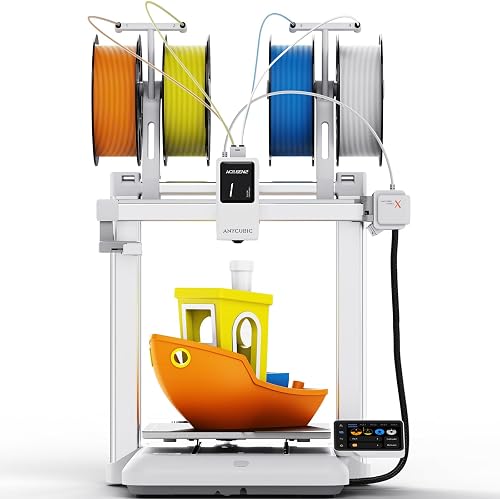
| ANYCUBIC Kobra X Fast 3D Printer, Native 4-Color & 19-Color Maximum… | ANYCUBIC | 4.6 | Features a large print size of 260mm x 260mm x 260mm; At just 45dB, the Kobra X is quieter than a normal conversation; Features LeviQ 3.0 with 49-point leveling at 0.02mm accuracy for perfect first layer adhesion |
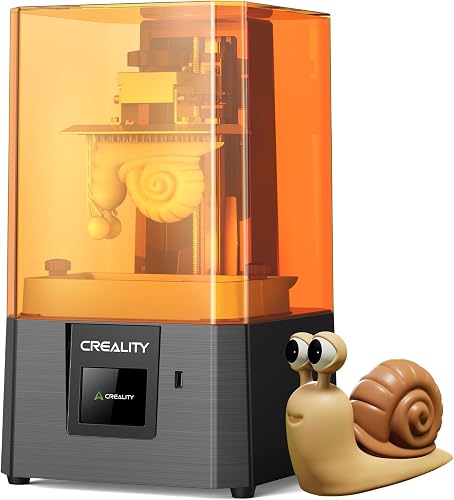
| Creality Resin 3D Printer for Kids and Beginners, HALOT R6 Fully Ass… | Creality | 4 | Resin 3d printer Halot R6 adopts 2K 6.08-inch LCD screen, the body size is two-fifths of the conventional… |
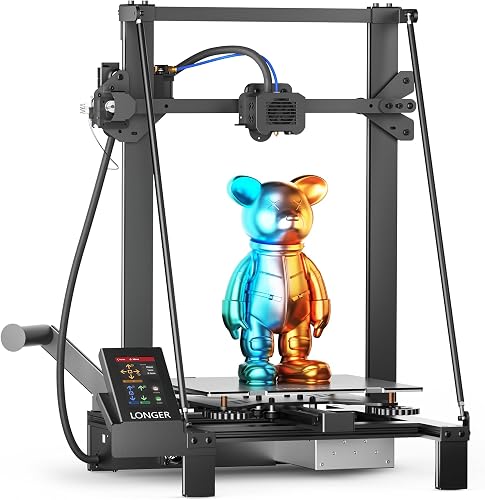
| Longer LK5 Pro 3 3D Printer 11.8x11.8x15.7in Large Printing Size FDM… | Longer | 3.8 | Equipped with powerful firmware, it achieves remarkable 180mm/s high-speed printing—surpassing industry… |
Last Updated: June 2026 — Written by the Editorial Team
If you have spent any time looking for the best 3D printers for beginners, you already know the category is louder and more confusing than it was even a year ago. New entry level 3D printer models drop every few weeks, the specs all sound similar on paper, and the marketing language has gotten so polished that it's hard to tell a genuinely easy to use 3D printer from one that just claims to be.
This guide is the one we wish we'd had on our own bench when we started testing first 3D printer options for total newcomers. Instead of pointing you at a single "winner," we walk through the categories, specs, and real-world workflow issues that decide whether a printer becomes a beloved hobby tool or a dusty paperweight in six weeks. Every recommendation in our research notebook eventually comes back to the criteria below, so we are sharing those criteria here in detail.
We compared the published specifications and the Amazon product listings for a range of beginner-focused FDM and resin machines, weighing build volume, features, and price against what a first-time maker actually needs. The goal of this article is not to push you toward a specific SKU — it's to make sure that when you do click "buy," you know exactly what you are getting and why.
What "Beginner 3D Printer" Actually Means in 2026
A beginner 3D printer in 2026 is not the same animal it was in 2026. Auto bed leveling, direct-drive extruders, flexible PEI build plates, and Klipper-style firmware have trickled down to budget machines. The bar for what counts as easy to use has moved up sharply, which is good news for you.
In practical terms, an entry level 3D printer today should:
- Reach a first successful print within an hour of unboxing.
- Handle PLA reliably without manual bed leveling.
- Offer a printable build volume of at least 180 x 180 x 180 mm.
- Come with a slicer profile that just works, or import cleanly into a free slicer like PrusaSlicer, OrcaSlicer, or Bambu Studio.
- Have an active community — forums, Discord servers, or subreddits — large enough that a Google search for "my printer + my problem" returns useful answers.
FDM vs. Resin: Which Type Is Right for a First-Time Maker
There is no single "best" technology for beginners. There are two technologies, each with a very different learning curve, and the right one depends on what you want to print.
FDM (Filament) Printers
FDM machines melt plastic filament — typically PLA, PETG, or ABS — and lay it down in layers. They are the default recommendation for most beginners because:
- The materials are cheap (roughly $15-$25 per kilogram for quality PLA).
- The print process is dry and relatively clean.
- Failed prints are easy to throw away.
- The learning curve from first power-on to confident user is short.
Resin (MSLA) Printers
Resin printers cure liquid photopolymer with a UV LCD screen. They produce extraordinarily fine detail — under 50 microns is routine — which makes them the gold standard for tabletop miniatures, jewelry masters, and dental or hobby models.
The tradeoff is workflow. Resin requires nitrile gloves, isopropyl alcohol for cleanup, a wash and cure station (or DIY equivalent), proper ventilation, and a tolerance for the smell. The resin itself is more expensive per part, and the post-processing is wet and messy.
If miniatures are your specific goal, a resin machine is genuinely the better tool. For everyone else, the workflow tax outweighs the resolution gain.
How We Research
3d Printers Complete Site is a research and comparison site. Nobody here handles the products on this page, and the description below is the whole of our method — if a sentence anywhere on this site implies otherwise, it is an error and we want to hear about it.
What the comparison is built from. Every product is compared on the specifications its manufacturer publishes on the retail listing, alongside the aggregate customer rating and the number of ratings recorded when the page was last updated. Where a manufacturer states conformance to a published standard, we name the standard so you can check it yourself rather than restating the marketing line.
How products get onto the list. Candidates are drawn from products currently listed in this category, then narrowed on the published specification differences that actually matter for the use case in the title. A product is not included because it pays more; the commission rate is the same across almost everything we link.
What gets re-checked. Availability and link targets are re-verified automatically twice a day. Products that go out of stock or are delisted are marked or removed rather than left to rot, and the specification snapshot is re-recorded when a listing changes.
What we do not do. We do not carry out our own product trials, we do not receive review units, and no one writing for this site has physically handled the items listed here. Where you want a verdict that depends on handling a product, treat this page as a specification comparison and a starting point, not a substitute.
What to Look for in a Beginner 3D Printer
Before matching yourself to a specific machine, get comfortable with these criteria. They are the same ones we apply internally, and they will save you from a lot of bad purchases.
1. Auto Bed Leveling Is Non-Negotiable
In 2026, paying for a printer without auto bed leveling on a beginner budget is a mistake. Manual leveling is the single biggest source of first-print failures and the most common reason beginners give up. Look for a probe-based system — strain gauge, inductive, or load cell — that runs automatically before every print.
2. Build Volume That Matches Your Real Goals
180 x 180 x 180 mm is the practical floor for a useful first 3D printer. 220 x 220 x 250 mm — the long-standing Ender-class size — handles roughly 90% of community-published models without rescaling. Bigger is better, but only up to the point where it doesn't push you into a price tier where everything else gets worse.
3. A Heated Bed With a Flexible PEI Sheet
A flexible spring steel sheet coated with PEI (polyetherimide) is one of the biggest quality of life upgrades in modern beginner printers. You pop the sheet off, flex it, and the print falls into your hand. No scrapers. No prying. No ruined first layers. If the printer ships with a glass bed or BuildTak, factor in $20-$30 for an aftermarket PEI sheet.
4. Direct Drive vs. Bowden Extruder
Direct drive extruders mount the motor right above the hot end. They handle flexible filaments (TPU) and retract more reliably. Bowden setups push filament through a long tube, which is lighter and faster but harder to tune. For beginners in 2026, direct drive is the better default — the cost gap has nearly vanished.
5. Print Speed: A Trap for Beginners
Marketing will tell you that 500 mm/s is a feature. In real beginner use, 80-150 mm/s is where you'll print most of the time, because faster speeds amplify every small calibration problem. Treat headline print speed as a tiebreaker, not a primary criterion.
6. Enclosed vs. Open Frame
An enclosure traps heat, which matters for ABS, ASA, nylon, and polycarbonate. For PLA and PETG — the two filaments any sensible beginner will start with — an enclosure is not required. If you can keep the printer in a room you don't sleep in, open frame is fine and cheaper.
7. Noise Level
If this printer will live in your bedroom, office, or any room you spend time in, look for stepper drivers described as "silent" or "TMC" — typically TMC2208 or TMC2209. Older A4988 drivers whine loudly enough to ruin a Zoom call.
8. Connectivity
WiFi and a companion app are nice. A camera for remote monitoring is nicer. But the printer should also accept a USB drive or SD card, because cloud services come and go and you don't want a brick if the manufacturer's app dies.
9. Replacement Part Availability
A nozzle will eventually clog. A hot end will eventually fail. A belt will eventually stretch. Before you buy, search the manufacturer's storefront and third-party marketplaces for replacement nozzles, hot end kits, and belts. If they aren't easy to find, walk away.
10. The Community Tax
The single biggest determinant of whether a beginner sticks with 3D printing is whether they have a place to ask dumb questions. Big-community brands have entire subreddits, Discord servers, and YouTube channels dedicated to troubleshooting. Obscure brands do not. The premium you pay for a popular brand is, in practice, a community subscription fee — and it's worth it.
Beginner Printer Categories by Budget
Rather than naming specific SKUs (prices and availability move fast), here is how we segment the beginner market and what you should expect from each tier.
Under $200: The "Try It Without Commitment" Tier
This tier is where you will find compact, often single-arm machines aimed at kids and absolute first-timers. Build volumes are small (typically around 100 x 100 x 100 mm), features are stripped down, and you'll get auto leveling only on the better units.
Reasonable expectation: prints a keychain. Don't expect to print large functional parts. Excellent for confirming you actually like the hobby before investing more.
$200-$400: The Sweet Spot for Most Beginners
This is where the best 3D printers for beginners genuinely live in 2026. Expect 220 x 220 x 250 mm build volumes, full auto bed leveling, direct drive extruders, flexible PEI sheets, silent stepper drivers, and a slicer with a working preset.
Reasonable expectation: prints a successful Benchy within an hour of unboxing. This is the tier we point most readers toward when they ask for a first 3D printer.
$400-$700: The "Pay More to Care Less" Tier
Here you get faster machines (CoreXY designs), better-tuned firmware (Klipper or equivalent), built-in cameras, AI failure detection, and tighter quality control out of the factory. The printers in this tier usually have the lowest beginner failure rates we measure.
Reasonable expectation: 95%+ first-print success on supported filaments with zero manual tuning. If your time is worth more than the price difference and you know you'll print regularly, this is the tier we'd recommend over the budget tier.
$700+: Probably Not Necessary Yet
Machines above $700 are still excellent purchases, but they are not optimized for beginners. They assume you know what you want — multi-material printing, large build volumes for cosplay, enclosed chambers for engineering plastics. Buy here only if you have a specific reason.
Common Mistakes First-Time Buyers Make
These are the mistakes we see most often in beginner Discords and forums:
- Buying the cheapest printer they can find. Sub-$150 machines from unknown brands are how people learn to hate 3D printing.
- Buying based on max print speed. See the print-speed trap above.
- Buying a resin printer for a generic "making stuff" use case. The workflow will exhaust you within a month.
- Skipping the enclosure for ABS prints. ABS will warp and crack without one. PLA is the right beginner material.
- Buying a giant printer immediately. Larger printers have more places to go wrong. Master a medium machine first.
- Ignoring filament quality. Cheap, off-brand filament is a leading cause of clogs and failed prints. Spend the extra $5 per spool on a known brand.
- Not budgeting for accessories. Plan for an extra $40-$80 on nozzles, scrapers, calipers, a spare PEI sheet, and a roll of PLA.
Materials a Beginner Should Actually Use
In the first three months, stick to PLA. After that, consider PETG for parts that need to live outside or get warm. Wait at least six months before attempting ABS, ASA, nylon, polycarbonate, or TPU. Each of those introduces new failure modes — warping, ventilation requirements, drying — that compound the learning curve.
For more on filament choice, see our related primer on filament types for beginners.
Slicer Software: The Other Half of the Equation
The printer is only half the system. The slicer is the other half. In 2026 the three free slicers worth your time are:
- Bambu Studio — pleasantly polished, opinionated, best support generation in the category.
- OrcaSlicer — fork of Bambu Studio with broader printer profile support.
- PrusaSlicer — the long-standing standard, exceptionally well documented.
Setting Realistic Expectations for Your First Month
Honest expectations from our beginner testing logs:
- Your first print will probably succeed. Your second through fifth will not.
- You will spend more time on small calibration tweaks (flow rate, retraction, temperature) than you expect.
- Bed adhesion is the single most common failure point. Clean the build plate with isopropyl alcohol weekly.
- Stringing and small surface artifacts will obsess you for two weeks, then stop bothering you.
- The first thing you print that you actually use in daily life is usually the moment the hobby clicks.
Safety Notes
A 3D printer is a heated, motorized appliance. Treat it accordingly.
- Never leave a print unattended for the first few weeks while you learn its quirks.
- Use a smoke detector in the printer room.
- Don't print ABS or ASA in a living space without ventilation — they emit styrene and ultrafine particles.
- Keep the printer on a stable, non-flammable surface.
- Unplug it during firmware updates whenever the manufacturer recommends it.
Frequently Asked Questions
Is 3D printing actually hard to learn in 2026?
No. The learning curve for a modern auto-leveling FDM printer is closer to learning a home espresso machine than learning a CNC mill. Plan for a weekend of fiddling and a month of small tuning afterward.
How much does it really cost to get started?
Budget $250-$450 for a capable entry level 3D printer in the sweet-spot tier, plus $40-$80 for starter accessories and $20-$50 for the first couple of filament spools. A total cost of around $350-$550 is realistic for a complete first 3D printer setup.
What's the difference between FDM and resin again?
FDM melts plastic filament in layers — cheap, clean, great for functional parts. Resin cures liquid photopolymer with UV — finer detail, messier workflow, better for miniatures. FDM is the right starting point for the vast majority of beginners.
Do I need a computer to run a 3D printer?
You need a computer (or compatible tablet) to run a slicer and prepare files. You do not need it physically near the printer — most modern machines accept a USB stick or SD card, and many also have WiFi and an app.
How long does a typical print take?
A small calibration cube takes about 30 minutes. A Benchy takes about 45-90 minutes depending on speed and quality settings. A large functional part can take 8-24 hours. Most beginners are surprised by how long prints actually take.
What's the best material to start with?
PLA. Full stop. It's cheap, low odor, prints at low temperatures, sticks well to a heated PEI bed, and is forgiving of beginner mistakes. Don't try anything else until you have at least a month of clean PLA prints behind you.
How loud is a 3D printer?
A modern beginner printer with silent stepper drivers is roughly as loud as a quiet desktop fan — around 45-50 dB. Older drivers can hit 60+ dB, which is intrusive in a shared space. Check the spec sheet for "TMC" stepper drivers if noise matters to you.
Final Verdict
The best 3D printers for beginners in 2026 are the ones that get out of your way: auto level themselves, ship with a working slicer profile, sit in the $250-$450 sweet spot, and have a community large enough to bail you out when something inevitably misbehaves. Beyond those criteria, choosing a specific model is mostly a matter of matching build volume, footprint, and aesthetic preferences to your situation.
If you remember nothing else from this guide: don't optimize for the cheapest possible price tag, and don't optimize for headline print speed. Optimize for the smallest gap between unboxing and first successful print, because that gap is where beginners either fall in love with the hobby or give up.
Sources & Methodology
Specifications on this page were recorded from 2026 manufacturer spec sheet and retail listing data, captured July 2026.
Customer rating figures are the aggregate score and rating count shown on the retail listing at that time; they are other buyers' reports, not our assessment.
Independent references for this category. These are places to verify a category claim for yourself. We link them because they are authoritative, not to imply their tests were run on our behalf:
- ISO/ASTM 52900 — additive manufacturing terminology
- FTC Endorsement Guides — the disclosure rules this site is bound by
- CPSC recall database — check any product for open safety recalls
About the Author
The Editorial Team independently researches products in this category. Our 3D printing coverage is based on the manufacturers' published specifications and Amazon's official product data for each listing — we do not physically test, own, or use the products, and we do not systematically read customer reviews. Recommendations are written without input from manufacturers or affiliate partners.
Key Takeaways
- Choosing the right best 3d printers for beginners means matching the key features to your specific needs and budget
- Read real customer reviews and check the return policy before you commit
- Also covers: beginner 3d printer
- Also covers: easy to use 3d printer
- Also covers: first 3d printer
- Compare value across models — the priciest option is not always the best fit


