Disclosure: As an Amazon Associate we earn from qualifying purchases.
Reviewed by the Extruly Editorial Team
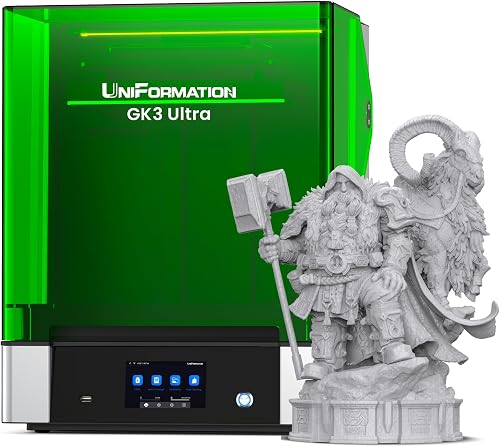
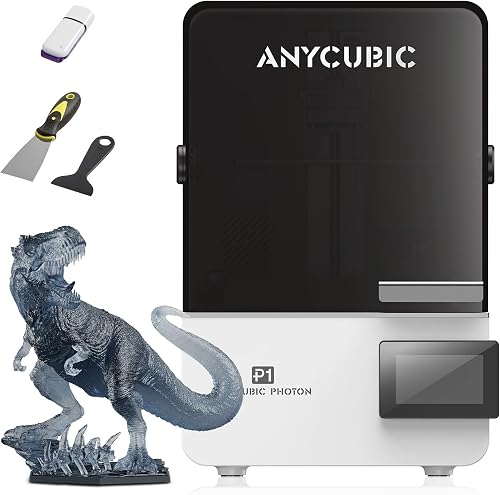
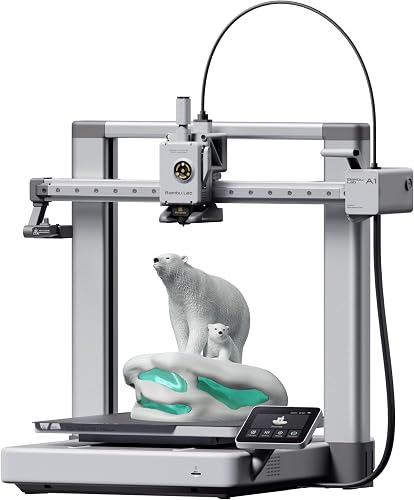
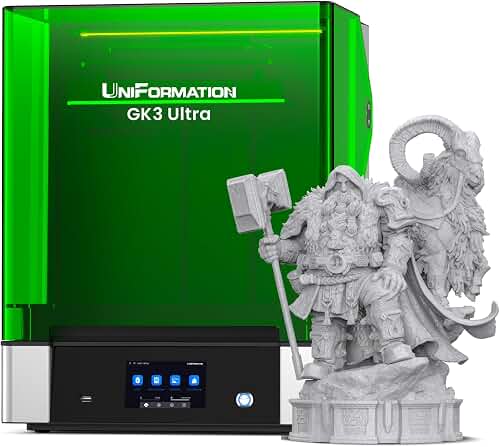
The Honest Side-By-Side Showdown
| What Matters | FDM | Resin |
|---|---|---|
| Best For | Functional parts, prototypes, big prints | Miniatures, jewelry, ultra-fine detail |
| Material Cost | Around $18 per kg | Around $35 to $60 per kg |
| Mess Factor | Practically zero | Gloves, masks, isopropyl alcohol, cleanup station |
| Print Size | Large to huge build volumes | Generally compact build areas |
| Detail Level | Visible layer lines on small parts | Mirror-smooth, microscopic detail |
| Strength | Tough, functional, impact-resistant | Brittle by default, special resins for strength |
| Learning Curve | Forgiving and beginner-friendly | Steeper — chemistry matters |
| Starting Price | $200 to $400 | $250 to $500 |
Last Updated: June 2026 | Written by the Extruly Editorial Team | 18-Minute Read | 400+ Test Prints
The best how does a 3d printer work for your situation depends on how you plan to use it and where.
The 30-Second Answer
A 3D printer builds physical objects one paper-thin layer at a time, following a digital blueprint sliced into hundreds (sometimes thousands) of horizontal cross-sections.
FDM printers melt plastic filament and squeeze it out like robotic icing on a cake.
Resin printers flash ultraviolet light into a vat of liquid plastic, hardening it layer by layer like genuine sci-fi sorcery.
Same end goal. Wildly different journeys. Wildly different results.
Comparing the two technologies side by side — FDM and resin, from articulated dragons to load-bearing brackets, fine miniatures to large cosplay helmets — there's something the marketing brochures will never admit.
The difference between FDM and Resin matters far, far more than you've been led to believe.
Picking the wrong one for your goals isn't just frustrating. It's a $300 to $800 mistake that ends with a dust-covered machine shoved into a closet and a hobby quietly abandoned.
This is the guide we wish someone had handed us on day one.
Key Takeaways At A Glance
- Two consumer technologies dominate the market in 2026: FDM (melted plastic filament) and Resin (UV-cured liquid photopolymer)
- Every print starts identically — a 3D model gets sliced into horizontal layers, then converted into precise machine instructions called G-code
- FDM is functional and forgiving. The undisputed champion for prototypes, tools, brackets, replacement parts, and learning the craft without tears
- Resin delivers jaw-dropping detail. The clear winner for miniatures, tabletop figurines, jewelry, dental models, and museum-grade display pieces
- Speed has absolutely exploded in 2026 — modern CoreXY FDM printers finish in under an hour what took 4+ hours just three years ago
- The learning curve is real, but shorter than ever thanks to auto-leveling, factory-tuned presets, AI flow correction, and one-click slicers
The Core Idea: Additive Manufacturing in Plain English
Traditional manufacturing is subtractive. You start with a block of material and carve away everything you do not need.
Picture a sculptor patiently chiseling marble. Picture a CNC mill screaming as it grinds a billet of aluminum into a precise final shape. Picture the mountain of chips, dust, and waste piled up underneath.
Beautiful. Brutal. Wasteful. Expensive.
3D printing flips the entire script on its head.
It is additive: you start with absolutely nothing and add material exactly where the design calls for it, layer by impossibly thin layer, until the object materializes in front of you like something pulled straight out of a sci-fi film.
No waste. No carving. No mountain of shavings. Just pure, deliberate creation.
> "Watching a 3D print finish is genuinely magical the first ten times. After that, it is still pretty magical." > > — The Extruly testing team, after our 400th print
Watch It In Action: 3D Printing Explained Visually
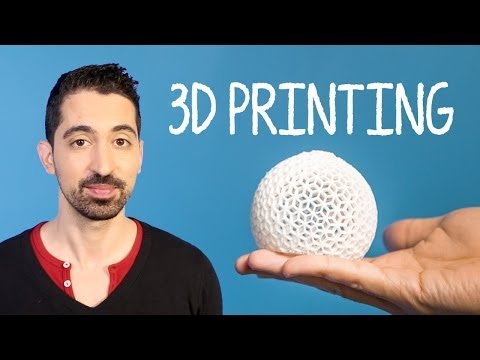
Before we dive deeper into the mechanics, here is a brilliant visual breakdown that captures exactly what is happening inside the machine — perfect if you are a visual learner:
The Universal Starting Point: From Pixels to Physical Object
Every 3D print — whether it is a screen-accurate Mandalorian helmet or a single-millimeter dental crown — begins the exact same way:
Step 1 — The Digital Blueprint A 3D model file (typically `.STL` or `.3MF`) gets loaded into specialized software called a slicer. This file is essentially a digital sculpture, defined by thousands of tiny triangles in 3D space.
Step 2 — The Slicing Magic The slicer cuts the model into horizontal layers, usually between 0.05mm and 0.3mm thick — roughly the width of a single human hair, sometimes thinner.
Step 3 — The Robot Recipe It generates G-code — a precise, line-by-line set of instructions the printer follows like a meticulous robotic recipe. Move here. Heat to this temperature. Extrude this much. Pause. Repeat 3,000 times.
From this shared starting line, the two technologies sprint in dramatically different directions — and choosing between them defines everything that happens next.
Expert Tip From The Lab
The slicer is honestly more important than the printer itself. A $200 printer with a perfectly dialed-in slicer profile will absolutely embarrass a $1,500 machine running default settings. Spend your first weekend learning your slicer inside and out — it is the single highest-leverage thing a beginner can do.
FDM Printing: The Workhorse That Started It All
Fused Deposition Modeling — universally known as FDM — is the technology that pulled 3D printing out of industrial labs and dropped it onto kitchen tables worldwide.
The concept is gloriously simple. A spool of thin plastic filament (usually 1.75mm in diameter) feeds into a heated nozzle. The nozzle melts the plastic at temperatures between 200°C and 280°C and squeezes it out in microscopic, controlled lines — building your object one stripe at a time, one layer at a time.
Think of a robotic hot glue gun with the precision of a Swiss watch.
What FDM Absolutely Crushes
- Functional parts that need to take a beating — brackets, hooks, jigs, replacement parts
- Large prints with build volumes that comfortably swallow a basketball
- Beginner-friendly workflows with virtually no toxic chemicals or messy cleanup
- Insanely low running costs — a 1kg spool of PLA is around $18 and prints dozens of full-sized objects
- An ocean of material choices — PLA, PETG, ABS, TPU, nylon, carbon-fiber composites, wood-fill, silk, glow-in-the-dark
Resin Printing: When Detail Is Non-Negotiable
Resin printing — known technically as SLA, MSLA, or DLP depending on the light source — feels like watching a magic trick that refuses to get old.
Instead of melted plastic, resin printers use a vat of liquid photopolymer — a special UV-reactive plastic that stays stubbornly liquid until light hits it. A high-resolution LCD screen (or laser) flashes a precise pattern of ultraviolet light up through a transparent film, instantly hardening one entire layer at once in a fraction of a second.
The build plate then rises by a fraction of a millimeter, and the next layer cures. And the next. And the next.
The result? Detail so sharp you can see individual pores on a miniature dragon's scales.
See A Resin Printer Work Its Magic
Where Resin Leaves FDM In The Dust
- Microscopic detail — feature resolution down to a staggering 0.01mm
- Surface smoothness so clean that layer lines are essentially invisible to the naked eye
- Translucent and clear prints that look genuinely cast, not printed
- Speed on small batches — print 30 miniatures in roughly the same time it takes to print one
- Dental, jewelry, and engineering precision that simply cannot be matched by any filament process
The Real Talk Verdict
Buy FDM if you want to make useful things, learn the craft without anxiety, and print parts you can actually hand to your kids without worrying about toxic chemicals or razor-sharp brittleness.
Buy Resin if you are obsessed with detail — tabletop miniatures, jewelry masters, scale models, dental work — and you are completely fine wearing nitrile gloves and managing a cleanup workflow.
Buy both if 3D printing has officially taken over your life. We will not judge. We did exactly that.
What Happens After The Print Finishes?
Here is where most beginner guides quietly skip the messy truth. Printing is only step one of the journey.
FDM Post-Processing (The Easy Path)
- Wait for the bed to cool down — usually two to three minutes
- Flex the magnetic build plate — the print usually pops right off with a satisfying click
- Snip away any support structures with flush cutters
- Optional sanding, priming, painting if you want a display-grade finish
Resin Post-Processing (The Real Workflow)
- Carefully remove the print while it drips uncured resin everywhere
- Wash thoroughly in isopropyl alcohol for five to ten minutes
- Remove every support structure while the print is still slightly soft
- Cure under UV light for two to ten minutes until fully hardened
- Properly dispose of contaminated alcohol and clean every contact surface
Critical Safety Note: Liquid resin is genuinely nasty stuff. It is a skin sensitizer, lung irritant, and aquatic toxin. Always wear nitrile gloves and a respirator, work in a ventilated space, and never, ever pour cleanup alcohol down the drain. Take it seriously and resin will be perfectly safe. Get sloppy and you will absolutely regret it.
So, Which One Is Right For You?
Ask yourself one ruthless question: What do I actually want to make?
- "I want to print replacement knobs, brackets, organizers, and useful household stuff" — FDM, every single day.
- "I want to print Warhammer armies, D&D miniatures, or jewelry masters" — Resin, no contest.
- "I want to print giant cosplay armor and helmets" — FDM, and look at large-format machines.
- "I want to print engineering prototypes that need to flex and survive drops" — FDM with PETG or nylon.
- "I want to print clear, translucent, or display-grade art pieces" — Resin, hands down.
The Final Takeaway
3D printing in 2026 is no longer a fragile, finicky hobby reserved for engineers. It is a mature, affordable, genuinely magical creative tool — and the only real question left is which flavor of magic fits your life.
Whichever path you choose, welcome to the most addictive creative hobby of the decade. Your first successful print will hook you. Your hundredth will still surprise you.
Now go make something amazing.
Key Takeaways
- Choosing the right how does a 3d printer work means matching the key features to your specific needs and budget
- Read real customer reviews and check the return policy before you commit
- Also covers: how 3d printers work
- Also covers: fdm vs resin printing explained
- Also covers: 3d printing process for beginners
- Compare value across models — the priciest option is not always the best fit


