Disclosure: As an Amazon Associate we earn from qualifying purchases.
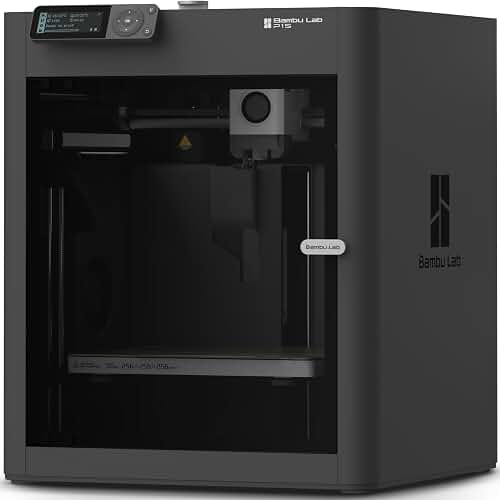
To print custom violin shoulder rests on Bambu Lab P1S, you need to model or download a violin-fit shoulder rest in CAD/STL, slice it in Bambu Studio with TPU or PETG at 0.2mm layers and 30-40% gyroid infill, then print on the textured PEI bed with a brim for grip. The P1S's enclosed chamber, CoreXY motion, and AMS-compatible multi-material support make it well-suited for the soft TPU bumpers and rigid PETG body that a comfortable shoulder rest needs. This guide walks through measuring your shoulder, modeling the curve, choosing materials, slicer settings, and post-processing so your custom rest fits like it was made for you—because it was.
Why the Bambu Lab P1S Is a Strong Match for Shoulder Rests
A violin shoulder rest sits between you and a very expensive instrument, so it has to be dimensionally accurate, vibration-friendly, and skin-safe. The P1S brings four capabilities that line up with those needs. First, its fully enclosed chamber keeps PETG and ABS from warping during the long, thin prints that shoulder rests demand. Second, CoreXY kinematics produce clean curved shells without the layer wobble you can get from bedslinger designs. Third, the textured PEI plate releases TPU bumpers cleanly without glue. Fourth, with an optional AMS unit, you can co-print a rigid load-bearing body and a soft contact surface in a single job.
Finding the right how to print custom violin shoulder rests on bambu lab p1s comes down to matching the features to how you will actually use it.
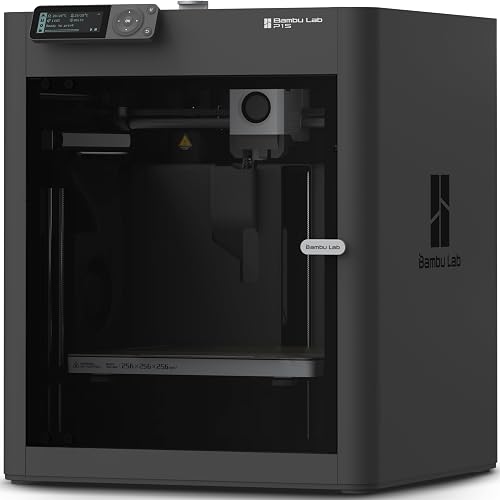

If you are still deciding on the machine, our Bambu Lab P1S review covers the hardware in depth, and the best enclosed 3D printers roundup compares the P1S against alternatives that can also handle PETG and ABS safely.
Step 1: Measure Your Shoulder, Collarbone, and Violin
Custom means custom. Before you open any software, gather these measurements with a flexible tailor's tape and a digital caliper:
- Shoulder-to-jaw height while holding the violin in playing position (use a stack of paper or foam to find the gap, then measure the stack).
- Collarbone curvature: trace your collarbone onto paper, then digitize that line by photographing it next to a ruler.
- Violin bout width at the lower bout where the rest will clamp.
- Rib height of the violin so the feet do not press into the varnish edge.
Most players are surprised that their two shoulders are not symmetric. Build your model around the actual gap on your playing side, not a generic curve. If you have access to a phone with LiDAR, scanning your shoulder with an app like Polycam gives you a base mesh you can subtract from a block in Fusion 360 or Blender.
Step 2: Model or Remix a Base Shoulder Rest
You have three realistic paths to a printable STL:
- Remix an open-source design. Printables, MakerWorld, and Thingiverse host several parametric violin shoulder rests inspired by the Kun, Wolf, and Bonmusica shapes. Look for files with an .f3d, .step, or OpenSCAD source so you can change height, curvature, and foot spacing.
- Model from scratch in CAD. Fusion 360, Onshape, and FreeCAD can sweep a profile along a 3D spline that matches your shoulder trace. Keep wall thickness around 4–6 mm for stiffness without weight.
- Sculpt in Blender. If you want organic curves, sculpt the body, then use the Boolean modifier to cut sockets for standard Kun-style feet, which are sold cheaply and let you reuse hardware.
Whichever path you take, the body must include four design features: contoured top surface (the part that meets your shoulder), reinforced foot mounts, rounded edges everywhere, and a slight inward tilt of the violin-side edge so the instrument sits flush against the rest.
Step 3: Pick the Right Filament Combination
The two-material approach is what makes a printed rest feel like a commercial product. Use a rigid filament for the body and a soft filament for the contact zones.
Body material
PETG is the best all-around choice. It is stiffer than PLA at body temperature, less brittle than PLA, and prints reliably in the P1S's enclosed chamber at 235°C nozzle / 70°C bed. ABS and ASA are stiffer still and survive a hot car better, but they smell more and require the P1S's activated carbon filter installed. PLA works for a prototype, but it creeps under sustained load and can deform if you leave the rest clipped to the violin in a warm room. Our PLA filament guide explains why PLA is fine for fit testing but not the final part.
Contact material
95A TPU is the sweet spot. It is soft enough to feel cushy against your collarbone but firm enough to keep its shape. Bambu's own TPU 95A HF prints well on the P1S in single-extruder mode at 220°C and 0.16 mm layers. Avoid 85A unless you want a pillowy surface that compresses noticeably while you play; some advanced players prefer it for vibrato comfort.
Feet
The feet should be either over-molded TPU sleeves on PETG posts or commercial Kun-style rubber feet pressed into printed sockets. Bare PETG against varnish can mark the wood, so always have a soft layer between the rest and the violin.
Step 4: Slicer Settings in Bambu Studio
Open your STL in Bambu Studio, select the Bambu Lab P1S profile, and apply the settings below. These are starting points; tune to your filament and ambient temperature.
- Layer height: 0.20 mm body, 0.16 mm contact pads.
- Wall loops: 4 (PETG body), 3 (TPU pads).
- Top/bottom layers: 5.
- Infill: 35% gyroid for the body, 100% for TPU pads.
- Print speed: 180 mm/s outer wall PETG, 30 mm/s TPU.
- Bed temperature: 70°C PETG, 45°C TPU.
- Brim: 5 mm mouse-ear brim on the foot sockets.
- Cooling: 50% part fan PETG, 30% TPU.
- Chamber: leave the door closed for PETG to reduce warping.
If you are running an AMS, set the body as PETG on slot 1 and the contact pads as TPU on slot 2, then enable filament swapping per object in the slicer. The P1S handles TPU through the AMS only with the dedicated soft-filament guide; otherwise spool TPU from the external holder and pause the print to swap manually.
Step 5: Print Orientation and Supports
Orient the rest so the contoured top surface is up and the feet point down. This puts the most cosmetically sensitive face on the outside walls instead of on a support-marked underside. You will need tree supports under the foot extensions, but keep the support contact distance at 0.20 mm so they snap off without scarring. Avoid printing the rest flat on its side; the layer lines end up perpendicular to the bending stress, which is exactly how you snap a shoulder rest in half during practice.
For your first attempt, level the build plate and run a flow calibration. Our walkthrough on how to level a 3D printer bed covers the auto-leveling routine on Bambu machines and the manual touch-up that fixes the first-layer issues most people blame on the slicer.
Step 6: Post-Processing for a Pro Finish
Right off the bed, a printed rest looks like a 3D print. A few minutes of finishing turns it into something you would not be embarrassed to bring to a lesson:
- Sand the contact surface with 220 then 400 grit to soften ridges that touch skin.
- Heat-smooth PETG edges briefly with a heat gun held 15 cm away. Move constantly; PETG sags fast.
- Glue a felt strip to the top contour if you want a fabric feel. Adhesive-backed billiard felt works well.
- Install rubber tubing over the feet for grip and varnish protection. 6 mm ID silicone tubing fits standard Kun-style feet.
- Test fit, mark, reprint. Expect to iterate two or three times before the curve is perfect. Save the .3mf for each revision.
Common Problems and How to Fix Them
If your rest cracks at the foot mount, increase wall loops to 5 and add a 2 mm fillet at the body-to-foot transition in CAD. If the TPU pad delaminates from the PETG body, you are seeing material incompatibility—these two do not chemically bond, so design a mechanical interlock (a dovetail or a captured T-slot) rather than relying on adhesion. If the print warps off the bed mid-job, clean the plate with isopropyl alcohol and bump the bed temperature to 75°C. Our printer maintenance guide covers PEI plate cleaning, lubrication intervals, and the small habits that keep a P1S printing accurately for years.
Cost, Time, and Why It Is Worth Doing
A commercial shoulder rest costs $30 to $120. A custom-printed rest uses roughly $3 of PETG and $1 of TPU, prints in 4–6 hours, and fits a specific body in a way no off-the-shelf product can. For students with non-standard shoulder shapes, players recovering from neck injuries, or violinists with antique instruments where standard Kun feet hit decorative purfling, a printed rest is not a novelty—it is the only option. Add a parametric source file and you can re-print the rest as your body changes or as you switch between violin and viola.
Frequently Asked Questions
What is the best filament for printing a violin shoulder rest on the Bambu Lab P1S?
PETG for the body and 95A TPU for the contact surfaces is the most popular combination. PETG is stiff, durable, and forgiving in the P1S's enclosed chamber. TPU 95A gives a cushioned feel without compressing so much that it dampens vibrato. PLA is acceptable for a fit-test prototype but will creep and deform if left clipped to the violin in a warm room, so avoid it for the final part.
Can I print a violin shoulder rest without an AMS unit on the Bambu Lab P1S?
Yes. You can print the rigid body in PETG, then print the TPU contact pad as a separate part and either glue it on with a flexible cyanoacrylate or design a mechanical snap-fit. Many makers prefer this two-part approach because TPU prints more reliably when fed from an external spool holder using the P1S's external filament path rather than through the AMS, which is optimized for rigid filaments.
How long does it take to print a custom violin shoulder rest on a P1S?
A standard adult violin shoulder rest of 230 mm length, 35 mm tall body, and 4 mm walls prints in about 4 to 6 hours at 0.20 mm layers. Adding TPU pads as a second material extends print time to 7 to 9 hours due to slower TPU speeds and tool changes. A quick fit-test prototype in PLA at 0.28 mm draft mode can finish in under 3 hours.
Will a 3D-printed shoulder rest damage my violin's varnish?
Only if you let bare PETG or PLA touch the wood. Always cap the feet with rubber tubing, silicone caps, or salvaged feet from a cheap commercial rest. Avoid solvents like acetone for smoothing parts that will touch the varnish, since residual solvent can soften shellac and oil-varnish finishes on older instruments. A felt or microfiber strip on the violin-facing edge adds extra protection.
Do I need a 3D scanner to model a custom shoulder rest?
No. Many players get an excellent fit using only paper tracings of their collarbone, caliper measurements of the gap between shoulder and jaw, and a parametric STL from MakerWorld. A LiDAR phone scan or a handheld 3D scanner speeds up the process and gives you a more accurate base mesh, but it is not required. Plan to iterate two or three prints to dial in the curve regardless of your starting method.
Is the Bambu Lab P1S a better choice than a Prusa MK4 for this project?
For shoulder rests, the P1S has small advantages: the enclosed chamber improves PETG reliability, and Bambu Studio's multi-material handling is more streamlined for two-material prints. The Prusa MK4S prints accurately and is excellent for PETG, but its open frame can let drafts cause warping on long thin parts. Compare them head-to-head in our Prusa MK4S vs Bambu Lab P1S breakdown.
Can I sell custom 3D-printed violin shoulder rests I designed?
If you designed the model yourself, yes. If you remixed an open-source design, check the original license—Creative Commons NonCommercial licenses prohibit sales, while CC-BY allows them with attribution. Original commercial designs like Kun and Wolf are protected by design patents and trademarks in many regions, so do not clone their distinctive shapes for resale. Designing your own profile from your own measurements keeps you on safe ground.
Key Takeaways
- Choosing the right how to print custom violin shoulder rests on bambu lab p1s means matching the key features to your specific needs and budget
- Read real customer reviews and check the return policy before you commit
- Also covers: violin accessory 3d printing p1s
- Also covers: custom shoulder rest 3d printer
- Also covers: string instrument 3d printing
- Compare value across models — the priciest option is not always the best fit