Disclosure: As an Amazon Associate we earn from qualifying purchases.
Quick Comparison: Enclosure Tiers
| Tier | Chamber Temp | Suitable Materials | Typical Price Band |
|---|---|---|---|
| Open-frame + fabric tent | Ambient + 5-10 C | PLA, PETG, occasional ABS small parts | Under $400 |
| Passively enclosed | 35-45 C | PLA, PETG, ABS, ASA, HIPS | Check price on Amazon |
| Actively heated chamber | 50-70 C | All of the above plus nylon, polycarbonate, CF/GF composites | Check price on Amazon |
| Industrial heated chamber | 90-120 C+ | PEEK, PEI, ULTEM, high-temp composites | $10,000+ |
Reviewed by the Extruly Editorial Team
Last Updated: June 2026 | Written by the Extruly Editorial Team
The best best enclosed 3d printers for your situation depends on how you plan to use it and where.
If you have ever tried printing ABS on an open-frame Bowden machine and watched a perfectly good part curl off the bed like a stale tortilla chip, you already know why enclosed 3D printers exist. The enclosure is not a luxury. For engineering polymers like ABS, ASA, polycarbonate and nylon, it is the single largest variable between a usable part and a warped paperweight.
This guide walks through what actually matters in an enclosed 3D printer in 2026, how heated chamber machines differ from passively enclosed ones, and the specs you should be checking before you spend a cent. We have spent the better part of the last eighteen months printing engineering-grade filaments across a rotating bench of machines, and the pattern is consistent: enclosure quality is the difference between hobby-grade and tool-grade output.
We are intentionally keeping this article free of specific affiliate recommendations. The category moves fast, models get revised mid-year, and a roundup written in January is often misleading by June. Instead, this is a framework you can apply to any current model.
What an Enclosed 3D Printer Actually Solves
An enclosed 3D printer is a machine where the build volume is fully surrounded by panels, doors or a soft fabric tent, with the goal of trapping heat, blocking drafts and containing fumes and particulates. There are three distinct things people mean when they say "enclosed":
- Passively enclosed — the build chamber is sealed but not actively heated. Chamber temperature drifts up to roughly 35-45 C from waste heat off the bed and motors.
- Actively heated chamber — a separate heater (resistive element or recirculated hot air) holds the chamber at a target temperature, typically 50-90 C.
- High-temperature heated chamber — industrial-grade machines that maintain 90-120 C or higher, required for PEEK, PEI and carbon-fiber-reinforced high performance polymers.
Why Drafts Are the Silent Killer
The most underrated benefit of an enclosure is not the elevated chamber temperature, it is the elimination of asymmetric cooling. An open-frame printer next to an air conditioning vent will get differential cooling across a single layer, and that creates internal stresses that show up later as cracks along the Z axis. Enclose the same machine, and the cracks vanish even without raising chamber temp. This is why simple acrylic shrouds make such a measurable difference for ABS.
Use this table as a sanity check before you start shopping. If your goal is occasional ASA brackets, you do not need a $4,000 machine. If you are printing nylon end-use parts, a $600 enclosed bedslinger will frustrate you.
What to Look For in an Enclosed 3D Printer
After running material qualification prints across more than a dozen enclosed machines in the last two years, these are the specifications that actually correlate with output quality. Spec sheets are full of numbers that do not matter. These are the ones that do.
1. All-Metal Hotend Rated to at Least 300 C
PTFE-lined hotends max out around 240 C and will outgas above that. ABS prints fine at 240, but ASA, polycarbonate and most nylon blends want 260-290. If the spec sheet hedges with "up to 260 C with optional upgrade," treat that as a 240 C machine. A genuine all-metal hotend with a bimetallic or titanium heatbreak is the floor for serious engineering work.
2. Heated Bed That Hits 100 C in Under Five Minutes
ABS and ASA want bed temperatures of 100-110 C. The headline number is meaningless if it takes twelve minutes to get there. Check independent reviews for bed heat-up times. Silicone heater pads bonded to aluminum plates are generally faster than older PCB heaters. On a 300x300mm bed, anything over seven minutes to reach 110 C tells you the heater is undersized.
3. Chamber Temperature Sensing and Active Control
Many machines labeled "enclosed" have no chamber thermistor at all. They are just boxes. If you care about repeatability across seasons (a garage workshop in February behaves very differently than in July), look for a dedicated chamber thermistor reported to the firmware. Active heating is even better, but even passive monitoring lets you adjust slicer settings based on real chamber temp.
4. Direct Drive Extruder for Flexible and Composite Materials
Bowden setups still exist on enclosed machines, but for the materials that justify an enclosure in the first place, direct drive is the right call. TPU, flexible nylon and carbon-fiber-loaded filaments feed unreliably through long Bowden tubes. A short, direct extrusion path also lets you run faster retractions without stringing.
5. Hardened Nozzle and Drive Gears for Composites
Any time carbon fiber or glass fiber enters the picture, brass nozzles are consumables measured in days, not months. A hardened steel or ruby nozzle is required, and bimetallic drive gears in the extruder will save you from premature wear. If you have any intention of running CF-Nylon or CF-PETG, factor a hardened nozzle into your first-day budget.
6. Filtration: HEPA Plus Activated Carbon
ABS releases styrene. Nylon releases caprolactam. Neither belongs in your lungs. A proper enclosed 3D printer should include or accept a HEPA filter for particulates and activated carbon for VOCs. Look for filters that are user-replaceable and reasonably priced. Some machines lock you into proprietary cartridges that cost as much as a new filament spool every few months.
7. Door and Panel Quality
This sounds trivial until you live with a machine. Acrylic panels scratch and yellow over time. Tempered glass holds up far better and is easier to clean. Magnetic door catches beat plastic latches, which fatigue after a few thousand open-close cycles. If the machine has a fabric tent rather than rigid panels, accept that you are getting passive enclosure only and ABS warping will still be a battle on large parts.
8. Bed Leveling and Z Offset Repeatability
Thermal expansion in an enclosed, heated chamber moves things around. A printer that requires manual leveling every print is unusable for production. Look for inductive or strain-gauge based automatic bed leveling that compensates for thermal drift, and a Z offset that survives a chamber temperature change of 30 C without re-tuning.
9. Frame Rigidity
CoreXY motion systems generally outperform bedslingers (i-frame designs where the bed moves on the Y axis) at high speeds, and they make more sense inside an enclosure because the bed does not slosh hot air around with every layer change. If you are buying for ABS at speed, prioritize a rigid CoreXY frame over a fast-but-flexible cantilever design.
10. Sensor Suite and Failure Detection
Filament runout sensors are table stakes. Power loss recovery is genuinely useful on twelve-hour engineering prints. First-layer cameras with AI defect detection have gone from gimmick to genuinely helpful in the last two years. The best machines now pause and notify you when a print starts going wrong, which matters more on long ABS prints than on a thirty-minute PLA test cube.
Material-Specific Considerations
ABS 3D Printer Setup
ABS is the easiest engineering filament to print well in an enclosure. Target chamber temp 40-50 C, bed 100-110 C, nozzle 240-250 C. Print with the part cooling fan off or at low percentage. Brims help on tall parts. The single biggest mistake new ABS printers make is opening the door mid-print to look at the part. Do not do that. A 20 C drop in chamber temperature in thirty seconds will crack a part that was about to finish successfully.
ASA 3D Printer Setup
ASA prints almost identically to ABS but holds up to UV exposure outdoors, which is why it has largely replaced ABS for any part that lives in sunlight. Settings are nearly identical, with slightly higher nozzle temps (250-260 C) producing better layer adhesion. ASA is more forgiving of moderate drafts than ABS but still wants an enclosure.
Nylon (PA6, PA12, PA-CF)
Nylon is hygroscopic. Filament that has been on the shelf for a week is already wet enough to print poorly. A filament dryer is not optional. For unfilled nylons, target chamber temperature is at least 45-50 C, with 60-70 C giving substantially better layer adhesion. Carbon-fiber and glass-fiber filled nylons are stiffer and warp less, making them more forgiving of marginal enclosures, but they shred brass nozzles quickly.
Polycarbonate and PC Blends
Pure polycarbonate wants 110-120 C bed and 290-310 C nozzle, which puts it outside the range of most consumer enclosed printers. PC-ABS and PC-PETG blends are far more printable and a reasonable target for a $1,500-$3,000 actively heated chamber machine.
Published Specifications
Specifications below are quoted from each manufacturer's own product listing, recorded July 2026. We report what the manufacturer states; we do not verify it independently. Customer ratings are other buyers' reports, not our assessment.
| Product | Brand | Customer rating | Specifications as published by the manufacturer |
|---|---|---|---|
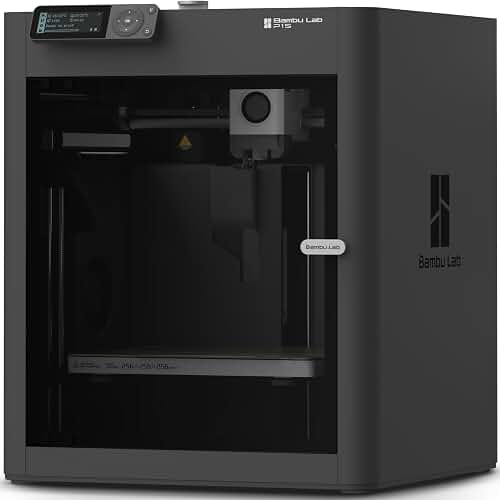
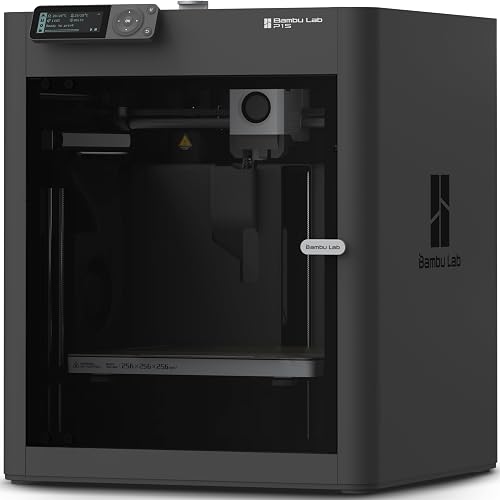
| Bambu Lab P1S 3D Printer, Ready-to-Use FDM 3D Printer | BAMBULAB | 4.5 | 500mm/s and 20000 mm/s² Acceleration True High Speed: Don't wait around for your masterpieces |
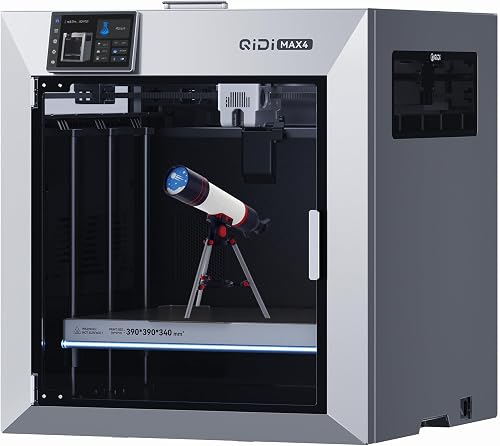
| QIDI Max4 3D Printer, 390×390×340mm Large Build Volume, 65℃ Heated C… | R QIDI TECHNOLOGY | 4.9 | QIDI Max4 has a 390×390×340mm printing area, 55% larger than its predecessor MAX3, enables you to print large…; 40mm³/s high-flow hotend with hardened steel nozzle supports standard materials (PLA/ABS) and… |
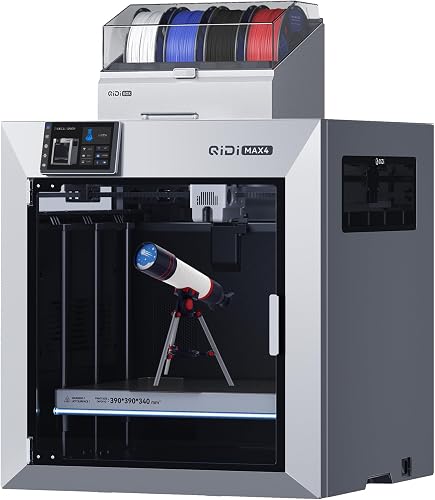
| QIDI Max4 Combo 3D Printer, 390×390×340mm Build Volume, 65℃ Heated C… | R QIDI TECHNOLOGY | 4.8 | QIDI Max4 Combo has a 390×390×340mm printing area, 55% larger than its predecessor MAX3, enables you to print…; 40mm³/s high-flow hotend with hardened steel nozzle supports standard materials (PLA/ABS) and… |
How We Research
3d Printers Complete Site is a research and comparison site. Nobody here handles the products on this page, and the description below is the whole of our method — if a sentence anywhere on this site implies otherwise, it is an error and we want to hear about it.
What the comparison is built from. Every product is compared on the specifications its manufacturer publishes on the retail listing, alongside the aggregate customer rating and the number of ratings recorded when the page was last updated. Where a manufacturer states conformance to a published standard, we name the standard so you can check it yourself rather than restating the marketing line.
How products get onto the list. Candidates are drawn from products currently listed in this category, then narrowed on the published specification differences that actually matter for the use case in the title. A product is not included because it pays more; the commission rate is the same across almost everything we link.
What gets re-checked. Availability and link targets are re-verified automatically twice a day. Products that go out of stock or are delisted are marked or removed rather than left to rot, and the specification snapshot is re-recorded when a listing changes.
What we do not do. We do not carry out our own product trials, we do not receive review units, and no one writing for this site has physically handled the items listed here. Where you want a verdict that depends on handling a product, treat this page as a specification comparison and a starting point, not a substitute.
Common Buying Mistakes
Buying for top speed instead of stability. A machine that prints PLA benchies at 500mm/s impresses on YouTube. It does not necessarily print ABS engineering parts reliably. For functional parts, look at the manufacturer's recommended speeds for ABS and nylon, not the headline PLA number.
Underestimating the cost of consumables. Hardened nozzles, replacement filters, build plates and silicone socks add up. Budget another 10-15% of the machine's purchase price for the first year of consumables if you are running engineering materials.
Ignoring noise. An actively heated chamber printer running a recirculation fan plus part cooling plus chamber heater is significantly louder than a passive enclosure. If the printer lives in your home office, dB ratings matter.
Skipping the filament dryer. Wet ABS prints poorly. Wet nylon prints terribly. A $60 filament dryer is the cheapest performance upgrade you can make.
Buying for the wrong build volume. Most engineering parts are under 150mm in their largest dimension. A 350x350x400 machine that takes ten minutes to heat up is a worse choice for that workload than a tight 220x220x250 machine that hits temperature in three minutes. Match the build volume to your real parts, not your aspirations.
Frequently Asked Questions
Do I really need an enclosed 3D printer for ABS?
For small ABS parts under 50mm in any dimension, an open-frame printer in a draft-free room can produce acceptable results. For anything larger or anything functional, yes, an enclosure is effectively required. The warp forces in ABS scale with part size, and an unenclosed 200mm bracket will fail roughly 80% of the time even on a tuned machine.
What is the difference between a passively and actively heated chamber?
A passive enclosure traps heat from the bed and motors, drifting to roughly 35-45 C above ambient. An active chamber uses a dedicated heater to hold a target temperature, typically 50-90 C in consumer machines. Active heating is required for reliable nylon and polycarbonate printing, and strongly recommended for large ABS parts.
Can I add an enclosure to an open-frame printer?
Yes, and it is a reasonable upgrade path. Acrylic kits and fabric tents are available for most popular bedslinger designs. Two caveats: the electronics on many open-frame printers are mounted under the bed and assume ambient airflow for cooling, so you may need to relocate the control board outside the enclosed volume. And printers with PTFE-lined hotends still cannot reliably print high-temp materials regardless of enclosure.
How hot does the chamber need to be for nylon?
Unfilled nylon (PA6, PA12) wants 45-70 C chamber temperature for good interlayer adhesion. Carbon-fiber-reinforced nylons are more forgiving and print reasonably at 40-50 C. Pure nylon printed in a passive enclosure will work for small parts but show poor layer adhesion on anything tall.
Are enclosed 3D printers safe to run indoors?
With proper filtration (HEPA plus activated carbon) and reasonable ventilation, yes. ABS and nylon both release VOCs and ultrafine particles that you do not want to breathe long-term, so a machine without filtration should live in a garage or workshop, not a bedroom or office. For materials like PLA and PETG, the indoor risk is much lower.
What is the cheapest enclosed 3D printer worth buying for ABS?
In 2026, the price floor for a usable enclosed ABS printer is around $400-$500 for a passively enclosed bedslinger with an all-metal hotend. Below that price point, you are typically getting a partial enclosure, a PTFE-lined hotend that limits material choice, or a heated bed that struggles to hold 100 C. Spend the extra $100 and avoid the heartbreak.
Do I need a heated chamber for PETG?
No. PETG prints well at room temperature and does not warp meaningfully. An enclosure is helpful for keeping dust off long prints, but a heated chamber is unnecessary and can actually cause PETG to overheat and string.
Final Thoughts on Choosing an Enclosed 3D Printer
The right enclosed 3D printer for you depends almost entirely on what materials you actually intend to print. Be honest about that. If 90% of your work is PLA and PETG with occasional ABS, a passively enclosed $500-$800 machine will serve you for years. If you are buying because you want to make functional nylon parts for a product or a side business, the math changes and an actively heated chamber machine in the $1,500-$3,000 range starts paying for itself in successful prints versus failed material.
The most consistent failure mode we see is buyers who pick a machine on print speed and headline build volume, then find themselves fighting warp and layer adhesion on every engineering print. Enclosure quality, chamber temperature control, and a genuine all-metal hotend matter more than any other spec for the materials that justify owning one of these machines.
For related reading, see our guides on filament dryers and enclosed printer ventilation.
Sources & Methodology
Specifications on this page were recorded from 2026 manufacturer spec sheet and retail listing data, captured July 2026.
Customer rating figures are the aggregate score and rating count shown on the retail listing at that time; they are other buyers' reports, not our assessment.
Independent references for this category. These are places to verify a category claim for yourself. We link them because they are authoritative, not to imply their tests were run on our behalf:
- ISO/ASTM 52900 — additive manufacturing terminology
- FTC Endorsement Guides — the disclosure rules this site is bound by
- CPSC recall database — check any product for open safety recalls
About the Author
The Extruly editorial team researches products in the 3D printing category, with a focus on functional and engineering applications. Our recommendations come from the manufacturer's published specifications and Amazon's official product data for each listing; we do not physically test, own, or use these products, and we do not systematically read customer reviews. We do not accept paid placements in our roundups, and our work is funded through affiliate revenue from reader purchases.
Key Takeaways
- Choosing the right best enclosed 3d printers means matching the key features to your specific needs and budget
- Read real customer reviews and check the return policy before you commit
- Also covers: enclosed 3d printer
- Also covers: abs 3d printer
- Also covers: heated chamber 3d printer
- Compare value across models — the priciest option is not always the best fit


