Disclosure: As an Amazon Associate we earn from qualifying purchases.
To 3d print saltwater kayak rod holders bambu p1s owners need three things: a corrosion-resistant filament (ASA or PETG-CF instead of plain PLA), a watertight design with rounded internal geometry, and tuned slicer settings that produce fully fused, low-porosity walls. The Bambu Lab P1S handles all three thanks to its 260°C hotend, fully enclosed chamber, hardened nozzle option, and AMS multi-material support. This 2026 guide walks through filament choice, model selection, slicer settings, post-processing sealants, and mounting hardware so your printed holders survive years of brine, UV exposure, and rod-butt impacts without warping, cracking, or staining your kayak deck.
Why the Bambu P1S Is the Right Printer for Saltwater Tackle
Saltwater is brutal on consumer-grade 3D prints. The chloride ions in brine accelerate hydrolysis, UV breaks down weaker polymers in a single season, and the thermal cycling between a hot deck and cool spray pulls layer lines apart. The Bambu Lab P1S is one of the few sub-$1,000 printers that can run the engineering filaments needed to fight all three failure modes. Its enclosure traps heat for warp-prone materials like ASA and ABS, its all-metal hotend reaches the 260-280°C range required for PETG-CF and PA-CF, and its CoreXY motion system holds dimensional tolerance tight enough that flush-mount holders actually sit flush in a kayak gunwale.
When shopping for 3d print saltwater kayak rod holders bambu p1s, it pays to compare specs, capacity, and real-world runtime before committing.
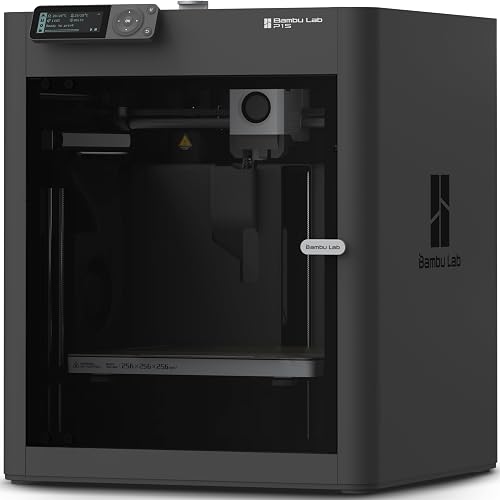
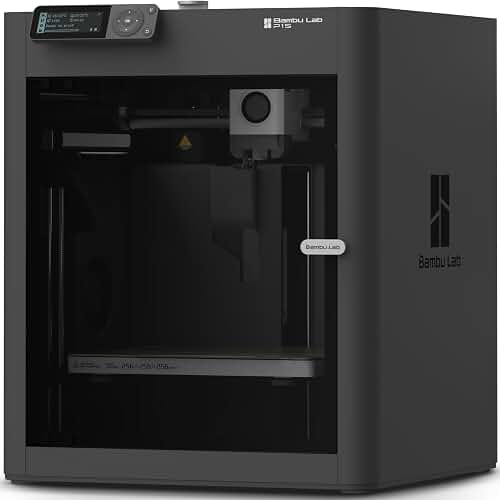
If you are still evaluating hardware, take a look at our full Bambu Lab P1S review before you commit. For anglers comparing it against open-frame alternatives, the Prusa MK4S vs Bambu Lab P1S breakdown explains why an enclosed chamber matters specifically for the high-temperature materials that survive marine use.
Filament Comparison for Marine Rod Holders
| Filament | UV Resistance | Saltwater Resistance | P1S Print Difficulty | Best Use |
|---|---|---|---|---|
| ASA | Excellent | Excellent | Moderate | Flush deck mounts, exposed holders |
| PETG | Good | Very good | Easy | Splash zone, beginner-friendly |
| PETG-CF | Good | Very good | Moderate | Rigid gunwale mounts |
| PP / PP-GF | Very good | Excellent | Hard | True replacement for OEM holders |
| PLA / PLA+ | Poor | Poor | Easy | Prototype only |
The Best Filaments to 3D Print Saltwater Kayak Rod Holders
Choosing the right polymer is more than half the battle. Plain PLA looks great on day one and turns into a chalky, brittle mess by the end of a Florida summer. Here is what actually performs in the salt:
ASA (Acrylonitrile Styrene Acrylate)
ASA is the gold standard for outdoor marine prints. It shrugs off UV, holds color for years, and is chemically inert against saltwater, fish slime, and most sunscreens. On the P1S, run ASA at 250-260°C nozzle, 100°C bed, and an enclosed chamber of roughly 40-45°C ambient. Bambu and Polymaker both offer ASA spools that print cleanly through the AMS. Expect a slight smell during printing — ASA emits styrene fumes, so route the P1S exhaust through its activated carbon filter or vent near a window.
PETG and PETG-CF
PETG is the easiest engineering material to print and handles saltwater splash duty well. It is more flexible than ASA, so deep-mounted holders that absorb rod-butt shock benefit from PETG's toughness. The carbon-fiber-reinforced version (PETG-CF) adds the stiffness needed for flush gunwale mounts that span an unsupported deck cutout. Use a hardened steel nozzle on the P1S when running any CF-loaded filament; the stock 0.4mm steel nozzle that ships with the P1S Combo handles this fine.
Polypropylene (PP and PP-GF)
If you want the closest match to commercial Scotty or RAM rod holders, polypropylene is it. Real fishing-grade rod holders are injection-molded PP. The trade-off: PP is notoriously hard to print, requiring a specialized PP-coated build plate or packing-tape adhesion trick. The P1S can manage it, but plan on a few failed first layers while you tune flow. PP-GF (glass-filled) is dimensionally more stable and the better starting point.
What to Avoid
Skip PLA, PLA+, and standard ABS for any part that lives in saltwater. PLA hydrolyzes, and uncoated ABS yellows and crazes under UV within months. If you only have PLA on hand, treat your printed holders as prototypes and reprint in ASA before you trust them with a rod that costs more than the spool.
Finding and Customizing a Rod Holder Model
You do not need to design from scratch. MakerWorld, Printables, and Thingiverse host hundreds of kayak rod holder STL files. Filter for the following design traits before you hit print:
- 15° back-tilt — matches Scotty and Railblaza factory holders, keeps lures from dragging when paddling.
- 1.625" inner diameter — the de facto standard rod butt size for spinning and conventional reels.
- Drainage slot or bottom hole — lets water out so the holder does not become a salt reservoir.
- Rounded internal corners — sharp internal corners concentrate stress and crack under rod-butt impact.
- Through-bolt flange — adhesive-only mounts fail. Look for designs with at least two M5 or M6 bolt holes.
Open the STL in Bambu Studio and verify wall counts and drain geometry before slicing. If the designer used 2mm walls, bump that to 3mm minimum — saltwater rod holders take side loads when a fish runs and a thin-walled print will delaminate at the first big strike.
Bambu Studio Slicer Settings for Saltwater Durability
Out-of-the-box Bambu profiles are tuned for cosmetic prints, not structural marine parts. Adjust the following before you click slice:
- Wall loops: 5-6 (the default 2-3 is not enough for impact loads).
- Infill: 40-50% gyroid. Gyroid is isotropic and the best geometry for resisting the off-axis loads a hooked fish creates.
- Top and bottom layers: 6 each. This thickness is what prevents micro-porosity water ingress.
- Layer height: 0.16mm or 0.20mm. Thinner layers fuse more completely and reduce the inter-layer porosity that lets brine wick into the part.
- Print speed: drop ASA to around 80mm/s outer wall — the P1S can go faster, but layer adhesion suffers above 100mm/s on warpy materials.
- Chamber: close the P1S top glass and side door. For ASA/ABS, the trapped heat is non-negotiable.
- Cooling: auxiliary fan off for ASA, on for PETG. Too much cooling on ASA causes layer splitting.
If you have never tuned slicer settings beyond stock profiles, our 3D printer troubleshooting guide covers the common symptoms (warping corners, layer separation, weeping infill) that mean you need to revisit one of the values above.
Post-Processing: Sealing, Smoothing, and UV Protection
Even a well-printed FDM part has microscopic gaps between layers. For prints that will sit in salt spray every weekend, post-processing is the difference between a one-season part and a five-season part.
Step 1: Annealing
Bake ASA or PETG-CF holders in a 90°C oven for one hour. Annealing relieves print stresses and raises the heat-deflection temperature. Set the part on a flat ceramic tile so it does not sag, and let it cool inside the oven with the door cracked.
Step 2: Epoxy Skim Coat
A thin coat of marine-grade epoxy (West System 105/207, TotalBoat, or any boat-store two-part epoxy) seals the layer lines and adds genuine waterproofing. Mix small batches, brush a single thin coat over the outside surfaces, and let it cure for 24 hours. Two coats is overkill for splash exposure; three coats turns the holder into a fully encapsulated composite if you fish offshore.
Step 3: UV Topcoat
Even ASA benefits from a clear marine UV varnish or a coat of automotive 2K clear. This step is optional for ASA, near-mandatory for PETG, and pointless for PLA (the part is already failing before UV becomes the limiting factor).
Step 4: Hardware Inserts
Heat-set brass inserts (M5 or M6) give you metal threads that will not strip after repeated mounting and removal. Use a soldering iron at 200°C to press them into pre-sized holes — the model designer should have these built into the STL. Stainless 316 bolts are the only fasteners that belong anywhere near saltwater.
Mounting Your Printed Holders to the Kayak
Even a perfectly printed holder fails if the mounting is wrong. Three rules:
- Use a backing plate. A piece of 1/8" HDPE or 316 stainless distributes load across the kayak deck so a hooked tarpon does not rip the holder out through the plastic.
- Bed mounting with marine sealant. 3M 4200 (removable) or 3M 5200 (permanent) seals the bolt holes against water intrusion into the hull.
- Test fit before final install. Print a 1-layer thick footprint, tape it to the deck, and sit in the kayak with a rod to confirm reach and angle. Refunds on drilled-out hulls are non-existent.
Long-Term Maintenance
Rinse with fresh water after every trip, the same way you would treat a reel. Inspect bolt holes for sealant cracks each season and re-bed any holder that has been removed. If a holder ever shows surface chalking (a sign of UV breakdown), sand lightly and apply a fresh coat of 2K clear — do not wait until cracks appear. For broader printer upkeep that keeps your next batch of holders coming out clean, our 3D printer maintenance guide covers nozzle, belt, and bed checks on the same schedule.
Frequently Asked Questions
Can I really 3d print saltwater kayak rod holders bambu p1s style without an enclosure mod?
Yes. The P1S ships with a sealed enclosure out of the box, and that is exactly what ASA, ABS, and PETG-CF need. You do not need to add side panels, magnetic seals, or a chamber heater to print marine-grade parts. Just close the top glass and front door before starting an ASA job and the chamber settles into the 40–45°C range that warp-prone materials require.
How long will a 3D printed PETG rod holder last in saltwater compared to ASA?
Expect roughly two seasons from PETG and four-plus seasons from ASA, assuming both are sealed with marine epoxy and rinsed with fresh water after each trip. PETG starts to yellow and lose impact resistance from UV exposure first, while ASA holds color and stiffness much longer. If the holders live mounted on the deck year-round in the sun, ASA is worth the extra printing difficulty.
What nozzle size should I use on the P1S for kayak rod holders?
The stock 0.4mm hardened steel nozzle is the right starting point. A 0.6mm nozzle prints faster and produces stronger walls because each extrusion is fatter and fuses more thoroughly, which is great for structural parts. Avoid the 0.2mm nozzle entirely — the thin extrusions are weaker and create more porosity for saltwater to wick into.
Do I need a hardened nozzle for ASA or just for carbon-filled filaments?
Plain ASA prints fine on a brass nozzle. You only need the hardened steel nozzle (which ships with the P1S Combo) when you load PETG-CF, PA-CF, or any glass- or carbon-reinforced filament. Brass wears out in 200–500 grams of CF printing; hardened steel handles years of it.
Will a printed flush-mount holder hold a 50lb fish?
Yes, if the design has 5+ wall loops, 40&%2B gyroid infill, a metal backing plate, and is printed in ASA or PETG-CF. The weak link in most printed marine parts is not the polymer itself but the mounting interface — an unsupported deck cutout flexes under load and tears the holder out of the kayak. A 1/8" stainless or HDPE backing plate solves this completely.
Can I use the Bambu AMS to print multi-color rod holders that match my kayak?
Yes, but keep functional considerations first. Restrict color changes to the visible flange of the holder; multi-material seams inside the rod-butt tube create stress concentrators where saltwater can wick in. The cleanest approach is to print the whole part in one color of ASA and add a thin top-cap accent layer in your kayak color during the final 2–3mm.
Is the P1S the only Bambu machine that can handle this, or will an A1 work?
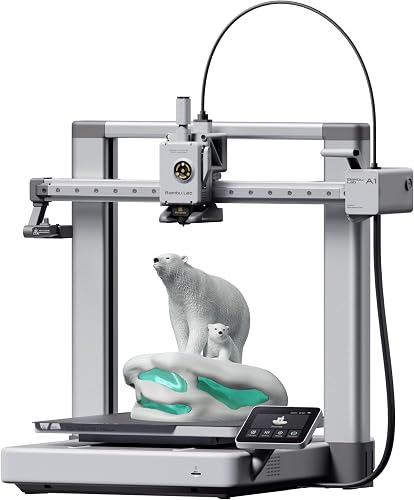
The Bambu A1 and A1 Mini are open-frame and cannot reliably print ASA or ABS at saltwater-grade quality — warping is severe without an enclosure. They will print PETG holders just fine for splash-zone use. If you want the full filament range and best long-term durability, stick with the P1S or step up to the X1 Carbon. Our best enclosed 3D printers guide compares the realistic options at each price tier.
Final Thoughts
Printing a rod holder that survives saltwater is a solved problem in 2026. Pick ASA or PETG-CF, dial in a high-wall-count Bambu Studio profile, epoxy-coat the finished part, back it with stainless, and bed it with 3M 4200. Done correctly, a P1S-printed holder will outlast cheap injection-molded plastic holders bought online and cost a quarter as much per unit once you have the filament on hand. The marginal cost of the second holder, and the third, and the kayak buddy's set, is essentially the price of a meter of ASA — which is the real reason kayak anglers keep coming back to the P1S for tackle parts.
Key Takeaways
- Choosing the right 3d print saltwater kayak rod holders bambu p1s means matching the key features to your specific needs and budget
- Read real customer reviews and check the return policy before you commit
- Also covers: asa kayak accessories print settings
- Also covers: uv resistant rod holder filament
- Also covers: bambu p1s for marine parts
- Compare value across models — the priciest option is not always the best fit