Disclosure: As an Amazon Associate we earn from qualifying purchases.
To print a watertight rc submarine hull bambu x1 carbon owners can actually dive, you need three things working together: a pressure-rated material (PETG, ASA, or PA-CF), a slicer profile tuned for zero micro-gaps (6+ walls, 100% overlap, ironed top layers), and a post-process seal coat (epoxy or XTC-3D). The Bambu Lab X1 Carbon's enclosed chamber, hardened nozzle, and AMS multi-material support make it one of the best consumer machines for this job in 2026 — but stock profiles will leak. This guide walks you through the exact orientation, wall strategy, seam control, and leak-test workflow that produces hulls rated to 3-10 meters of test depth.
Why the X1 Carbon Is the Right Tool for RC Sub Hulls
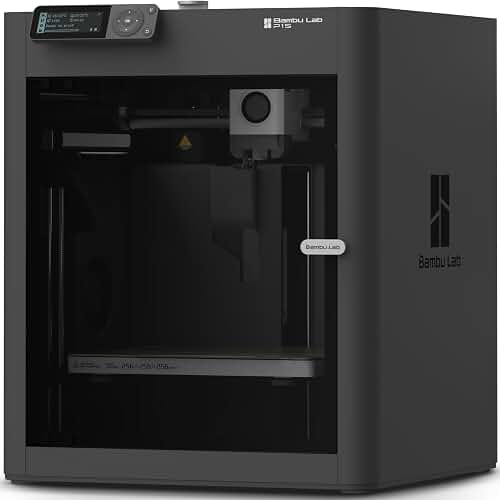
RC submarine hulls are unforgiving. A single under-extruded layer line becomes a slow leak at 2 meters and a flooded electronics bay at 5. The X1 Carbon helps in ways that matter for pressure work: a fully enclosed chamber holds ambient temperature so ASA and PA-CF lay down without warping; the LIDAR first-layer scan catches gaps before they become wall defects; and the 0.4 mm hardened steel nozzle (swappable to 0.6 mm) handles abrasive carbon-filled nylons for structural sections like ballast tanks and motor mounts.
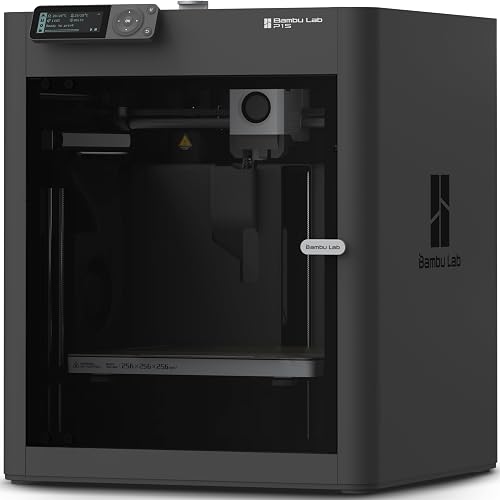

Compared to open-frame bedslingers, the X1C's CoreXY motion also produces tighter seam alignment, which is critical because the Z-seam is the most common failure point on a watertight rc submarine hull bambu x1 carbon build. If you're still researching the platform itself, our Bambu Lab X1 Carbon review covers the hardware in depth.
Choose Your Material First — It Drives Every Other Decision
Material selection determines wall count, infill, sealing method, and even hull geometry. Here is the trade-off matrix for the three filaments that actually work for submersible hulls in 2026.
| Material | Watertight Out of the Box? | Chamber Needed | Best Use Case | Recommended Sealant |
|---|---|---|---|---|
| PETG | Nearly — needs light epoxy coat | Optional | Beginner hulls, 1-3 m depth | XTC-3D or 2-part epoxy |
| ASA | Yes if walls ≥ 6, with brush coat | Yes (X1C enclosed) | UV-exposed hulls, 3-7 m depth | Acetone slurry + epoxy |
| PA-CF (Nylon Carbon) | No — porous, requires full seal | Mandatory | Structural frames, dive planes, deep hulls | Epoxy resin dip |
| PLA | No — hydrolyzes, brittle cold | No | Mockups and test fits only | Do not use submerged |
For most builders, PETG is the right starting point. It is dimensionally forgiving, bonds to itself well between layers, and the X1C's profile for Bambu PETG HF is already close to leak-proof. ASA is the move once you are confident — it survives UV, gasoline traces in marina water, and impact better than PETG. PA-CF is reserved for parts under genuine mechanical load (pressure-hull endcaps, prop shaft mounts).
Slicer Settings That Actually Seal
This is where 90% of leaky hulls are made. Bambu Studio's default "Strength" profile is tuned for structural parts, not pressure vessels. Override these specific fields.
Wall and Top/Bottom Strategy
- Wall loops: 6 (not 3). Six 0.42 mm walls give you 2.5 mm of solid perimeter, which is what blocks micro-leaks.
- Top shell layers: 7 / Bottom shell layers: 5. More than you think.
- Wall ordering: Inner/Outer/Inner. Improves dimensional accuracy on curved hull sections and reduces seam visibility.
- Infill: 15% gyroid. Counterintuitive — high infill does NOT improve watertightness, but gyroid creates internal support that prevents wall deflection under pressure.
- Ironing: enabled on top surfaces only, flow 12%, spacing 0.15 mm. This closes micro-gaps in the top shell.
Seam, Speed, and Flow
- Seam position: Aligned, back. Then manually paint the seam onto a flat or non-submerged face using Bambu Studio's seam painter. Random seams are leak generators.
- Outer wall speed: 80 mm/s max. Slower means better layer adhesion and tighter extrusion.
- Flow ratio: calibrated. Run the flow dynamics calibration on the X1C before every roll change. A flow ratio that is 2% low will leak.
- Z-hop: disabled. Z-hop introduces tiny travel-move blobs that become weak points.
Layer Height and Nozzle
Use a 0.4 mm nozzle with a 0.16 mm layer height for the hull skin. Thinner layers fuse more completely. For internal ribs and bulkheads, switch to 0.20 mm to save time — they do not need to be watertight, only structural. If you need ballast-tank parts that touch water on both sides, drop to 0.12 mm for those specific bodies and bump wall count to 8.
Hull Geometry and Orientation
Print your hull halves vertically with the parting line oriented so the seam runs along the keel or topside. This forces the Z-seam onto a single straight line that you can address with a fillet weld of acetone-slurry (for ASA) or epoxy bead (for PETG/PA-CF).
Avoid printing closed cylinders horizontally — the upper surface ends up as a 90° overhang that needs support, and any support contact becomes a leak vector. If your hull is too tall for the X1C's 256 mm Z-build, split it into two stacked sections with a tongue-and-groove joint and bond chemically. PETG bonds to PETG with MEK; ASA bonds to ASA with acetone; PA-CF needs cyanoacrylate plus a fiberglass overwrap.
For models taller than 256 mm where splitting is undesirable, see our best large format 3D printers guide — but for most RC subs in the 600-1200 mm length class, splitting on the X1C is the standard approach.
The Post-Print Sealing Process
Even a perfectly sliced PETG hull will weep at depth. Plan on a sealing pass — it is not failure, it is the standard workflow.
Step 1: Inspect Under Raking Light
Shine an LED flashlight along the hull at a shallow angle. Any line of light visible from inside is a leak path. Mark with a Sharpie.
Step 2: Pressure Pre-Test (Dry)
Cap one end of the hull, fit a bicycle pump valve to the other, and pressurize to 5 PSI. Spray the exterior with soapy water and look for bubbles. This finds 95% of leaks before you ever touch the water.
Step 3: Apply Sealant
For PETG and ASA, brush a thin coat of XTC-3D or a low-viscosity marine epoxy over the entire exterior. Two thin coats are better than one thick coat. For PA-CF, dip the part in thinned epoxy and rotate on a lathe or rotisserie until cured to avoid drips and pooling.
Step 4: Wet Test in a Bucket
Submerge for 24 hours with a paper towel inside. Any moisture = re-coat the suspect area. Do not skip this step.
Step 5: Tank Test to Operating Depth
Most RC subs operate between 0.5 and 3 m. Test in a pool to your maximum intended depth for 30 minutes minimum before adding electronics.
Common Failure Modes and Fixes
The X1C is consistent, so when a hull leaks it is almost always one of four root causes:
- Z-seam line: Address with seam painting and a post-print epoxy bead.
- Wet filament: PETG, ASA, and PA-CF all absorb moisture. Dry PETG at 65°C for 6 hours, ASA at 80°C for 8 hours, PA-CF at 80°C for 12 hours minimum before printing. The X1C has no built-in dryer — use a dedicated filament dryer.
- Under-extrusion: Re-run flow dynamics calibration, check nozzle for partial clogs.
- Layer shift on tall prints: Reduce outer wall acceleration and check belt tension monthly. Our 3D printer maintenance guide covers belt checks in detail.
AMS Considerations for Multi-Material Hulls
The X1C's AMS lets you print soluble interfaces between the hull and internal mounting bosses. PETG hull with PETG mounts works fine — but if you want PVA-supported internal cavities for water-tight chambers around the WTC (water-tight cylinder for electronics), the AMS is the only practical way to do it on a consumer printer in 2026.
Be aware: PA-CF and ASA both abrade the AMS feed path faster than PLA. Inspect the PTFE tubing every 50 hours of carbon-loaded printing and swap as needed.
Frequently Asked Questions
Can I use a 0.6 mm nozzle for a faster watertight hull on the X1 Carbon?
Yes, and it is often the right move for hulls over 400 mm long. A 0.6 mm hardened nozzle at 0.24 mm layer height with 5 walls produces a hull that is equally watertight and prints in roughly half the time. Drop your outer wall speed to 60 mm/s to compensate for the higher volumetric flow.
Is PLA ever acceptable for an RC submarine hull?
Only for short-duration freshwater testing of fit and ballast. PLA hydrolyzes in water over weeks, becomes brittle in cold water below 10°C, and creeps under sustained pressure. Use it for mockups, then reprint in PETG or ASA for the actual sub.
How thick should the walls of an RC submarine pressure hull be?
For a typical 100 mm diameter cylindrical pressure hull rated to 5 m, target 2.5-3 mm of solid wall (6-7 perimeters at 0.42 mm line width) plus an epoxy seal coat. Increase to 4 mm for hulls over 150 mm diameter or operating depths beyond 7 m. Cylindrical geometry is significantly stronger than rectangular — design accordingly.
What is the best filament dryer to pair with the X1 Carbon for ASA and PA-CF?
Any 80°C-capable dryer works. The X1C does not include drying, so plan on a Sunlu S4, Polymaker PolyDryer, or equivalent. PA-CF in particular will print stringy, weak, and porous if dried below 80°C for at least 12 hours.
Should I print the hull in one piece or in halves?
Halves, almost always. Vertical-split halves let you inspect the interior, install hardware, and run a fillet seal along the inside seam — none of which is possible in a closed one-piece print. Use a tongue-and-groove or stepped lap joint and bond with chemical solvent appropriate to the material.
Does the X1 Carbon's chamber get hot enough for PA-CF watertight parts?
The X1C is a passively heated enclosed printer — chamber temps typically reach 45-55°C during PA-CF prints, which is enough to prevent warping on parts up to roughly 200 mm in any dimension. For larger PA-CF hulls you may see corner lift; mitigate with a brim, glue stick on the build plate, and printing during ambient room temps above 22°C.
How do I prevent the WTC O-ring groove from leaking?
Print the O-ring groove face-down on the build plate so the sealing surface is glass-smooth, or print it face-up and finish with ironing plus a light wet-sand to 600 grit. Use a radial O-ring (squeezing on the diameter) rather than a face-seal O-ring whenever possible — radial seals are far more forgiving of print imperfections.
Final Thoughts
The X1 Carbon is genuinely capable of producing dive-ready hulls, but only if you treat the slicer profile, material drying, and post-print sealing as a single integrated workflow. Skip any step and you will be fishing electronics out of saltwater. Get all three right and you will have a hull that outlasts the radio gear inside it. For broader machine context, our Bambu Lab X1 Carbon vs Prusa XL comparison covers when the X1C is the right pick versus a larger-format alternative for oversized hull sections.
Key Takeaways
- Choosing the right watertight rc submarine hull bambu x1 carbon means matching the key features to your specific needs and budget
- Read real customer reviews and check the return policy before you commit
- Also covers: 3d print rc submarine hull
- Also covers: watertight 3d printing bambu x1c
- Also covers: rc sub hull print settings
- Compare value across models — the priciest option is not always the best fit