Disclosure: As an Amazon Associate we earn from qualifying purchases.
For dental labs and chairside clinicians weighing the anycubic photon m7 pro vs elegoo saturn 4 ultra 16k dentists question in 2026, the short answer is this: the Elegoo Saturn 4 Ultra 16K wins on raw XY resolution and build volume, making it the stronger pick for high-detail crowns, full-arch models, and surgical guides where margin sharpness matters. The Anycubic Photon M7 Pro wins on usability, integrated heating, and a tighter ecosystem around dental resin workflows, which makes it easier for a solo practice or a small lab to run reliably without a dedicated technician. If your bottleneck is throughput and detail on a single tray, choose Elegoo. If your bottleneck is staff time and consistency, choose Anycubic.
Below we break down the two printers strictly through a dental lens — resin compatibility, accuracy on validated workflows, post-processing, regulatory considerations, and total cost of ownership — so you can make the call without buying twice.
Why these two printers matter for dental work
Resin MSLA printers have largely replaced milling for many indirect restorations and orthodontic appliances because they hit sub-50-micron accuracy on models, surgical guides, splints, and try-ins for a fraction of the per-part cost. The Anycubic Photon M7 Pro and Elegoo Saturn 4 Ultra 16K both sit in the prosumer band that has, over the last two years, become genuinely viable for clinical use when paired with a validated resin, a calibrated wash-and-cure, and a properly licensed CAD workflow.
Head-to-head specifications
| Specification | Anycubic Photon M7 Pro | Elegoo Saturn 4 Ultra 16K |
|---|---|---|
| LCD resolution | 7K mono LCD (~28µm XY pixel) | 16K mono LCD (~19µm XY pixel) |
| Build volume | ~223 x 126 x 230 mm | ~219 x 123 x 220 mm |
| Layer exposure (standard dental resin) | 1.5–2.0 s | 0.8–1.6 s with Tilt Release |
| Heated vat / chamber | Yes, integrated heater | No integrated heater (ambient sensitive) |
| Resin handling | Auto-fill compatible with Anycubic resin system | Manual fill, larger vat surface |
| Release mechanism | Standard peel | Tilt release (lower peel force) |
| Connectivity | Wi-Fi, app, cloud slicer | Wi-Fi, USB, Chitubox-native |
| Dental resin validation | Wider third-party support, profiles for major brands | Broad Chitubox profile library, fewer turn-key dental presets |
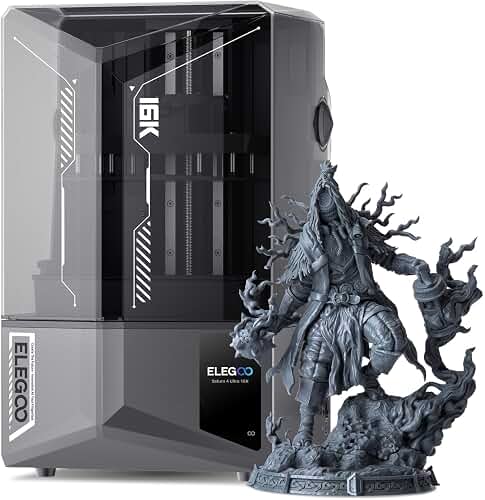
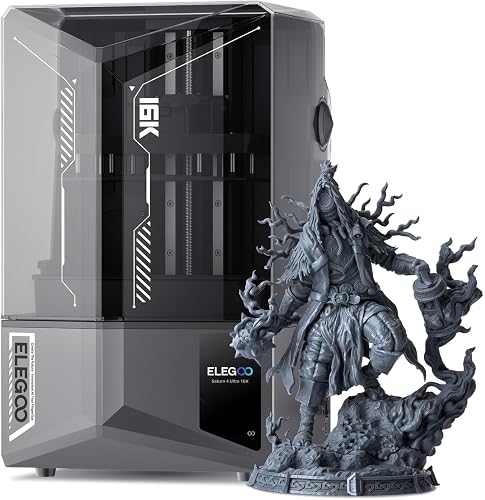
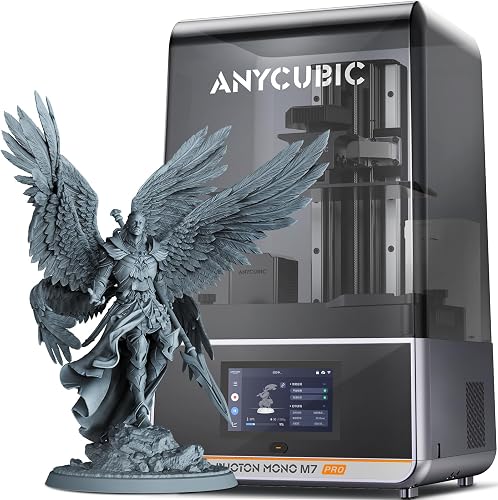
What makes the anycubic photon m7 pro vs elegoo saturn 4 ultra 16k dentists matchup interesting in 2026 is that they take opposite design philosophies. Anycubic packages the printer as an all-in-one appliance with a heated chamber, integrated resin handling, and an opinionated slicer. Elegoo pushes the spec sheet — higher pixel density, larger plate, faster exposure — and trusts the operator to dial in the workflow. Both approaches can produce clinically acceptable parts. They suit different practices.
The headline number — 16K versus 7K — is real but easy to overstate. At a working layer height of 50 microns for models and 25 microns for crowns, both printers resolve the geometry CAD asks for. The difference shows up at the margin: occlusal grooves, line angles on prep margins, and the underside of cantilevered pontics where pixel jaggies become visible after polishing. For surgical guides where the sleeve seat needs to be smooth and concentric, the Saturn 4 Ultra 16K has a measurable edge.
Accuracy on dental workloads
For the practical workloads dental clinicians actually run, the differences sort out like this:
- Study models and orthodontic models: Both printers comfortably hit the ADA-acceptable accuracy band of ±100 microns on full-arch parts. Time-to-print is closer than the spec sheet suggests because the Saturn 4 Ultra's tilt release lets it run shorter layer exposures, while the M7 Pro's heated vat keeps viscosity stable so exposure does not drift across a long print.
- Crown and bridge try-ins: The Saturn 4 Ultra 16K's finer pixel produces sharper internal fitting surfaces. With a validated crown resin and a 25-micron layer, margins seat with less chairside adjustment.
- Surgical guides: Both can produce clinically usable guides, but the Saturn's resolution helps the sleeve cylinder, and the M7 Pro's heated chamber helps dimensional stability across a long guide. Pick based on which failure mode you see more often in your current workflow.
- Splints and night guards: The M7 Pro's heated resin tank is a real advantage with the high-viscosity biocompatible splint resins, which print poorly below 25°C. The Saturn 4 Ultra can match it but requires a warm room or an aftermarket vat heater.
- Denture bases and teeth: Both work; this category is more about your resin choice and curing schedule than the printer.
Resin compatibility and regulatory considerations
This is where many buyers stumble. A printer is only as clinical-grade as the resin and workflow validated on it. Anycubic has invested in publishing profiles for the major Class I and Class IIa dental resins (BlueCast, NextDent, Senertek, Detax, Saremco), and the Photon Workshop slicer ships with these presets. Elegoo's Chitubox-native workflow has broad community support but fewer manufacturer-blessed presets specifically for the Saturn 4 Ultra 16K, meaning your first week with the printer will involve more exposure testing.
Neither printer is a registered medical device. Both are general-purpose MSLA printers that become part of a regulated workflow only when paired with a CE-marked or FDA-cleared resin and a validated post-processing protocol. If your practice operates in a jurisdiction that audits this — most EU countries, increasing US enforcement — your SOP, not the printer brand, is what regulators care about. Build the SOP around whichever printer is easier for your team to operate consistently.
Speed, throughput, and downtime
The Saturn 4 Ultra's tilt release is the single biggest throughput advantage in this comparison. On a full plate of eight quadrant models, the Saturn typically finishes 30–45% faster than the M7 Pro because peel force is lower per layer and exposure can be shorter. For a lab printing overnight batches, this changes daily capacity meaningfully.
The M7 Pro counters with less hands-on time per job. Auto-fill, the heated vat, and the resin-level sensor mean a technician can load a job, leave, and come back to a finished print without intermediate checks. If your bottleneck is staff hours, not machine hours, that matters more than raw print speed.
Post-processing matters more than print time
Both printers leave you with the same problem: a sticky model that needs washing, drying, and post-curing. A Saturn 4 Ultra paired with Elegoo's Mercury XS wash-and-cure or an M7 Pro paired with Anycubic's Wash & Cure 3 is the realistic single-vendor stack. Cross-vendor mixing works fine, but warranty and support get awkward if something goes wrong.
Plan for a dedicated post-processing bench with adequate ventilation, an alcohol or TPM wash, a drying step, and a UV cure chamber that hits both 405 nm and 365 nm. The cure schedule is resin-specific and almost always under-documented; expect to validate this yourself with a benchtop spectrophotometer or trust your resin supplier's published times.
Total cost of ownership
Headline price is similar, but TCO over three years splits along resin and consumable lines. The Saturn 4 Ultra's larger LCD is more expensive to replace when it eventually fails (typically 1500–2500 print hours). The M7 Pro's auto-fill ecosystem ties you to Anycubic-compatible resin packaging, which carries a small premium. For a practice doing 20–40 prints a month, expect $1500–$2500 a year in resin and consumables on either platform.
If you want a broader view of where these resin machines sit against the rest of the market, the best resin 3D printers roundup covers the full landscape including the higher-end Formlabs and SprintRay options many dental practices end up comparing against.
Which dentists should buy which
Choose the Anycubic Photon M7 Pro if
You are a solo clinician or a small practice running 5–20 prints a week, your staff has limited 3D-printing experience, and you want the printer to behave like an appliance rather than a research instrument. The heated vat, auto-fill, and dental-validated resin profiles will save you days of trial-and-error. The M7 Pro is also the right call if your workflow is dominated by splints, night guards, or high-viscosity biocompatible resins that benefit from temperature control. For context on Anycubic's broader resin lineup and how the M7 Pro evolved from earlier generations, see our Anycubic Photon Mono M5s review.
Choose the Elegoo Saturn 4 Ultra 16K if
You run a dental lab, a multi-chair group practice, or any setting where throughput and margin sharpness on crowns and surgical guides drives revenue. The tilt-release mechanism, finer LCD, and faster per-layer cycle translate directly into more billable parts per shift. You should also be comfortable with Chitubox, exposure testing, and the maintenance discipline that comes with any high-resolution MSLA printer. For a sense of Elegoo's quality control and support patterns, the Elegoo Mars 4 Ultra review covers the same ecosystem at a smaller scale.
Buy both if
Many established labs run two printers anyway — one tuned for models and one tuned for crowns and guides. At the price points involved, this is often the right answer. Run the Saturn as your detail machine and the M7 Pro as your batch-and-go workhorse. Redundancy alone justifies the second unit when a chairside delivery is on the calendar.
Frequently Asked Questions
Is the Anycubic Photon M7 Pro or Elegoo Saturn 4 Ultra 16K better for printing dental crowns?
The Elegoo Saturn 4 Ultra 16K is better for crowns because its ~19-micron XY pixel resolves margins more cleanly than the M7 Pro's ~28-micron pixel. Pair it with a validated permanent crown resin and a 25-micron layer height for the best fit.
Can dentists use the Anycubic Photon M7 Pro for surgical guides without a separate dental printer?
Yes. The M7 Pro produces clinically acceptable surgical guides when paired with a Class IIa guide resin like NextDent SG or Detax Freeprint Splint 2.0. The heated vat helps dimensional stability across long arches, though the Saturn's higher resolution gives sharper sleeve seats.
What resins are validated on the Elegoo Saturn 4 Ultra 16K for dental use?
As of 2026, Elegoo publishes presets for several third-party dental resins, but the validated list is shorter than Anycubic's. Most major brands (BlueCast, Senertek, Saremco) work, but expect to run your own exposure tests rather than relying on a turn-key preset.
How much faster is the Saturn 4 Ultra 16K versus the Photon M7 Pro on a full plate of dental models?
On a full plate of eight quadrant models at 50-micron layers, the Saturn 4 Ultra typically finishes 30–45% faster thanks to its tilt-release mechanism and lower per-layer exposure. A 4-hour Anycubic job often runs in under 2.5 hours on the Elegoo.
Do I need a heated resin vat for dental printing?
For most model and crown resins printed in a room kept above 22°C, no. For high-viscosity splint, denture base, and indirect bonding resins, a heated vat genuinely helps. This is the M7 Pro's biggest workflow advantage; on the Saturn, an aftermarket vat heater or a warmer print room is the workaround.
Are these resin printers a good first 3D printer for a dental office?
If the office has no prior 3D-printing experience, the M7 Pro is the gentler entry because the integrated workflow hides more of the complexity. If you are weighing resin against an FDM machine for non-clinical models or fixtures, our FDM vs resin 3D printer guide explains which category fits which task.
What is the realistic monthly running cost for a dental practice?
Plan for $120–$200 a month in resin for a practice running 20–40 prints a month, plus FEP film, isopropyl alcohol or TPM, and gloves. LCD replacement amortizes to roughly $15–$30 a month over the panel's life. For broader purchasing context including post-processing equipment, the 3D printer buying guide covers the full stack.
The bottom line
Both printers are clinically capable in 2026, and either one will pay for itself inside the first quarter of regular use in a dental setting. The choice is really about which constraint your practice has more of. Tight on staff time, limited 3D-printing experience, or working with high-viscosity biocompatible resins? Buy the Anycubic Photon M7 Pro. Maximizing throughput on a busy lab schedule, prioritizing crown margin sharpness, or already comfortable with Chitubox-based workflows? Buy the Elegoo Saturn 4 Ultra 16K. The anycubic photon m7 pro vs elegoo saturn 4 ultra 16k dentists decision is not about which printer is better — both are excellent — but about which one removes the bottleneck you actually have.
Key Takeaways
- Choosing the right anycubic photon m7 pro vs elegoo saturn 4 ultra 16k dentists means matching the key features to your specific needs and budget
- Read real customer reviews and check the return policy before you commit
- Also covers: m7 pro vs saturn 4 ultra 16k dental models
- Also covers: best 16k resin printer for ortho models
- Also covers: photon m7 pro dental workflow review
- Compare value across models — the priciest option is not always the best fit