Disclosure: As an Amazon Associate we earn from qualifying purchases.
If you're hunting for the best 3d printer for cookie cutter business under 500 dollars in 2026, the short answer is: pick a fast, reliable bed-slinger or CoreXY machine with a build volume of at least 220 × 220 mm, a flexible PEI-coated build plate, and a heated bed that handles PETG cleanly. For most kitchen-table cookie cutter operations, the Bambu Lab A1, Bambu Lab A1 Mini, and Creality Ender-3 V3 SE all land under $500, print food-safe-adjacent PETG quickly, and survive long batch runs without constant tuning. Below we break down what actually matters when your printer is paying the bills.
Why cookie cutter printing is a perfect under-$500 side hustle
Cookie cutters are arguably the ideal first product for a hobbyist-turned-entrepreneur. Each cutter uses pennies of filament, prints in 20-60 minutes, ships flat in a bubble mailer, and commands $6-$15 retail on Etsy or at local craft fairs. You don't need a $2,000 machine to start — you need a dependable workhorse that can chew through dozens of small parts a day with minimal babysitting. That's exactly the sweet spot the sub-$500 printer market now serves better than it ever has.
The big shift since 2024 is that fast, auto-calibrating printers have dropped below the $500 ceiling. You no longer have to choose between affordability and the speed needed to fulfill a holiday rush. If you're brand new to the hobby, our best 3D printers for beginners guide covers the broader landscape, but the picks below are tuned specifically for someone running a small batch-production operation.
What actually matters when choosing the best 3d printer for cookie cutter business under 500
Forget marketing specs for a second. When your printer is a revenue-generating tool, five things matter more than anything else:
- Build volume: 220 × 220 mm is the practical minimum. It lets you nest 12-20 cutters per plate and knock out a full Etsy order in one print.
- Print speed: Look for real-world speeds of 200-500 mm/s with proper input shaping. Marketing numbers lie; look for input shaping or resonance compensation as a feature.
- Auto bed leveling and flow calibration: Manual leveling steals hours per week. Auto features mean you press print and walk away.
- Flexible PEI build plate: Cookie cutters have thin walls and tall, narrow geometry. They need to stick during printing and pop off easily after. PEI sheets do both.
- Reliable extruder for PETG: PETG is the de facto cookie-cutter material because it's tough, dishwasher-tolerant, and considered food-contact-safe in single-use applications. Your extruder needs to handle it without heat-creep clogs.
Resolution and exotic features like multi-color printing are nice-to-haves, not requirements. A single-color PETG cutter in a fun shape sells the same as a fancier one, and at higher margin. If you want to dig deeper into specs before deciding, our 3D printer key features guide walks through every term you'll see on a product page.
Top picks under $500 for cookie cutter production in 2026
Below are the three machines we'd actually buy for this exact use case today. All three regularly sit below the $500 mark — sometimes well below — and all three have been battle-tested by Etsy sellers and small-batch printers.
Bambu Lab A1 — Best overall workhorse
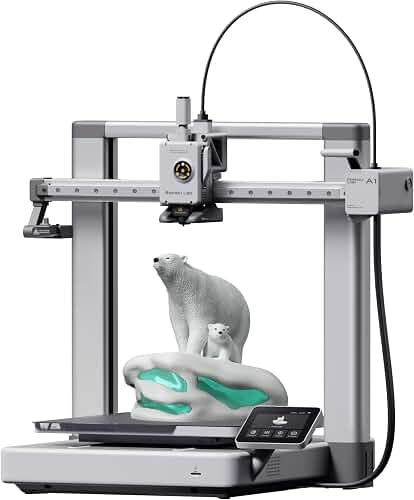
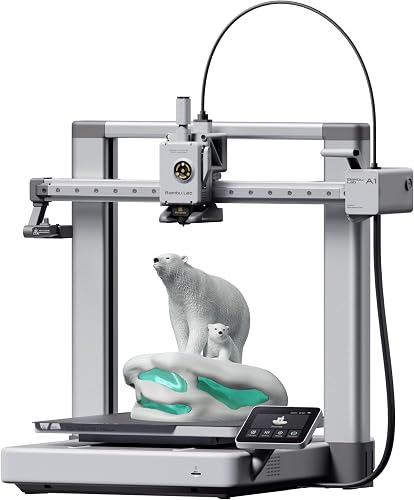
The Bambu Lab A1 is the printer most full-time cookie cutter sellers we've talked to are actually using. It's a 256 × 256 × 256 mm bed-slinger with full auto calibration, vibration compensation, and a textured PEI plate that releases cooled PETG with a satisfying snap. You can nest roughly 16-20 standard cutters per plate and finish a full plate in under two hours at draft-quality speeds. The included AMS Lite is overkill for single-color cutters, but if you ever want to do multi-color holiday designs, you'll already own the upgrade. Check the current price at Amazon — it often dips into the $400s during sales. Want a deeper look first? Read our full Bambu Lab A1 Mini review for the smaller-build sibling's perspective on print quality.
Comparison at a glance
| Printer | Build Volume | Max Speed | Auto-Level | Best For | Typical Price |
|---|---|---|---|---|---|
| Bambu Lab A1 | 256 × 256 × 256 mm | 500 mm/s | Full auto + flow | Highest output | $399-$479 |
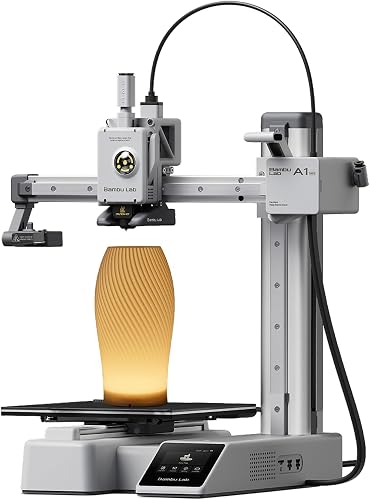
| Bambu Lab A1 Mini | 180 × 180 × 180 mm | 500 mm/s | Full auto + flow | Small-space sellers | $249-$299 |
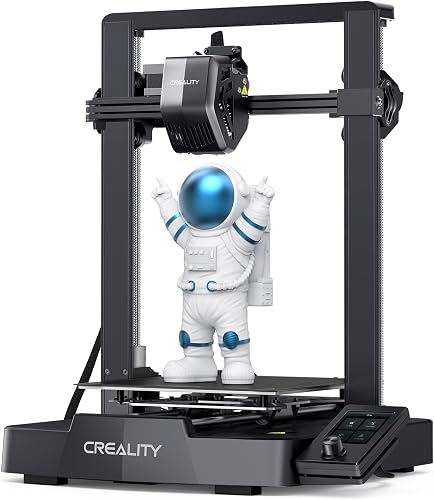
| Creality Ender-3 V3 SE | 220 × 220 × 250 mm | 250 mm/s | Auto bed-level | Tightest budgets | $179-$229 |
Bambu Lab A1 Mini — Best for tight spaces and small cutters
If you're working from a kitchen counter or have no plans to make oversized novelty cutters, the A1 Mini is the smartest spend in 3D printing right now. The 180 × 180 mm bed still fits 8-12 cutters per print, the auto-calibration is identical to its bigger brother, and it's small enough to live on a shelf when not in use. At its typical $299 price point, it pays for itself in roughly 40-60 cutter sales. Grab it on Amazon. The trade-off versus the full A1 is just build volume — print quality and speed are essentially indistinguishable.
Creality Ender-3 V3 SE — Best budget tinkerer pick
If your budget is closer to $200 than $500, the Ender-3 V3 SE remains a remarkable deal. You get a 220 × 220 × 250 mm build volume, a direct-drive Sprite extruder that handles PETG well, automatic bed leveling, and speeds up to 250 mm/s. It's louder and requires a bit more hands-on attention than the Bambu machines, but the cost savings let you buy a second unit later and parallelize production. Our complete Creality Ender-3 V3 SE review covers the quirks worth knowing about. Pick one up on Amazon.
Filament: the real make-or-break for cookie cutter prints
The most overlooked decision when starting a cookie cutter business isn't the printer — it's the filament. Use the wrong material and your cutters warp, crack on first use, or worse, leach in the dishwasher. The industry standard is PETG. It's tough, semi-flexible (so it won't snap when pressed into dough), dishwasher-safe at reasonable temperatures, and most major brands are made from FDA-grade pellets. Avoid PLA for anything sold commercially — it warps in hot kitchens and degrades when washed.
Budget roughly $20-$30 per 1 kg spool of food-grade PETG, and expect 80-150 small cutters per spool depending on size. A single spool of PETG will, in most cases, fully cover the cost of an Ender-3 V3 SE within a couple of busy weekends at a craft fair.
The unit economics: how fast does a sub-$500 printer pay for itself?
Let's run quick math on the Bambu Lab A1 at a $429 street price. A typical 3-inch cookie cutter uses about 8 grams of PETG (roughly $0.20 in material), takes 25-35 minutes to print at standard quality, and sells for $8-$12 on Etsy. Even after Etsy fees and shipping supplies, you're netting roughly $5 per cutter. That means the A1 pays itself off in around 85 cutter sales — achievable in a single strong holiday weekend for many sellers. Power costs are negligible: these machines draw 80-150 watts during printing, or roughly $0.02 of electricity per print.
The biggest cost most new sellers underestimate is shipping mailers, polybags, and printed business cards — budget another $40-$60 for your initial supply. Time is the variable that varies most. Plan for roughly 10-15 minutes of post-processing per plate (removing brims, light deburring, packaging), regardless of which printer you choose.
Setup, slicing, and getting cookie cutters to print cleanly
Cookie cutters are deceptively tricky to slice. The walls are thin (typically 0.8-1.2 mm), tall (15-25 mm), and the geometry can include sharp inside corners. A few slicer settings will save you hours of failed prints:
- Set wall count to 2 or 3 and infill to 0% — the walls are the part.
- Use a 0.4 mm nozzle with 0.2 mm layer height for the best speed-to-quality balance.
- Add a 5 mm brim on every cutter to prevent corner lift, especially with PETG.
- Lower part cooling to roughly 50% for the first 5 layers, then ramp up. PETG hates aggressive early cooling.
- If you have an enclosed printer, leave the door cracked open. PETG warps less in cooler ambient air.
If you're brand new to slicing or have never leveled a bed before, walk through our how-to-level-3d-printer-bed walkthrough first — auto-leveling printers still benefit from one manual nudge before their first job.
One printer or two? Scaling up without overspending
A common mistake new cookie cutter sellers make is spending their entire $500 budget on a single premium printer. In many cases, two Ender-3 V3 SEs (roughly $360-$400 total) will out-produce a single Bambu A1 simply because they're printing in parallel. The downside is double the maintenance and double the failure surface area. If you're a hands-off operator, one A1 wins. If you don't mind tinkering and value raw throughput, two budget machines win.
For a wider look at where your money goes at different price points, our 3D printer budget guide compares sub-$300, sub-$500, and sub-$1000 tiers head-to-head.
Frequently Asked Questions
Is the best 3d printer for cookie cutter business under 500 dollars actually good enough for selling?
Yes. The current generation of sub-$500 printers — particularly the Bambu Lab A1 and A1 Mini — produces print quality that's effectively indistinguishable from machines twice the price for simple, single-color geometric shapes like cookie cutters. The visible layer lines on a cutter are below what a customer notices, and the structural integrity from PETG is well within what's needed for repeated dough use.
What filament is safe for 3D printed cookie cutters?
PETG made from FDA-compliant pellets is the de facto standard. It's tough, dishwasher-tolerant up to about 60°C, and doesn't degrade when contacted with raw dough. PLA can be used as a starter material but degrades in warm or wet environments and isn't recommended for products you sell. Always disclose to customers that 3D-printed items have microscopic crevices and should be hand-washed in warm soapy water for best longevity.
How many cookie cutters can I print in a day on a sub-$500 printer?
On a Bambu Lab A1 with a full 256 mm plate, you can realistically print 16-20 medium cutters in 90-120 minutes, meaning 8-10 full plates in a 16-hour day, or 130-200 cutters per day if you're swapping plates promptly. Most sellers run 1-3 plates per day around their regular jobs, which still produces plenty of inventory for a small Etsy store or weekend market booth.
Do I need an enclosure for printing cookie cutters?
Not for PETG, no. PETG prints fine in open-frame printers like the A1 or Ender-3 V3 SE. An enclosure becomes important only if you move on to ABS or ASA — materials that are stronger and more heat-tolerant but rarely needed for cookie cutters. If you do later want an enclosed machine, our best enclosed 3D printers guide covers the affordable options.
Can I design my own cookie cutters or do I have to buy files?
Both work. Free tools like Cookiecad and MakerWorld's cookie cutter generator let you upload an image and download a printable STL in seconds — perfect for custom logo or character cutters. For original designs, Tinkercad and Fusion 360 handle the job for free. Many top Etsy sellers offer custom designs as their highest-margin product because customers pay a premium for personalized shapes.
How long does a 3D printed cookie cutter actually last?
A well-printed PETG cutter, hand-washed and stored dry, will last for years of regular home use — easily hundreds of bakes. Dishwasher use shortens lifespan to roughly 50-100 cycles before the layers begin to separate. This is worth communicating in your product listings to set realistic expectations and reduce returns.
Is it worth upgrading from a sub-$500 printer once the business grows?
Eventually, yes — but probably not in the direction you'd guess. Most successful cookie cutter sellers don't upgrade to a single fancier machine; they add a second or third identical sub-$500 printer to multiply output. Identical machines mean identical profiles, identical filament behavior, and no relearning. Reinvest profits in machine count before chasing premium specs.
Key Takeaways
- Choosing the right best 3d printer for cookie cutter business under 500 means matching the key features to your specific needs and budget
- Read real customer reviews and check the return policy before you commit
- Also covers: cheap 3d printer for selling cookie cutters
- Also covers: food safe filament cookie cutter printer
- Also covers: etsy cookie cutter shop printer
- Compare value across models — the priciest option is not always the best fit