Disclosure: As an Amazon Associate we earn from qualifying purchases.
For Etsy sellers focused on articulated dragons, the best 3d printer for etsy articulated dragons is an enclosed FDM machine with high speed, reliable bed adhesion, and a build volume around 256x256mm. Articulated dragon models from creators like Cinderwing3D, McGybeer, and Flexi Factory print in one piece with built-in joints, so consistency and minimal supports matter more than ultra-fine resin detail. In 2026, CoreXY printers with multi-color AMS support dominate this niche thanks to sub-20-minute layer times, but reliable Cartesian and budget machines also serve sellers well depending on volume, color complexity, and starting budget.
Why articulated dragons demand a specific kind of 3D printer
Articulated dragons are unlike most printed products on Etsy. A typical model is printed in-place with all joints already assembled inside the geometry. That means the printer must hold tolerances of 0.2mm or tighter throughout an 8-to-20 hour print, recover gracefully from minor flow inconsistencies, and produce smooth surfaces that don't fuse the joints together. A single failed layer at hour 10 isn't a wasted afternoon for a hobbyist—it's an unsellable unit, lost filament, and lost listing momentum. The right machine minimizes that risk while squeezing out enough units per week to justify the listing price.
Key features to prioritize for dragon production
Print speed and throughput
A medium articulated dragon at 0.2mm layers takes 6-10 hours on a 2026-era CoreXY printer running 250-500mm/s effective speeds. The same model on a 60mm/s Bowden machine from 2022 runs 20+ hours. If your Etsy shop sells $25-$45 dragons and you ship 30-50 per month, the math on speed is brutal: a faster printer pays for itself in 2-3 months. Look for machines with input shaping, pressure advance, Klipper-grade firmware, and a rigid CoreXY or H-bot frame. Bedslingers can still work, but their Y-axis vibration tends to leave artifacts that buyers notice on a dragon's back ridges.
Bed size and Z-height
The default 220x220mm bed of older Enders is too small for the larger dragon models that command $50+ prices. A 256x256mm bed lets you fit two medium dragons per plate or one extra-large dragon diagonally. Z-height of 250mm+ helps when buyers request scaled-up versions. If you plan to print baby dragons in batches, a 256mm bed comfortably holds 6-9 small models at once, which is the kind of throughput that turns a side hustle into a real revenue line.
Multi-color and multi-material capability
This is where Etsy dragon listings have shifted hard since 2024. Solid-color dragons still sell, but multi-color and dual-tone gradient dragons command 40-60% premium pricing. An automatic material system that handles four filaments lets you print belly-and-back two-tone dragons, painted-look hybrids, and color-matched custom orders without manual filament swaps. The trade-off is filament waste during purges—budget 20-30g of waste per color change, which adds up across a farm.
Reliability and unattended operation
Etsy dragons usually print overnight or while you're at your day job. The printer needs spaghetti detection, filament runout sensors, power-loss recovery, and ideally an onboard camera so you can monitor from your phone. Enclosed printers also reduce drafts that cause warping on long prints—important for the dragon's tail tip and wing edges. Our roundup of best enclosed 3D printers covers the chamber options worth considering.
Filament flexibility
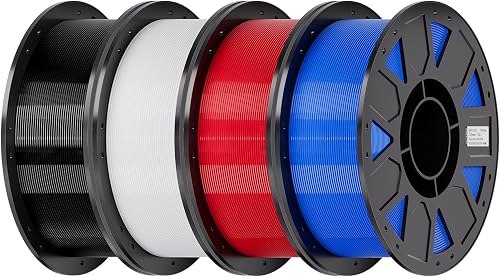
Most articulated dragons print best in PLA or PLA+, but premium buyers increasingly request silk PLA, dual-color coextruded filaments, and matte PLA finishes. Make sure your printer's hotend and extruder handle these without grinding. A hardened nozzle is worth it if you're running glow-in-the-dark or carbon-fiber filaments, both of which chew through brass nozzles in weeks.
FDM vs resin for print-in-place dragons
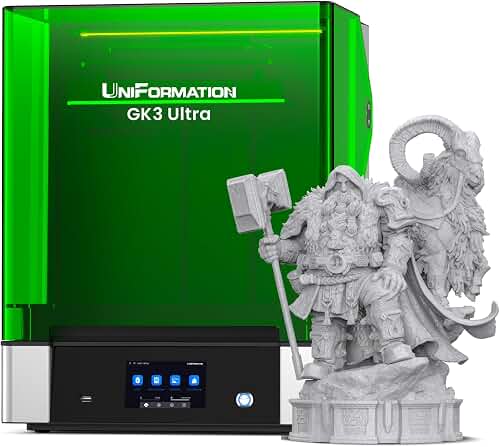
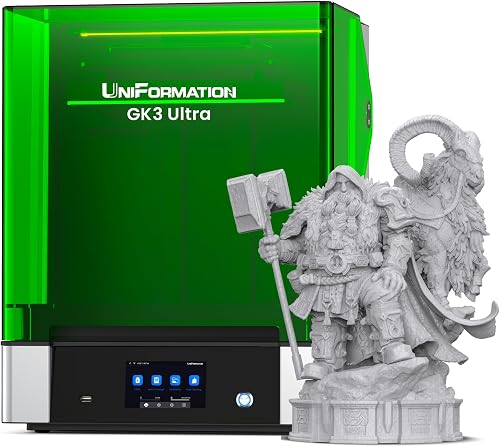
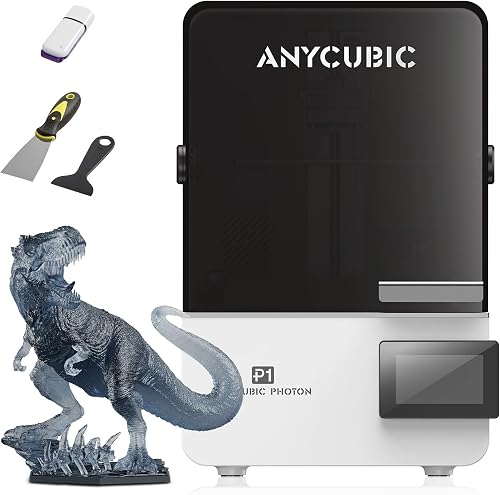
Resin printers produce stunning detail but they're the wrong tool for articulated dragons. Print-in-place joints in resin tend to weld solid because uncured resin pools inside the joint gaps. The post-processing—washing, curing, removing supports from every joint—makes resin economically impossible at Etsy production scale. FDM is the correct technology here: the joints come off the build plate already articulating, requiring zero finishing. If you also want to sell painted miniatures or busts alongside dragons, a separate resin printer makes sense, but for the dragon line itself, FDM wins. For deeper context on the tradeoffs, see our FDM vs resin 3D printer guide.
Top printer categories for Etsy dragon sellers
When evaluating the best 3d printer for etsy articulated dragons, three categories cover almost every seller scenario. The right pick depends on whether you're optimizing for premium multi-color listings, long-running farm reliability, or maximum throughput per dollar.
The CoreXY speed kings
Enclosed CoreXY printers in the $700-$1,500 range are the dominant choice for serious Etsy dragon sellers in 2026. They combine fast print speeds, multi-color AMS support, enclosed chambers for consistent temperatures, and reliable auto-bed-leveling. Expect to print a medium dragon in 6-8 hours and run 3-4 prints per day per machine. Their major weakness is filament waste during color changes—if you only print single-color dragons, the AMS premium isn't worth it. Our best high-speed 3D printers roundup covers the leading options in this category.
The reliability workhorses
Open-frame Cartesian printers from established brands prioritize repeatability over peak speed. They print medium dragons in 8-12 hours but rarely fail mid-print, and their parts ecosystem plus community support make troubleshooting trivial. For sellers building a farm of 4-10 machines, the lower failure rate often beats raw speed because you can leave them unattended for longer stretches. Filament costs are also lower since there's no AMS purge waste to absorb on every color swap.
Budget farm builders
$250-$400 printers from 2026 are dramatically better than the same price tier from 2023. With input shaping, auto-leveling, and 300mm/s capable hotends, even budget machines can produce sellable dragons. The trade-offs are louder fans, less polished slicer profiles, and more user tuning. For sellers willing to run four to six budget machines instead of one premium machine, the total throughput per dollar can be very favorable. Read our 3D printer budget guide for current entry-level picks.
Filament choices that sell on Etsy
Standard PLA is the foundation—reliable, low-warp, and widely available in saturated colors. For dragon listings specifically, three filaments outperform on conversion rate. Silk PLA gives dragons a metallic, almost reptilian sheen that photographs beautifully on Etsy listing thumbnails; greens, purples, and copper tones sell fastest. Matte PLA hides layer lines and looks more like cast resin, which premium buyers prefer for display-quality pieces. Glow-in-the-dark PLA commands the highest premium of any single-color filament—parents buying for kids will pay $50-$70 for a glow dragon that costs $4 in filament. Multi-color dual-extruded silk filaments produce gradient effects without an AMS, useful for budget setups. For background on PLA selection, see our guide to PLA filament.
Scaling from one printer to a farm
The natural progression for a successful dragon shop is one printer to three to a small farm. Plan for this from the start. Pick a printer brand and model with strong availability of consumables—nozzles, hotends, build plates—and a slicer profile you trust. Switching brands mid-farm means relearning slicer settings and dealing with subtle dimensional differences between printers, headaches that compound when you're trying to ship 100+ dragons per month.
Space planning matters too. Each enclosed CoreXY printer needs roughly 2 square feet of bench space plus 1 foot of clearance behind for filament feeding. A four-printer farm in a spare bedroom or garage corner can produce 12-16 dragons per day at full utilization. Power draw is modest—most printers pull 100-300W during printing—but ventilation for fume management becomes important when running multiple machines for hours.
Track your costs honestly. Filament at $20/kg yields 25-50 medium dragons per kilo depending on size and infill. Electricity adds $0.05-$0.15 per dragon. Build plate wear, occasional nozzle replacements, and the AMS purge waste add up to roughly $0.50-$1.50 per dragon in consumables. Etsy fees take 6.5% plus listing and payment processing. After all that, a $35 dragon nets $20-$25, and that's the number that justifies the printer investment.
Frequently Asked Questions
What is the best 3d printer for etsy articulated dragons in 2026?
For most Etsy sellers, an enclosed CoreXY printer with AMS in the $700-$1,500 range hits the right balance of speed, multi-color capability, and reliability. If you only print single-color dragons, a $300-$500 high-speed Cartesian printer offers better dollars-per-dragon economics. The right choice depends on whether your listings emphasize multi-color premium pieces or volume single-color production.
Can I print articulated dragons on a resin printer?
Technically yes, but it's a poor business choice. The uncured resin pools inside the joint gaps during printing, and the wash-and-cure post-processing dramatically increases per-unit labor. Most successful Etsy dragon sellers reserve resin printers for detailed miniatures and busts, and use FDM for articulated print-in-place models.
How long does it take to print one articulated dragon?
A medium articulated dragon around 200mm long prints in 6-10 hours on a 2026-era high-speed FDM printer at 0.2mm layer height. Small dragons run 2-4 hours; large display dragons can take 18-24 hours. Speed depends heavily on the printer's acceleration limits and your slicer's quality settings, plus whether you're running multi-color which adds purge time per layer.
Do I need an AMS or multi-color system to sell dragons on Etsy?
You don't need it to start, but multi-color dragons consistently outsell single-color listings at higher price points. If you're testing the market with your first printer, begin single-color and reinvest profits into a multi-color upgrade. If sales prove out, prioritize AMS or a multi-material setup on your next machine to unlock premium pricing tiers.
What filament works best for articulated dragon prints?
Standard PLA and PLA+ from reputable brands give the best balance of print reliability, joint flexibility, and color saturation. Silk PLA elevates premium listings, and glow-in-the-dark PLA commands the highest single-color premiums. Avoid PETG and TPU for full dragons—PETG fuses joints together because of its stringy nature, and TPU is too floppy to feel like a satisfying articulated toy.
Is a Bambu Lab printer or a Prusa better for Etsy dragon production?
Bambu Lab printers print faster and integrate AMS multi-color natively, which suits volume sellers and multi-color premium listings. Prusa printers offer best-in-class long-term reliability and excellent community support, which suits sellers planning to run a 4+ printer farm with minimal downtime. Both will produce sellable dragons; the choice usually comes down to whether you prioritize speed or longevity.
How much can I realistically earn selling articulated dragons on Etsy?
With one fast printer running 12-16 hours a day, a focused dragon-only shop can ship 60-90 dragons per month at $25-$45 each, netting roughly $1,200-$2,500 monthly after fees and filament. Scaling to a three-printer farm typically triples that, though listing competition and SEO matter as much as production capacity—high-quality photos and unique color combinations drive the conversion rate that justifies the throughput.
Key Takeaways
- Choosing the right best 3d printer for etsy articulated dragons means matching the key features to your specific needs and budget
- Read real customer reviews and check the return policy before you commit
- Also covers: 3d printer for etsy sellers
- Also covers: articulated print 3d printer
- Also covers: etsy fidget toy printer
- Compare value across models — the priciest option is not always the best fit