Disclosure: As an Amazon Associate we earn from qualifying purchases.
If you're hunting for the best 3d printer for airsoft magazine base plates and grips, you need a machine that handles tough engineering-grade filaments like nylon, PETG, ABS and PA-CF, prints fine threads and snap-fit details cleanly, and offers a build volume of at least 220 x 220 x 250 mm so you can batch parts. In 2026, the sweet spot is a sub-$1,000 enclosed CoreXY FDM printer with a hardened steel nozzle, a heated bed that hits 100°C+, and an all-metal hotend rated to 300°C. That combo lets you print magwell base plates, M4/AK grip panels, and AAP-01 / Hi-Capa furniture that survive recoil, drop tests and field abuse.
Airsoft parts are not decorative cosplay props. A base plate seats a spring under constant load. A grip panel gets gripped, slammed into walls, and exposed to UV, gun oil and silicone spray. The wrong printer or filament will give you a part that cracks on the first reload. Below we break down exactly what specs matter, which materials to choose, and which 3D printers in 2026 actually deliver airsoft-grade results.
What Makes a 3D Printer Good for Airsoft Parts?
Most beginner FDM machines can squeeze out a PLA base plate that looks fine on the bench, but airsoft parts have specific mechanical demands. When evaluating the best 3d printer for airsoft magazine base plates and grips, focus on these five capabilities:
Best Filaments for Airsoft Magazine Base Plates and Grips
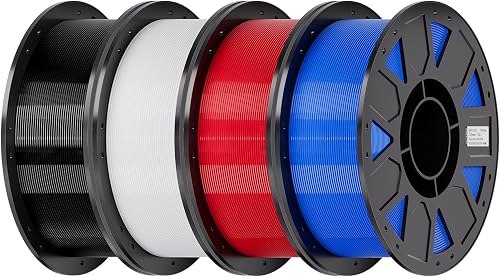
The printer is half the equation. The filament is the other half. Here's how the popular materials stack up for airsoft-specific work in 2026:
| Filament | Strength | Impact Resistance | Print Difficulty | Best Use |
|---|---|---|---|---|
| PLA / PLA+ | Medium | Low (brittle) | Easy | Prototyping only |
| PETG | Medium-High | Medium | Easy-Medium | Base plates, mag followers |
| ABS / ASA | High | High | Medium-Hard | Grips, weatherproof parts |
| Nylon (PA6/PA12) | Very High | Very High | Hard | Stress-bearing baseplates |
| PA-CF / PETG-CF | Extreme | High | Hard | OEM-grade grip panels |
| TPU 95A | Low (flexible) | Extreme | Medium | Grip overmolds, butt pads |
- High-temperature hotend (260°C minimum, 300°C ideal): Required for nylon, PA-CF, PETG-CF, ASA and ABS — the filaments that actually hold up to airsoft stress.
- Heated bed to 100°C+ with a textured PEI sheet: Prevents warping on long, flat base plates and gives grip panels a satisfying matte finish that mimics OEM polymer.
- Hardened steel nozzle: Carbon-fiber-reinforced filament chews up brass nozzles in hours. A hardened steel or ruby-tipped 0.4 mm or 0.6 mm nozzle is mandatory.
- Enclosed chamber: ABS, ASA and nylon all warp badly in open-frame printers. An enclosure stabilizes chamber temperature so a 200 mm magazine baseplate prints with flat geometry.
- Direct-drive extruder: Flexible TPU grip overmolds and stippled grip textures print far cleaner with a direct-drive setup than a Bowden system.
Anything missing from that list and you'll either fight the print or fight the part after it's installed in your gun.
For most airsofters, the practical sweet spot is PETG for base plates and ASA or PA-CF for grip panels. PETG handles spring tension and impact better than PLA without needing an enclosure, while ASA gives a polymer-frame-style finish that resists UV bleaching during summer skirmishes. PA-CF is the endgame — it costs more, prints harder, but produces parts that are nearly indistinguishable from factory furniture.
Top 3D Printer Recommendations for Airsoft Builders in 2026
Bambu Lab P1S — Best Overall for Airsoft Parts
The Bambu Lab P1S remains the strongest recommendation for serious airsoft builders in 2026. Its fully enclosed CoreXY frame holds a stable chamber temperature, which is critical when printing ABS or ASA grip panels that would warp on an open-frame printer. The hardened steel hotend handles PA-CF and PETG-CF natively, and the 256 x 256 x 256 mm build volume is large enough to lay down several Hi-Capa baseplates or a full pair of M4 grip panels per print. Auto-bed leveling, vibration compensation and an active carbon filter for ABS fumes round out the package. If you can only own one printer for airsoft work, this is it. See our full Bambu Lab P1S review for benchmarks and torture tests.
Prusa MK4S — Best for Tinkerers and Long-Term Reliability
If you'd rather own a printer for the next decade than chase the latest CoreXY release, the Prusa MK4S is the workhorse choice. Its Nextruder direct-drive extruder handles flexible TPU grip wraps and stippled overmolds cleanly, and Prusa's high-temperature hotend reaches 300°C for nylon and carbon-fiber blends. With an optional enclosure, the MK4S becomes a fully capable ABS and ASA platform. Print quality on small details like checkered grip texture and witness-hole markings is genuinely class-leading. Full breakdown in our Prusa MK4S review.
Bambu Lab A1 Mini — Best Budget Option for Small Parts
If you only need to print baseplates and small grip panels for pistols like the AAP-01, Glock-style replicas or Hi-Capa frames, the A1 Mini's 180 x 180 x 180 mm volume is enough. It's not enclosed, so ABS is off the table, but it handles PETG and PLA+ beautifully and costs a fraction of a P1S. Pair it with quality PETG and you'll produce serviceable base plates all weekend long.
Bambu Lab X1 Carbon ‐ Best No-Compromise Choice
For airsoft tech shops, content creators and hobbyists who want absolute best-in-class results, the X1 Carbon adds a lidar scanner, dual auto-bed leveling and a fully heated chamber option. It eats PA-CF for breakfast and produces grip panels with stippling so crisp they could pass for factory polymer. Read more in our Bambu Lab X1 Carbon review.
How to Set Up Your Printer for Airsoft Parts
Even the best 3d printer for airsoft magazine base plates and grips needs the right slicer settings. Here's a starting profile that has worked across hundreds of community-shared airsoft STL files:
- Layer height: 0.16 mm for base plates, 0.20 mm for grip panels. Thinner layers expose grip texture more cleanly.
- Walls / perimeters: 4-5. Airsoft parts fail along weak walls, not weak infill.
- Infill: 40-60% gyroid. Gyroid distributes impact load in all directions, ideal for parts that get slammed against rocks during low-ready drills.
- Print orientation: Lay base plates flat. Print grip panels standing up with the curved face away from the bed and use tree supports.
- Brim: 5 mm for ABS/ASA, none for PETG.
- Cooling: 30-40% for PETG, 0-20% for ABS/ASA/PA-CF.
If you're new to dialing in profiles, our 3D printer buying guide and how to choose a 3D printer articles walk through bed leveling, slicer basics and material handling end-to-end.
Build Volume: How Much Do You Really Need?
A Hi-Capa baseplate is roughly 32 x 25 x 10 mm. An M4 magwell baseplate sits closer to 75 x 25 x 12 mm. Standard AR-15 grip panels are around 110 x 80 mm. None of these individually demand a large printer, but if you want to batch eight base plates per print run, you'll appreciate a 220 mm or larger bed. For most airsoft work, a 220 x 220 x 250 mm bed is the comfortable minimum, and 256 x 256 x 256 mm gives you headroom for fore-grips, stock cheek risers and rail-mounted accessories.
Should You Use Resin Instead?
Resin (MSLA) printers produce stunning fine detail but make terrible airsoft parts. Standard photopolymer resin is brittle — a Hi-Capa baseplate printed in standard resin will shatter the first time you slam the mag home. Tough or engineering resins close the gap but still trail PETG and nylon for impact resistance, and they cost two to three times as much per part. Stick with FDM for functional airsoft components and reserve resin for cosmetic items like helmet badges, NVG dummies and patch holders.
Cost Breakdown: Getting Started in 2026
Here's a realistic budget to start printing airsoft parts at home:
- Printer: $300-$800 (Bambu A1 Mini to P1S)
- Two spools of PETG: $40
- One spool of ASA or PA-CF: $35-$70
- Hardened steel 0.4 mm nozzle: $15
- Calipers and basic tools: $30
Total entry cost lands between $420 and $955. Compared to buying aftermarket polymer baseplates at $12-$25 each and custom grips at $40-$90 each, the printer pays for itself within two or three loadouts.
Frequently Asked Questions
Can I print airsoft magazine base plates in PLA?
Technically yes, but you shouldn't rely on it. PLA is rigid and brittle, and the constant spring pressure of a loaded magazine plus drops onto hard ground will crack a PLA baseplate within a few games. PLA+ formulations last longer, but PETG is the minimum recommended material for any structural airsoft part. Save PLA for fit-test prototypes only.
What infill percentage is best for airsoft grip panels?
Use 40-60% gyroid infill for grip panels and 50-70% for base plates. Gyroid distributes load in all three axes, which matters when a grip gets slammed against cover. Going above 70% rarely helps and just wastes filament and print time — once you reach that density, perimeter count matters more than infill.
Do I need an enclosed 3D printer to make airsoft parts?
You don't strictly need one for PETG, but for ABS, ASA, nylon and PA-CF an enclosure is effectively mandatory. Without a stable chamber temperature, large flat parts like baseplates warp at the corners and grip panels develop layer-separation cracks. If you only print PETG, an open-frame machine works. If you want OEM-grade polymer parts, get an enclosure.
What nozzle size should I use for airsoft components?
A 0.4 mm hardened steel nozzle is the default and balances detail with print speed. For carbon-fiber-filled filaments, hardened steel or ruby is mandatory — CF particles destroy brass nozzles in hours. If you only print large baseplates without fine texture, a 0.6 mm nozzle nearly halves print time with minimal quality loss.
How long does it take to 3D print a magazine base plate?
A single Hi-Capa baseplate prints in roughly 35-50 minutes on a modern CoreXY printer at 0.16 mm layer height. M4 magwell baseplates take 60-90 minutes. Batching eight at once on a 256 mm bed runs around 4-5 hours total — far more efficient than printing them one at a time.
Will 3D printed parts hold up to airsoft gas pressure?
Base plates and grips don't see gas pressure directly — that's contained by the magazine shell and valve. Printed parts handle the spring tension, retention clip force and physical abuse from drops and reloads. As long as you choose PETG or better and use sufficient walls and infill, printed base plates routinely outlast cheap aftermarket polymer parts.
What's the difference between printing base plates and grips?
Base plates are flat, small, and need impact resistance for drops. Grips are larger, often curved, and need surface texture plus comfortable ergonomics. Base plates print fast and benefit from PETG. Grips reward the extra effort of printing ASA or PA-CF with stippled or checkered texture — they're the part of your kit you touch constantly, so finish quality matters more than raw strength.
Are 3D printed airsoft parts legal at most fields?
Functional accessories like base plates, grips, rail covers and stock pads are universally accepted. Replica suppressors, externally identifying parts and orange-tip modifications vary by jurisdiction and field rules — always check your local field's policy before showing up with a printed accessory that changes the gun's appearance.
Key Takeaways
- Choosing the right best 3d printer for airsoft magazine base plates and grips means matching the key features to your specific needs and budget
- Read real customer reviews and check the return policy before you commit
- Also covers: airsoft parts 3d printer
- Also covers: abs printer for airsoft grips
- Also covers: durable magazine base plate printer
- Compare value across models — the priciest option is not always the best fit