Disclosure: As an Amazon Associate we earn from qualifying purchases.
If you're hunting for the best 3d printer for custom action figure accessories and weapons, a high-resolution resin (MSLA) printer is almost always the right answer. Resin captures the tiny rivets, blade edges, holster details, and panel lines that 1:12 and 1:18 scale figures demand, while FDM struggles to reproduce sub-millimeter features without visible layer lines. For larger props like 1:6 scale rifles, helmets, or full diorama set dressing, a sharp FDM machine can complement your resin rig. Below we break down the resolution, build volume, slicer support, and material options that separate hobby toys from professional-grade kitbash arsenals in 2026.
Why Resin Wins for Tiny Accessories
Action figure customization lives or dies on detail. A 1:12 katana grip is roughly 3-4 mm wide; a 1:18 pistol slide is barely 6 mm long. At those dimensions, every micron of XY resolution shows up on the finished part. Modern 8K and 12K monochrome LCD resin printers hit 18-19 micron pixel pitch, which means crisp Picatinny rails, lettering on weapon receivers, and clean undercuts on holsters - features that simply cannot survive the 0.4 mm nozzle pass of a typical consumer FDM printer.
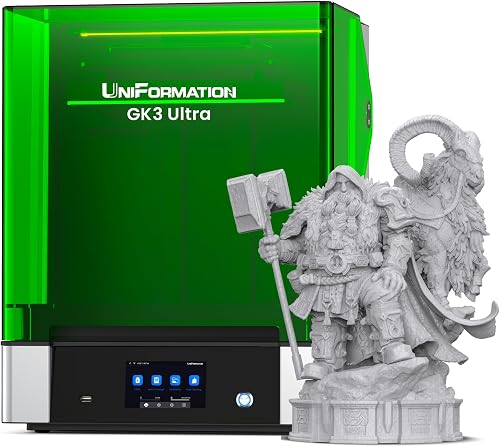
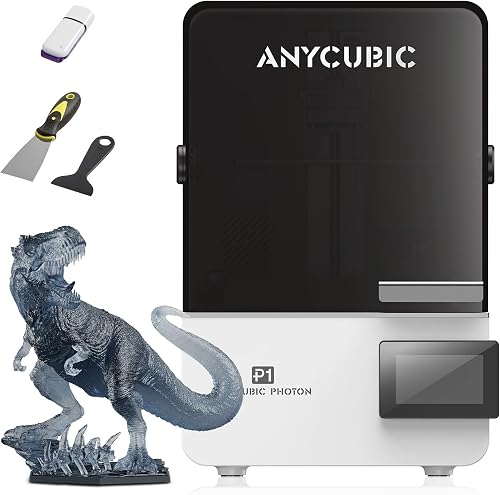
Resin's other advantage is isotropy. A printed katana blade or rifle barrel snapped sideways out of an FDM print will delaminate along layer lines; the same part in a tough resin behaves much more like injection-molded plastic. For accessories that get handled, swapped, and posed repeatedly, that strength matters as much as the surface finish. If you are still weighing the two technologies in general, our FDM vs resin 3D printer guide walks through the broader trade-offs.
Resin vs FDM: Side-by-Side for Figure Accessories
| Factor | Resin (MSLA) | FDM |
|---|---|---|
| Minimum usable detail | ~0.05 mm features | ~0.4 mm features |
| Surface finish | Near injection-mold smooth | Visible layer lines |
| Build volume (typical) | ~150 x 220 x 200 mm | ~220 x 220 x 250 mm and up |
| Best for | 1:12-1:18 weapons, hands, faces | 1:6 props, helmets, bases |
| Material strength | Brittle to tough (resin-dependent) | Tough across most filaments |
| Post-processing | Wash + UV cure required | Supports removed, optional sand |
| Mess factor | Gloves, ventilation, IPA | Low - clean filament workflow |
| Running cost | ~$0.10-0.30 per part | ~$0.05-0.15 per part |
Key Specs in the Best 3d Printer for Custom Action Figure Accessories and Weapons
Not every resin printer is built for thin, fragile geometry. When you scan spec sheets, ignore marketing speed claims and focus on the four numbers that actually predict whether a custom 1911, a power sword, or a sci-fi pulse rifle will print cleanly.
XY Resolution and LCD Generation
For 1:12 and smaller, target an 8K or 12K mono LCD with a pixel pitch of 19 microns or finer. That delivers clean trigger guards, scope reticles, and sword guard filigree without relying on anti-aliasing tricks. 4K machines still work for chunkier props, but you will see jaggies on lettering and engraved serial numbers.
Build Volume Sweet Spot
A plate around 200 x 130 x 200 mm fits a full battle loadout - rifle, sidearm, knife, magazines, and pouches - in a single batch print. Larger 10-13 inch plates exist if you also print 1:6 figure props or want to fill an entire plate with weapons for kit sales.
Z-Axis and Lift Speed
Linear rails and tilt-release systems matter when you are stacking dozens of skinny pistol barrels on the plate. Lift speeds of 60-100 mm/min keep batch prints under five hours, which means you can iterate a design same-day instead of waiting overnight.
Slicer Support
Chitubox, Lychee, and Voxeldance Tango all need to recognize the machine. Hollowing tools, auto-support presets tuned for thin weapons, and anti-aliasing are non-negotiable for clean barrels and bayonets. Closed-source slicers locked to one brand are a yellow flag if you plan to grow.
Printer Categories Worth Considering in 2026
There is no single best machine for every customizer - your budget, scale, and output volume drive the right pick. Here is how to think about each tier.
Best Overall: Mid-Range 12K Mono LCD Resin Printer
If you want one machine to handle 95% of your weapon and accessory needs, look at the current generation of ~10-inch 12K mono LCD machines. They hit 19 micron pixel pitch, ship with tilt-release or fast lift, and have mature slicer profiles. You can read our deeper take on one popular workhorse in this class in our Elegoo Mars 4 Ultra review.
Best Budget Resin Option
For under $300, entry-level 6K-8K mono LCD printers still produce sharper accessories than any consumer FDM. The trade-offs are a smaller plate, basic supports, and manual leveling. They are ideal for a hobbyist printing one or two custom guns per week and starting to learn the resin workflow.
Best High-Detail Option for Pro-Level Kitbashers
If you are selling kits at conventions or running a Patreon, step up to a 12K printer with linear rails. The improved resolution shows in 1:18 facial sculpts and microscopic engraving on sci-fi rifles. Our Anycubic Photon Mono M5s review covers what to expect at this tier and how the workflow scales for batch production.
Best FDM Complement for Larger Props
For 1:6 scale rifles, helmets, dioramas, and display stands, a fast CoreXY FDM with a 0.2 mm nozzle is hard to beat. See our Bambu Lab A1 Mini review for a compact FDM that pairs well with a resin printer on the same desk.
Don't Overlook Materials
Resin chemistry has changed more than the hardware over the last two years. For weapons that get handled, choose an ABS-like or tough resin - the part will flex rather than shatter when you knock a rifle barrel against a shelf. Water-washable resins shorten your post-processing, but they are slightly more brittle. For shelf-display-only pieces, standard or 8K-optimized resins capture the sharpest detail.
If you print weapons with translucent elements (energy swords, plasma rifles), look for resins designed specifically for clear or tinted output. Painting over them with Tamiya Clear lacquers gives convincing energy-weapon effects that hobbyists pay real money for.
Software and STL Sources
Your printer is half the battle - the other half is design files. Cults3D, MyMiniFactory, MakerWorld, and Patreon creators publish thousands of action figure scale weapon packs. Many are parametric, letting you scale a 1:6 design down to 1:12 without losing geometry. For original designs, Blender and Fusion 360 are the dominant tools in the custom action figure community.
Before slicing, hollow your weapons to save resin and reduce suction-cup failures during prints. A 1.5-2 mm wall thickness with a 2 mm drainage hole is the standard. Auto-support generators in Lychee Pro handle most accessories well, but always rotate barrels and blades at 30-45 degree angles to keep supports off the visible surfaces.
Print Settings That Make or Break Tiny Weapons
Even the best 3d printer for custom action figure accessories and weapons will fail if your settings are off. Start with a layer height of 0.03 mm for hero pieces and 0.05 mm for batch fodder. Exposure time depends on your resin, but the cured-thin-bar test (Cones of Calibration, RERF) takes ten minutes and saves dozens of failed prints. Add light-bleed compensation if your printer's slicer supports it - it shaves a few microns off the X/Y to keep trigger guards from welding shut.
Curing and Finishing
UV-cure with the part still wet (in water) to avoid warping skinny barrels. Don't over-cure: two to four minutes per side under a 405 nm station is usually enough. Once cured, prime with a thin Tamiya Fine Surface Primer or Stynylrez. Action figure accessories live or die on paint, and a smooth resin surface is the canvas that lets you nail metallics, weathering, and decals.
How an In-House Printer Compares to Print Services
If you only need a handful of weapons per year, a print-on-demand service like JLCPCB, Treatstock, or a local maker is cheaper than buying a printer. The break-even point is roughly 20-30 weapons depending on resin and labor. Past that, owning the machine pays off, especially if you want to iterate on a design or sell finished kits.
Workflow: From STL to Painted Weapon
A typical session looks like this: download or design the STL, scale to your figure line (1:12 = 0.5x most 1:6 files), hollow and add drains, auto-support and refine, slice with anti-aliasing at level 8, print overnight, wash in IPA or water depending on resin, UV-cure damp, snip supports with flush cutters, sand witness marks at 600/1200 grit, prime, paint, decal, seal. End to end you can deliver a museum-grade 1:12 sniper rifle in 24 hours.
Frequently Asked Questions
Is a resin or FDM printer better for 1:12 action figure weapons?
Resin. The detail required on 1:12 weapons - rivets, sights, trigger guards, engravings - is below the practical resolution of consumer FDM. A 12K mono LCD resin printer is the right tool. FDM is better reserved for larger 1:6 props, helmets, or display bases where 0.2 mm features look fine.
What is the smallest action figure weapon a resin printer can reliably produce?
Modern 8K-12K resin printers handle weapons down to about 15 mm in length with recognizable detail - think 1:18 scale pistols. Below that, geometry simplification matters more than printer resolution. Use chunkier triggers and oversized sights so painted details register at viewing distance.
Do I need a separate enclosure or ventilation for printing figure accessories?
Yes. All photopolymer resins emit some VOCs during printing and curing. Set the printer up in a garage, a vented hobby room, or with an inline carbon filter. Modern machines ship with carbon filtration built in, but cross-ventilation is still strongly recommended. See our enclosed 3D printers guide for FDM equivalents if you also print prop bases in ABS.
How long does it take to print a batch of action figure weapons?
A full plate of 15-20 1:12 weapons typically prints in 4-7 hours on an 8K-12K mono LCD machine at 0.05 mm layer height. Single hero prints (one detailed rifle) can finish in 90 minutes. Resin printing time scales with Z-height, not number of parts, so batch printing is dramatically more efficient than one-offs.
Can I sell 3D-printed action figure accessories I designed myself?
Yes, with one big caveat: you must own the IP. Original designs are fair game. Copies of trademarked or copyrighted weapons (specific movie or game guns, branded vehicles) are not, and rights holders do issue takedowns on Etsy, eBay, and Instagram. Many creators license original-design kits inspired by, but not copying, existing properties.
What resin should I use for action figure weapons that get handled often?
An ABS-like or tough resin from Siraya Tech, Sunlu, Phrozen, or Elegoo. Standard resins are too brittle for thin barrels and blades that get posed and re-posed. Mixed-blend formulas (e.g., 80% tough + 20% standard) give a good balance of detail capture and impact resistance for everyday handling.
Is a resin printer enough on its own, or do I also need an FDM machine?
For pure 1:12 and 1:18 accessories, a resin printer alone is enough. If your collection includes 1:6 figures, dioramas, or display cases, adding a compact FDM doubles your capability without doubling your desk space. Many customizers run an Elegoo or Anycubic resin alongside a Bambu Lab or Prusa FDM and split the workload by scale.
Key Takeaways
- Choosing the right best 3d printer for custom action figure accessories and weapons means matching the key features to your specific needs and budget
- Read real customer reviews and check the return policy before you commit
- Also covers: 1/12 scale action figure 3d printer
- Also covers: custom marvel legends accessories printer
- Also covers: resin printer for action figure weapons
- Compare value across models — the priciest option is not always the best fit