Disclosure: As an Amazon Associate we earn from qualifying purchases.
Choosing the best 3d printer for printing fishing lures and swimbaits comes down to one decision: hard lures or soft swimbaits. Resin (MSLA/LCD) printers produce the crisp scale patterns, sharp gill plates, and watertight bodies that hardbaits need. FDM printers, on the other hand, can extrude flexible TPU filament to make soft swimbaits, paddle tails, and grubs that swim with realistic action. Most serious tackle-makers eventually own one of each. In this 2026 buyer's guide we cover which resolutions matter for lure detail, why shore durability requires specific resin chemistry, what nozzle-and-bed combos handle TPU, and how to design molds you can pour soft plastic into.
Hardbaits vs. soft swimbaits: two very different print problems
Before you spend a dime, recognize that "fishing lure" covers two manufacturing tasks that almost no single printer wins at. A jerkbait, crankbait, glide bait, or topwater popper is rigid: it needs a sealed hollow body, ballast cavities, and detail crisp enough that paint and foil reflect like fish scales. That's a resin printer's sweet spot. A paddle-tail swimbait, grub, fluke, or jig trailer needs to flex, fold over a hook, and swim — meaning either you print it from soft TPU filament on an FDM machine, or you print a rigid mold on either type of printer and inject Plastisol soft plastic into it.
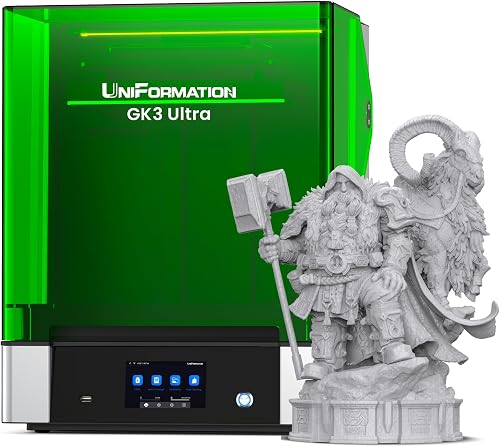
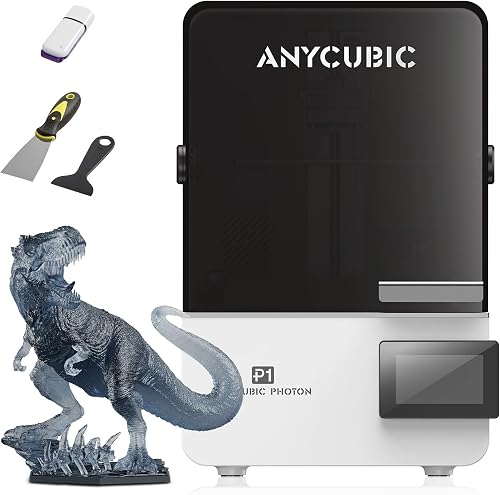
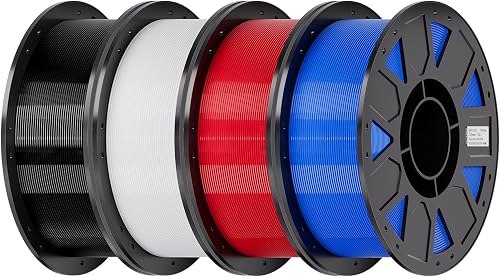
If you only fish hardbaits, buy a resin printer. If you only pour soft plastics, you can get away with a budget FDM. If you want to do both seriously, expect to run two machines side by side.
Why resin (MSLA/LCD) wins for hardbait lure bodies
Resin printers cure liquid photopolymer one ~50-micron layer at a time using an LCD mask. The result is the smoothest surface and finest detail you can get under $500. Scale patterns down to 0.05 mm, eye sockets, gill rakers, and lateral lines come out essentially print-ready — light sanding and you're spraying primer. For a 5-inch glide bait the entire body and joint can come off the build plate in a few hours.
The catches are real, though. Standard resin is brittle and UV-sensitive, which is the opposite of what a lure needs. Look for "tough," "ABS-like," or "water-washable durable" resins, and ideally a printer rated for engineering resins like Siraya Tech Blu or Phrozen TR300. You'll also need a wash-and-cure station, nitrile gloves, IPA or water for cleanup, and a ventilated workspace — resin fumes are not a kitchen-table hobby. For more on the trade-offs, see our FDM vs resin 3D printer guide.
Why FDM matters for soft swimbaits and printed molds
FDM printers extrude molten plastic from a nozzle. They can't match resin's surface finish, but they can do two things resin can't: print flexible TPU and print large, durable objects cheaply. A roll of 95A-shore TPU runs about $25, and a soft 4-inch paddle tail uses pennies of material. The trade-off is that TPU is finicky — slow print speeds (15–25 mm/s), short Bowden paths or (ideally) direct-drive extrusion, and bed temperatures around 50–60 °C.
FDM also shines for printing the rigid two-part molds you'll inject Plastisol into. A PETG or ABS mold printed with 0.1 mm layer height, then lightly sanded and coated with mold release, will pour hundreds of soft plastics before it degrades. This is how most semi-serious lure builders scale production: design once, print one mold, pour 500 baits.
Key specs to evaluate
Print resolution and pixel size (resin)
For lure work, the XY pixel size of the LCD matters more than the marketed layer height. A 4K mono LCD on a 6.6-inch panel gives roughly 35-micron pixels — fine enough for individual scales. An 8K panel pushes that to 18–22 microns, where you can read text molded into a 1.5-inch crankbait. Anything below 50 microns is good enough for most anglers; 8K is a luxury you'll notice on glide baits and swimbait joints.
Build volume
Most resin printers in this category give you roughly 150 × 80 × 160 mm of build space — plenty for two 5-inch glide-bait halves at a time. If you build oversized musky or saltwater plugs, look at large-format machines like the Elegoo Saturn 4 Ultra (12-inch class) or Phrozen Sonic Mega 8K. For FDM, anything 220 × 220 mm or larger handles every freshwater lure mold you'll design.
Material compatibility
For resin printers, confirm support for "tough" or "engineering" resins — these are less brittle and survive rod-tip strikes against gunwales. For FDM, you want a printer verified to handle TPU without back-jamming, and ideally a hardened-steel nozzle if you ever switch to abrasive glow-in-the-dark filaments. An enclosed printer like those in our best enclosed 3D printers roundup also helps if you're printing ABS or ASA molds that warp in drafts.
Ease of use and iteration speed
Modern resin printers cure a full layer in 1.5–3 seconds regardless of how much of the build plate is occupied, so resin speed scales with height, not part count. Print a single lure or eight; the time is similar. For FDM, consider a CoreXY machine if you're churning out mold prototypes — a Bambu Lab P1S or Prusa MK4S will iterate a mold design in an evening that a bed-slinger would take a full day.
Designing lures for printing — the workflow nobody warns you about
The printer is half the battle. The other half is CAD. Fusion 360 (free for hobbyists), Blender, and Plasticity are the common tools. A few hard-won design rules:
- Hollow hardbait bodies: model your body solid, then shell to a 1.5–2 mm wall and add 1–2 small drain holes so uncured resin can escape during printing. Skip the drain holes and you'll trap a pocket of liquid resin that ruins the buoyancy.
- Ballast chambers: model an internal cavity you'll fill with tungsten or lead BBs and epoxy after curing. This is how you tune sink rate without redesigning the shell.
- Hook hangers and line ties: print the body with through-holes, then thread stainless wire or screw-in hardware. Trying to print hook hangers integrally almost always fails under load.
- Soft-plastic molds: model the bait, then use a boolean subtract to cut a two-part mold with vent holes at the tail and a sprue at the head. Print in PETG or ABS at 0.12 mm layer height, then sand the parting line flat.
Pouring molds vs. printing direct
Direct-printed TPU swimbaits look great but cost real time — each 4-inch paddle tail might take 40 minutes to print, where pouring a Plastisol bait into a printed mold takes 90 seconds. If you fish your own baits, printing TPU direct is fine and lets you experiment with colors quickly. If you're stocking a tackle box or selling at a local bait shop, build a mold and pour. The mold-making approach also unlocks scent additives, salt impregnation, and laminated two-tone pours that TPU printing can't replicate.
For hardbaits the decision is reversed: direct-printing in resin is almost always faster and cheaper than building a silicone master, since hardbaits are low-volume and each one needs unique paint anyway.
Realistic budget tiers in 2026
The best 3d printer for printing fishing lures and swimbaits is rarely one machine — it's usually two, scaled to how serious you are. Roughly speaking, here's what you're spending to enter the hobby:
- Soft baits only: $250 for a budget FDM printer plus $50 for TPU and PETG. Total: $300.
- Hardbaits only: $300 for a mid-range 8K resin printer, $120 for a wash/cure station, $80 for tough resin, IPA, and PPE. Total: ~$500.
- Both: $700–900 for the two printers plus a $200 ongoing materials stash. Add another $150 if you want injection-pour equipment (presto pot, ladle, Plastisol, colorants).
If you're new to the platform decision, our how to choose a 3D printer walkthrough lines up these trade-offs against more general criteria like noise, footprint, and slicer software.
What to skip
Don't buy a printer based on YouTube hype if its spec sheet doesn't list TPU or tough-resin compatibility. Don't buy a giant 12-inch resin printer just because it's marginally bigger — the larger LCDs cost $200+ to replace when they fail (and they will fail every 1,500–2,000 hours). Don't buy a "lure-specific" 3D printer; there is no such thing. Any general-purpose machine from a reputable brand will do the job if you match it to the bait style.
Frequently Asked Questions
Can I print fishing lures with PLA filament?
You can, but they won't last. PLA is rigid, brittle in cold water, and degrades after a few weeks of sun and humidity exposure. Use PLA only for prototype shapes you're testing for buoyancy or hook position. For lures you actually want to fish with, use PETG, ABS, or ASA for hard bodies, or TPU for soft baits. Tough resin is the best all-around hardbait material.
Are 3D-printed fishing lures actually durable enough to fish with?
Yes, when printed in the right material. A glide bait shelled in tough resin with stainless wire-through construction will survive northern pike and musky strikes for a full season. The common failure modes are split seams (fix with thicker walls and post-cure epoxy) and broken hook hangers (fix with through-wire instead of glued-in screw eyes). A UV-inhibiting clear coat doubles the life of any printed lure.
What's the cheapest 3D printer that can make professional-looking crankbaits?
A sub-$300 mono-LCD resin printer like the Elegoo Mars 4 Ultra or Anycubic Photon Mono M5s will produce crankbait bodies indistinguishable from injection-molded commercial baits once painted. The big quality jump above this price point is build volume and panel longevity, not detail resolution. Pair the printer with a $120 wash-and-cure station and you're production-ready.
Can I use a Bambu Lab P1S or Prusa MK4S to print soft swimbaits?
Yes — both handle 95A-shore TPU well with their direct-drive extruders, and the enclosed P1S helps with ABS/ASA molds. They're overkill for TPU-only work but excellent if you also want to print rigid mold masters and hardware. Our Bambu Lab P1S review goes deeper on the flexible-filament workflow. For mold prototyping at speed, either machine is a workhorse.
Do I need an enclosed printer for fishing-lure work?
For resin printers, an enclosed light shield is mandatory — daylight will partially cure your tank and ruin prints. For FDM, an enclosure helps when you're printing ABS or ASA molds (these materials warp without a stable thermal environment) but isn't required for PETG or TPU. If your printer area is drafty or under 65 °F, an enclosure pays back fast in success rate.
Can I sell 3D-printed fishing lures legally?
Generally yes, as long as you're not copying patented designs or trademarked color schemes from major manufacturers. Original designs you create in CAD are yours to sell. Be cautious about cloning specific Lucky Craft, Megabass, or Rapala body shapes — some are design-patented. Selling on Etsy or at local tackle shops with original designs and clear labeling is a thriving cottage industry.
What software do most lure designers use?
Fusion 360 dominates because the free hobbyist license covers everything you need and its parametric modeling makes ballast tuning fast. Blender is popular for organic, fish-shaped bodies because sculpt mode mimics carving. Plasticity is the rising option for hybrid hardbait/swimbait work. All three export STL files that any slicer (PrusaSlicer, Bambu Studio, Lychee, Chitubox) can prepare for printing.
Key Takeaways
- Choosing the right best 3d printer for printing fishing lures and swimbaits means matching the key features to your specific needs and budget
- Read real customer reviews and check the return policy before you commit
- Also covers: 3d printed bass lure mold printer
- Also covers: resin printer for fishing lure prototypes
- Also covers: tpu fishing lure 3d printer
- Compare value across models — the priciest option is not always the best fit