Disclosure: As an Amazon Associate we earn from qualifying purchases.
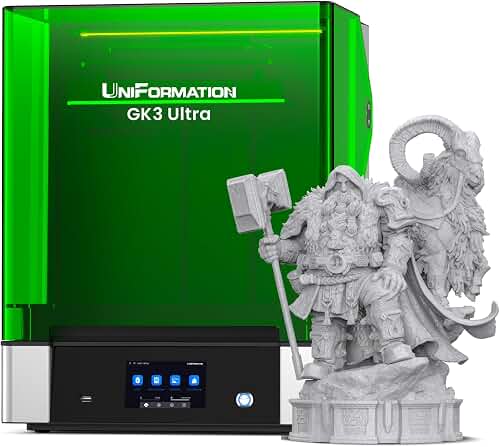
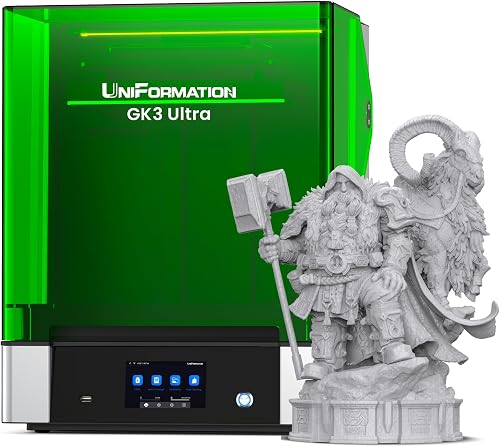
Choosing the best 3d printer for sneaker customization soles and midsoles in 2026 comes down to three non-negotiables: the ability to extrude flexible thermoplastic polyurethane (TPU) cleanly, a build volume large enough to hold a full mens size 13 outsole in one orientation, and either a direct-drive extruder (for FDM) or a high-resolution masked stereolithography (mSLA) engine that handles flexible photopolymer resins. For most independent sneaker customizers, a direct-drive FDM machine with an enclosed chamber wins because midsoles are large, cushioned, and best printed from soft TPU. Resin printers earn their place for crisply detailed tread patterns and small inserts.
What sneaker soles and midsoles actually demand from a 3D printer
Sneaker soles are not display props. They flex thousands of times per mile, absorb impact, grip wet pavement, and survive temperature swings. That places three physical demands on the printer you choose for sole and midsole work, and those demands are different from the demands of a typical prop or cosplay print.
First, the printer must deposit or cure flexible materials reliably. Outsoles need TPU in the 85A to 95A Shore hardness range so they bend without cracking. Midsoles often use softer 70A to 85A TPU or specialty foaming TPU that expands during extrusion to mimic the cushioning of EVA. Resin alternatives use flexible or elastic photopolymers rated by elongation-at-break rather than Shore hardness, and not every resin printer pumps enough UV energy through these cloudy materials to cure them evenly.
The best best 3d printer for sneaker customization soles and midsoles for your situation depends on how you plan to use it and where.
Second, the build plate has to be large enough. A US mens size 11 outsole is roughly 305 mm long. A size 13 pushes 320 mm. Printers with a 220 x 220 mm bed force you to either scale down, print soles diagonally with the heel hanging off, or chop the sole into two pieces and glue them. None of those are acceptable for a paying customer.
Third, the motion system has to print soft materials without skipping, blobbing, or stringing. Soft TPU behaves like wet spaghetti through a Bowden tube; a direct-drive extruder with a short, well-tuned filament path is almost mandatory. For resin, the peel forces on flexible elastomers are higher than for standard resin, so a sturdy Z-axis and a flexible build plate or release film help enormously.
FDM or resin: which technology fits which part of the shoe
The honest answer is that serious sneaker customizers eventually own one of each, because soles and midsoles live in different worlds.
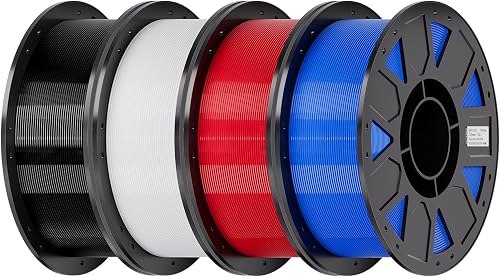
FDM (fused deposition modeling) printers melt a filament spool layer by layer. They are the right choice for full outsoles and midsoles because TPU filament has been a mature, well-documented material since 2018, prints in pieces hundreds of millimeters long, and tolerates years of foot impact. The downside is layer lines visible at the millimeter scale, which can show through translucent uppers if you are not careful.
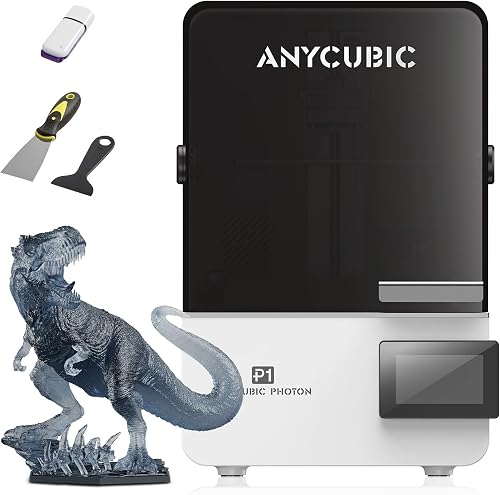
Resin printers cure liquid photopolymer with a UV light source. They produce surfaces so smooth you can mistake them for injection-molded parts, which makes them excellent for tread inserts, midsole jewels, branded medallions, and tiny accent pieces. The downside is build volume: even a large resin printer rarely exceeds 220 mm in any dimension, which is too short for a full adult outsole. Flexible resins also tend to tear at thin walls, so you cannot match TPU's toughness yet.
If you only print one part of the shoe and you must pick one machine, FDM is the safer first purchase. If you want to read a deeper comparison of the technologies before deciding, our FDM vs resin 3D printer guide walks through the workflow differences in detail.
Build volume: the size of the shoe sets the floor
For sole work, ignore marketing copy about build volume and look at the longest internal dimension. A printer advertised as 256 x 256 x 256 mm can print a 305 mm sole only if you rotate it diagonally, which wastes nearly half the bed and creates ugly seams on curved tread.
A practical rule of thumb for 2026:
- Up to US mens 9: a 220 x 220 mm bed prints flat, no compromise.
- US mens 10 to 12: aim for at least 256 x 256 mm; 300 x 300 mm is more comfortable.
- US mens 13 and above, or any womens platform sole: step up to a 350 x 350 mm bed or larger.
- Dual-gear, direct-drive arrangement with a short filament path (under 40 mm from gears to nozzle).
- Hardened steel or tungsten carbide nozzle if you plan to print abrasive carbon-fiber-reinforced TPU for stiff plates.
- All-metal hotend rated to at least 280 C, because some specialty TPUs and foaming TPUs print best at 230 to 250 C.
- A silicone sock around the heater block to reduce drafts on tall midsole prints.
- Outsoles: 95A TPU is the workhorse. It bends, grips, and accepts dye well. Print at 0.2 mm layers with 30 to 40 percent gyroid infill for a balance of cushion and durability.
- Midsoles: 85A TPU gives a softer feel. Foaming TPU (LW-TPU style) expands during extrusion when you lower the flow rate, producing a closed-cell foam that mimics EVA midsoles at roughly half the density.
- Stiffening plates: carbon-fiber-reinforced PA (nylon-CF) or PETG-CF embedded between layers can simulate a propulsion plate. These need a hardened nozzle and a dry filament chamber.
- Decorative inserts: flexible resin printed on a separate machine, then bonded with cyanoacrylate or shoe-specific urethane adhesive.
- Scan the customer's foot or last with a smartphone-based photogrammetry app, or use a commercial foot scanner if you offer orthotic customization.
- Import the mesh into a parametric CAD tool (Fusion 360, Plasticity, or onshape) and build the sole on top of the foot profile.
- Generate a lattice pattern in the midsole region using a generative design plugin. Octet and gyroid lattices behave differently underfoot; print test cubes before committing.
- Export STL or 3MF, slice for TPU, and queue overnight.
- Bond the printed sole to the upper using a flexible polyurethane adhesive applied after light sanding of the sole surface.
If you regularly print full-length midsoles taller than 30 mm with carbon plates or lattices embedded, vertical build height starts to matter too. A 300 mm Z gives you room to print midsoles standing on their heel for a smoother top surface. For a broader look at machines in this category, our guide to the best large format 3D printers covers the trade-offs.
Extruder and hotend: the heart of TPU printing
This is where casual buyers underestimate the requirement. A direct-drive extruder, where the motor sits directly above the hotend, is the single biggest predictor of TPU success. Bowden setups push the filament through a long PTFE tube, and soft TPU compresses inside that tube like a noodle. The result is under-extrusion, blobs, and aborted prints. Every customizer who has tried both will tell you the same story.
Look for these extruder features:
Print speed marketing has dominated 3D printer launches since 2024, but for TPU you will rarely exceed 60 to 80 mm/s anyway. Pay more attention to acceleration smoothness and input shaping, which prevent ringing on the curved sidewalls of midsoles.
Enclosed chamber and bed adhesion
TPU is hygroscopic and warps less than ABS, so a heated chamber is not strictly required. But an enclosure pays off in three ways for sole work: it blocks drafts that cause inconsistent layer bonding on tall prints, it muffles the noise of a printer running an eight-hour midsole, and it contains the slight smell of melted TPU. If you work out of a home studio or a shared maker space, an enclosure is a quality-of-life upgrade more than a technical requirement.
Bed adhesion for TPU is usually excellent on textured PEI plates, which is now the default surface shipped with most major brands. Smooth PEI works too but can grab too hard; a thin film of glue stick prevents tearing chunks out of the plate when you peel a sole free. Avoid raw glass beds and tape-based surfaces for soft TPU; the first layer will not release cleanly.
Materials: matching filament to function
This is the area where new customizers waste the most money. A few practical 2026 guidelines:
Whatever you choose, dry your filament. TPU absorbs moisture faster than any other common filament; a damp spool prints with audible popping and produces brittle, hazy parts. A 50 dollar food dehydrator running at 50 C for four hours fixes most spools.
Software and slicer settings for sole work
You will spend more time in a slicer than at the printer. The major free slicers (PrusaSlicer, OrcaSlicer, Bambu Studio, Cura) all handle TPU well, but a few profile tweaks matter for footwear specifically.
Use a gyroid or honeycomb infill, never grid or lines, for midsoles. Gyroid infill flexes uniformly in every direction, which prevents the dead, plasticky feel of rectilinear infill. Aim for 25 to 35 percent infill for a midsole, 40 to 60 for an outsole that needs to hold tread definition.
Set perimeter count to four or more for outsole walls. A two-wall part will tear at the heel after weeks of use. Lower the print speed for the first few layers, raise it for the bulk of the part, and disable cooling for the bottom 5 mm; TPU bonds better between layers when the previous layer is still warm.
For a refresher on tuning settings broadly, our 3D printer key features guide covers slicer-side fundamentals.
Workflow: from foot scan to finished shoe
A repeatable customization workflow looks roughly like this in 2026:
None of these steps require an industrial printer. They do require patience and iterative testing. Expect to print three or four versions of any new design before it walks well.
Budget expectations in 2026
A capable TPU-printing FDM machine with a 256 x 256 mm or larger bed and a direct-drive extruder starts around 350 to 500 USD in 2026. Stepping up to 350 mm beds, fully enclosed chambers, and AMS-style material switching pushes you into the 700 to 1200 USD range. A capable flexible-resin printer suitable for inserts runs 250 to 600 USD on top of that.
If you are weighing the full-shop cost, the 3D printer buying guide includes a more general framework for matching machine to use case. Most successful sneaker customizers I have seen run two FDM machines in parallel rather than one premium machine: it doubles throughput and gives a hedge against downtime in the middle of a customer order.
Frequently Asked Questions
Can you really 3D print a wearable sneaker midsole that lasts?
Yes, with caveats. TPU midsoles printed at 25 to 35 percent gyroid infill and bonded with a flexible polyurethane adhesive routinely survive several hundred miles of casual wear. They will not match the lifespan of an injection-molded EVA midsole from a major brand yet, but for limited-run customs they perform well enough that customers return for repeat work.
What Shore hardness TPU is best for sneaker outsoles?
95A is the standard answer in 2026. It grips, flexes, and resists abrasion on pavement. Softer 85A feels nicer underfoot but wears faster and is harder to print without stringing. Harder 98A is too rigid for most outsole geometries and feels like a hard plastic shoe.
Do I need a resin printer too, or is FDM enough?
FDM alone is enough to start. Resin earns its place once you start selling premium customs with crisp branded medallions, jewel-like tread inserts, or thin filigree on the side of the midsole. If your customer base wants visible detail finer than 0.2 mm, add a small mSLA machine.
Will an entry-level printer like the Ender 3 handle TPU midsoles?
Marginal. The classic Ender 3 has a Bowden extruder that struggles with soft TPU, and the 235 x 235 mm bed only barely fits adult soles. Upgraded direct-drive variants of similar machines work better, but if you are committing to a customization business, a modern direct-drive machine saves weeks of frustration.
How long does it take to 3D print a full sneaker sole?
A standard adult outsole printed at 0.2 mm layer height and a moderate speed runs four to seven hours. A taller midsole with a complex lattice can hit 10 to 14 hours. Plan to start prints in the evening and inspect in the morning.
Can I print directly onto an existing sneaker upper?
Not safely. Fabric uppers cannot tolerate nozzle heat. Print the sole separately, then bond it with a urethane shoe cement after roughing the bonding surface with 120-grit sandpaper. Some advanced customizers fixture the upper above the printed sole and inject adhesive through a mold; that is a workshop process, not a printer feature.
Is foaming TPU worth using for midsoles?
Yes, if you want lighter, softer cushioning. Foaming TPU expands during extrusion and produces parts up to 30 percent less dense than standard TPU at the same wall count. It requires careful flow tuning and a dry spool, but the resulting midsoles feel noticeably closer to traditional EVA cushioning than solid TPU. Treat it as the upgrade you reach for once you have nailed regular TPU.
Key Takeaways
- Choosing the right best 3d printer for sneaker customization soles and midsoles means matching the key features to your specific needs and budget
- Read real customer reviews and check the return policy before you commit
- Also covers: custom sneaker sole 3d printer
- Also covers: tpu midsole 3d printer
- Also covers: footwear customizer 3d printer
- Compare value across models — the priciest option is not always the best fit