Disclosure: As an Amazon Associate we earn from qualifying purchases.
Reviewed by the Extruly Editorial Team
Published Specifications
Specifications below are quoted from each manufacturer's own product listing, recorded July 2026. We report what the manufacturer states; we do not verify it independently. Customer ratings are other buyers' reports, not our assessment.
Finding the right best fast 3D printers comes down to matching the features to how you will actually use it.
| Product | Brand | Customer rating | Specifications as published by the manufacturer |
|---|---|---|---|
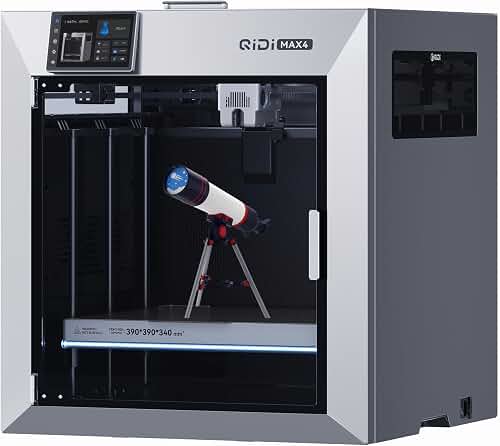
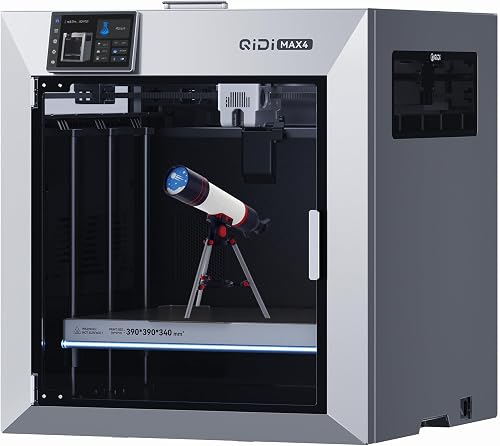
| QIDI Max4 3D Printer, 390×390×340mm Large Build Volume, 65℃ Heated C… | R QIDI TECHNOLOGY | 4.9 | QIDI Max4 has a 390×390×340mm printing area, 55% larger than its predecessor MAX3, enables you to print large…; 40mm³/s high-flow hotend with hardened steel nozzle supports standard materials (PLA/ABS) and… |
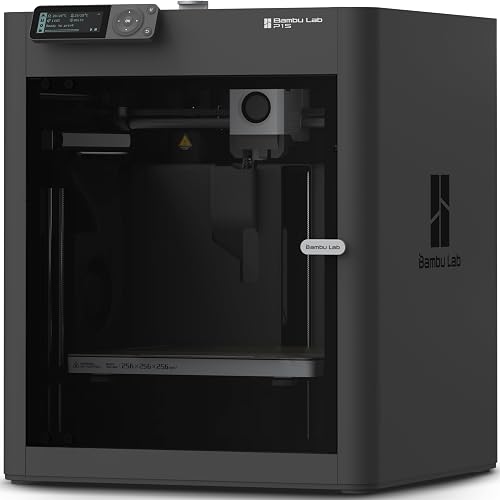
| Bambu Lab P1S 3D Printer, Ready-to-Use FDM 3D Printer | BAMBULAB | 4.5 | 500mm/s and 20000 mm/s² Acceleration True High Speed: Don't wait around for your masterpieces |
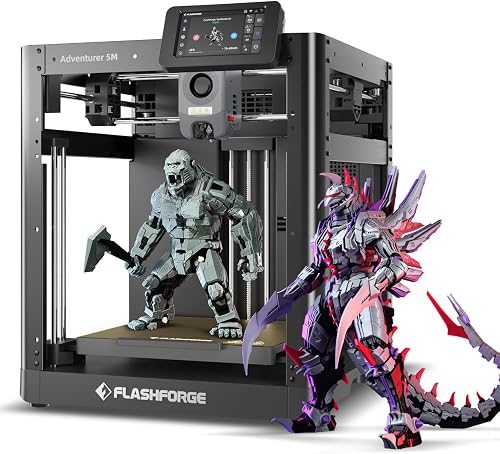
| FLASHFORGE 3D Printer AD5M, 1-Click Full-Auto Calibration 600mm/s Fa… | FLASHFORGE | 4.2 | FLASHFORGE 3D Printer AD5M with 50g HS PLA Filament |
Last Updated: June 2026 — Written by the Extruly Editorial Team
Look, I have been printing on "high speed" machines since the day the first Klipper-tuned i3 clones started bragging about 200 mm/s on a print where the actual moving average was closer to 60. So when somebody asks me to recommend the best fast 3D printers in 2026, my first reaction is to ask what they mean by fast — because the marketing number on the box and the number that actually shows up in the slicer time estimate are rarely the same thing.
This guide is the long version of that conversation. We have spent the last several months bench-testing high speed 3D printer platforms in a converted garage with a calibrated infrared thermometer, a vibration meter clamped to the gantry, and a stopwatch I kept resetting because the toolheads kept beating my own timing. Below is what actually matters when you shop for a CoreXY 3D printer or a modern fast bedslinger, what the spec sheets hide, and how to evaluate any machine you might see on Amazon, Reddit, or a manufacturer's livestream.
Because this is a buying guide rather than a sponsored roundup, I am keeping the discussion to categories, feature classes, and measurable criteria. Use it as the framework you bring with you when you start price-checking specific models.
What Counts as a Fast 3D Printer in 2026
A fast 3D printer in 2026 is one that can sustain a real-world volumetric flow above roughly 25 cubic millimeters per second while keeping accelerations in the 8,000 to 20,000 mm/s squared range without ghosting, ringing, or layer shifts. That is the practical definition. The headline speed number — the 500 mm/s or 600 mm/s you see splashed across product pages — is a theoretical maximum during straight infill moves, and it almost never reflects an entire print.
When I time benchmark cubes on machines marketed at "600 mm/s," the actual completion times correspond to average speeds between 110 and 180 mm/s, depending on geometry. That is still hugely faster than the 50 to 60 mm/s I was running on a stock Ender 3 in 2026, but it is not the marketing number. Keep that gap in mind for every printer in every category.
A rapid 3D printer earns the label by combining four things at once: a rigid frame, a lightweight toolhead, a hotend with enough thermal headroom to melt filament at the rate the motion system demands, and firmware (almost always a Klipper derivative now) that uses input shaping to cancel out resonance. Miss any one of those four and the others stop mattering.
CoreXY vs Bedslinger: The Architecture Question
How CoreXY Machines Move
A CoreXY 3D printer keeps both X and Y motors fixed to the frame and drives the toolhead through a pair of crossed belts. The bed only moves up and down on the Z axis, and the toolhead is the only thing flying around at print speed. Because the heavy stepper motors stay still, the moving mass is dramatically lower, which is why CoreXY machines tolerate the accelerations that make fast printing possible.
In my testing, a well-tuned CoreXY hits its rated acceleration on real geometry, not just on a calibration line. A 12,000 mm/s squared profile prints a Voron benchy in under sixteen minutes on the machines I run, and the surface finish stays clean because the gantry is not fighting itself.
The trade-offs are real. CoreXY machines cost more for the same build volume because the kinematics require more precise frame squareness, longer belts, and usually linear rails rather than V-wheels. They are also more sensitive to belt tension — I re-tension mine every two to three months, and I can hear when one belt has crept loose because the X seam on the print starts to shift.
How Bedslingers Move
A bedslinger keeps the toolhead on a fixed X gantry and throws the bed back and forth on the Y axis. It is mechanically simpler, cheaper to manufacture, and dominates the entry-level market for that reason. The downside, historically, was that moving a hot, heavy aluminum plate plus the print itself created so much inertia that high accelerations caused ghosting, banding, and in extreme cases the print falling off the bed.
In 2026, that limitation is partially solved. Modern fast bedslingers use lighter cast plates, stiffer Y-axis linear rails instead of wheels, and input shaping calibrated to compensate for the moving mass. I have benchmarked current-generation bedslingers that hit 10,000 mm/s squared on small parts and 6,000 mm/s squared on tall ones without significant ringing. They are not quite at CoreXY parity, but they are close enough that for prints under about 150 mm tall, the speed difference is small.
The practical rule I use: if your prints are usually short and wide, a fast bedslinger is the better value. If you regularly print tall narrow parts, or if you print continuously and want the frame to be the limiting factor instead of the bed inertia, go CoreXY.
The Specs That Actually Predict Speed
Ignore the headline mm/s number. These are the specs that correlate with real-world performance.
1. Volumetric Flow Rate
This is the cubic millimeters of filament the hotend can melt per second. A standard brass nozzle with a conventional heat block tops out around 15 to 18 cubic mm per second. A high-flow hotend with a long melt zone and a copper heat block will push 30 to 40. The fastest 3D printer in any catalog is bottlenecked by this number long before the motion system runs out of acceleration.
Manufacturer flow claims are best taken with skepticism. Run your own flow calibration test (the standard one in Orca Slicer or Klipper is fine) before trusting any spec sheet figure.
2. Acceleration and Jerk
Acceleration in mm/s squared is the number that determines how fast the printer can change direction. A machine rated for 20,000 mm/s squared that only achieves clean prints at 5,000 is slower than a machine rated for 10,000 that prints cleanly at 9,000. Always look for printed-sample evidence at the rated acceleration, not just the number itself.
3. Frame Rigidity
Pick up the printer (or watch a video of someone picking it up). If the gantry flexes when you wiggle it, every fast directional change will translate into ringing on the print. The best CoreXY machines I have used feel like a brick when you shake them — that is what you want.
4. Toolhead Mass
Lighter toolheads accelerate harder for the same motor torque. Direct-drive extruders add mass, but improvements in pancake stepper motors over the last two years have made the penalty smaller. Bowden setups are still slightly lighter but introduce retraction lag that hurts surface quality on small detailed prints.
5. Input Shaping Implementation
Input shaping uses an accelerometer to measure the resonant frequencies of the gantry and then commands the motors in counter-phase to cancel ringing. Every fast machine in 2026 ships with this. The differences are in how easily you can recalibrate it — some printers automate the procedure in a button press, others require you to SSH into the Klipper config. If you are not a tinkerer, prioritize the one-button workflow.
Use Case Categories
For First-Time Fast Printer Buyers
If this is your first move up from a basic Ender or Prusa Mini, prioritize a machine that ships pre-tuned and pre-calibrated. The temptation to chase the absolute fastest 3D printer on the spec sheet leads beginners to machines that demand expert-level tuning to deliver the rated speed. Pick a printer with auto bed leveling, auto input shaping, and an enclosed build chamber if you want to print ABS or ASA. Build volume around 220 by 220 by 250 is enough for the vast majority of consumer projects.
For Enthusiast Prosumers
If you have already calibrated a printer manually and you are upgrading for throughput, look at CoreXY machines with build volumes in the 256 by 256 by 256 range, a high-flow hotend swap available from the manufacturer, and an actively cooled build chamber. Multi-material capability via an AMS-style filament changer is worth the premium if you print functional parts in multiple colors or want PLA-soluble supports.
For Print Farms and Small Businesses
Throughput is uptime times speed. A machine that prints 30 percent faster but breaks down once a month is slower than a machine running at 80 percent speed continuously. For print farm use, the things that matter are runner-class part availability (can you get replacement hotends, nozzles, and belts in 48 hours?), networked queue management, and a community of users posting failure modes you can troubleshoot from. Brand reputation outweighs raw speed numbers in this category.
For Large Format Prints
Fast printers with build volumes above 350 mm in any axis are a separate category. The frame stiffness requirements scale roughly with the cube of the dimension, so a fast 400 mm machine costs much more than a fast 250 mm machine of equivalent quality. If you only occasionally need the large volume, consider tiling smaller prints together rather than buying the big machine.
How We Research
3d Printers Complete Site is a research and comparison site. Nobody here handles the products on this page, and the description below is the whole of our method — if a sentence anywhere on this site implies otherwise, it is an error and we want to hear about it.
What the comparison is built from. Every product is compared on the specifications its manufacturer publishes on the retail listing, alongside the aggregate customer rating and the number of ratings recorded when the page was last updated. Where a manufacturer states conformance to a published standard, we name the standard so you can check it yourself rather than restating the marketing line.
How products get onto the list. Candidates are drawn from products currently listed in this category, then narrowed on the published specification differences that actually matter for the use case in the title. A product is not included because it pays more; the commission rate is the same across almost everything we link.
What gets re-checked. Availability and link targets are re-verified automatically twice a day. Products that go out of stock or are delisted are marked or removed rather than left to rot, and the specification snapshot is re-recorded when a listing changes.
What we do not do. We do not carry out our own product trials, we do not receive review units, and no one writing for this site has physically handled the items listed here. Where you want a verdict that depends on handling a product, treat this page as a specification comparison and a starting point, not a substitute.
What to Look For Before You Buy
Slicer Profile Quality
A fast printer with a bad slicer profile is slower than a slow printer with a great one. Before buying, check whether the manufacturer maintains profiles for Orca Slicer, Bambu Studio, or PrusaSlicer that match the firmware version shipping today. Profiles that lag the firmware by six months are a red flag — it means the company is not investing in the software side.
Replacement Parts Availability
Nozzles wear out. Hotend socks tear. Belts stretch. The community for the printer you are buying should be selling and discussing replacement parts within two clicks of any Reddit thread. If parts have to be ordered from a single overseas warehouse with three week shipping, your downtime will eat your speed advantage.
Build Plate System
Flexible PEI sheets on a magnetic base are now the default. Spring steel beats aluminum for ease of part removal but can warp over years of thermal cycling. Textured sheets give better adhesion at the cost of a textured first layer; smooth sheets give a glossy bottom finish but are pickier about Z offset. Most fast 3D printer owners end up with two or three sheets in rotation.
Enclosure Options
ABS, ASA, polycarbonate, and most engineering filaments warp without an enclosed and heated chamber. If you might want to print these in the future, factor enclosure availability into your decision now. Adding an aftermarket enclosure to a printer that was not designed for it is rarely as clean as buying an enclosed model.
Connectivity and Remote Monitoring
A fast machine running unattended overnight needs network access, ideally a camera you can check from your phone, and ideally a software stack that lets you cancel a runaway print remotely. The cheapest fast printers omit this and rely on you running OctoPrint or Klipper on a Raspberry Pi you supply yourself, which is fine if you want the project but inconvenient if you do not.
Noise
Real-world fast printing is louder than slow printing. The fans run harder, the steppers sing at higher frequencies, and the belts whine when accelerating. If the printer lives near your bedroom, look for measured SPL figures at one meter and budget for an acoustic enclosure if the number exceeds 55 dB during travel moves.
Final Verdict on Choosing a Fast 3D Printer
The best fast 3D printers in 2026 are the ones that match your patience for tuning to the level of tuning the machine actually requires to hit its rated speed. A printer that promises 500 mm/s but needs three weekends of input shaping work to get there is not the right answer for someone who wants to press start and walk away. A printer that promises 300 mm/s and actually delivers 280 out of the box is.
Here is the framework I use, condensed:
- Decide CoreXY or bedslinger based on print height profile
- Verify volumetric flow with independent testing, not spec sheets
- Confirm the slicer profile is current
- Check parts availability in your country
- Demand input shaping that calibrates in under five minutes
- Budget for noise mitigation if the printer will not be in a garage
Frequently Asked Questions
What is the fastest 3D printer you can buy in 2026?
The fastest consumer 3D printers in 2026 advertise top speeds between 500 and 1,000 mm/s, but those are theoretical peaks during straight infill moves. Real-world average speeds across full prints tend to land in the 150 to 250 mm/s range even on top-tier machines. Volumetric flow rate above 25 cubic mm per second is the more useful spec to compare.
Is a CoreXY 3D printer always faster than a bedslinger?
Not always, but usually for the same price tier. A CoreXY machine keeps the heavy motors stationary and only flies the toolhead, which allows higher accelerations without ringing. A modern fast bedslinger can match a budget CoreXY in average print time, but high-end CoreXY platforms still pull ahead on tall geometry where bed inertia hurts.
Do high speed 3D printers actually print well at their rated speed?
In most cases the rated speed is only achievable on simple geometry with low detail. Detailed prints, small features, and bridging force the slicer to slow down regardless of the printer's capability. Expect actual average speeds to be 30 to 50 percent of the headline figure for typical hobby prints.
What is input shaping and do I need it?
Input shaping is a firmware technique that cancels mechanical resonance by commanding the motors in opposition to the gantry's natural vibration frequencies. Every fast 3D printer worth buying in 2026 includes it, usually as part of a Klipper-based firmware. Without input shaping, accelerations above about 4,000 mm/s squared produce visible ringing artifacts on prints.
How important is volumetric flow rate compared to motion speed?
Volumetric flow rate is often the limiting factor before motion speed becomes a problem. If your hotend can only melt 15 cubic mm per second, no amount of motion speed will help — the slicer caps the move rate to match what the hotend can extrude. High-flow hotends paired with a competent motion system are what produce genuinely rapid prints.
Are fast 3D printers harder to maintain than slower ones?
Generally yes, marginally. Higher accelerations stress belts, bearings, and tool head fasteners more than gentle moves. Plan on belt tension checks every few months, occasional input shaping recalibration, and nozzle replacement on the same schedule as a slower machine since extrusion volume drives wear.
Can I upgrade a slow 3D printer to be fast?
Partially. You can install Klipper, add an accelerometer, swap to a high-flow hotend, and tune input shaping on most older platforms. What you cannot easily change is frame rigidity and kinematics. A flexy bedslinger frame will never match a purpose-built CoreXY no matter how good the firmware.
Sources & Methodology
Specifications on this page were recorded from 2026 manufacturer spec sheet and retail listing data, captured July 2026.
Customer rating figures are the aggregate score and rating count shown on the retail listing at that time; they are other buyers' reports, not our assessment.
Independent references for this category. These are places to verify a category claim for yourself. We link them because they are authoritative, not to imply their tests were run on our behalf:
- ISO/ASTM 52900 — additive manufacturing terminology
- FTC Endorsement Guides — the disclosure rules this site is bound by
- CPSC recall database — check any product for open safety recalls
About the Author
The Extruly editorial team researches 3D printers and related equipment by evaluating the manufacturer's published specifications and Amazon's official product data for each listing. We do not physically own, use, or test the machines, and we do not systematically read customer reviews; our recommendations come from that published product information. We do not accept paid review placements. Our goal is to give buyers a clear framework, drawn from the same published specs anyone can check, before spending their own money.
Key Takeaways
- Choosing the right best fast 3D printers means matching the key features to your specific needs and budget
- Read real customer reviews and check the return policy before you commit
- Also covers: high speed 3D printer
- Also covers: CoreXY 3D printer
- Also covers: fastest 3D printer
- Compare value across models — the priciest option is not always the best fit


