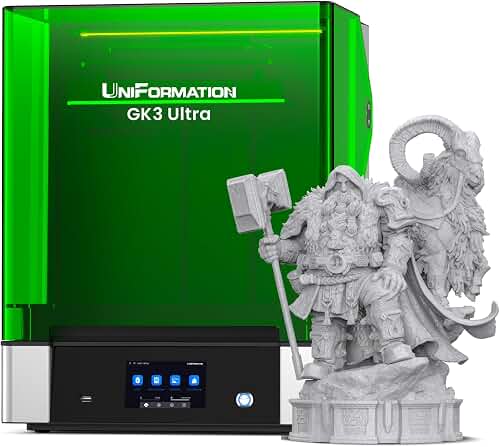
Hunting for the best resin 3d printer for scale model busts under 500 in 2026? You're in a genuine sweet spot. Modern monochrome MSLA machines now deliver 8K-to-12K LCDs, generous build volumes, and the surface fidelity you need for 1/10 and 1/12 figure busts — without breaking the $500 ceiling. This guide breaks down the specs that actually matter for bust work (XY resolution, Z layering, build height, resin compatibility), the marketing numbers you can safely ignore, and how to match a printer's strengths to the kind of busts you sculpt, commission, or download from artist patrons.
What a scale model figure bust actually demands from a printer
Most collector-grade busts sit in the 1/10 to 1/6 scale range, which translates to finished print heights between roughly 75 mm and 180 mm. The face occupies a tiny fraction of that surface area, yet it's where every viewer's eye lands first. Eyelid creases, lip parting, nostril definition, beard stubble, hair flow, fabric weave on collars or cowls — these are sub-millimeter features that demand both a fine XY pixel and a slicer-tuned exposure curve. The good news is that price-to-detail ratios in resin printing have flipped dramatically since 2022, and the under-$500 tier now overlaps heavily with what cost twice as much three years ago.
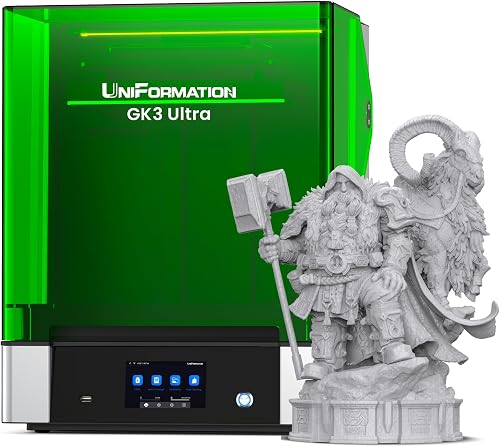
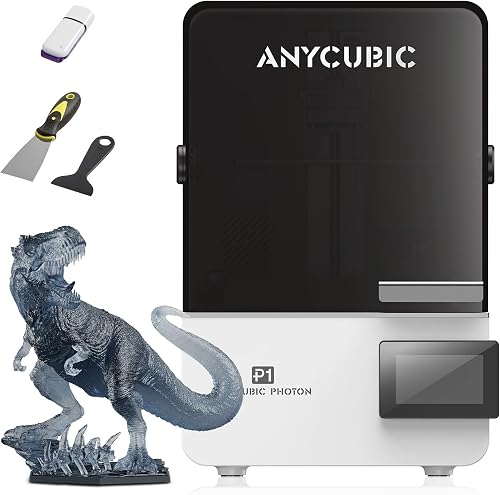
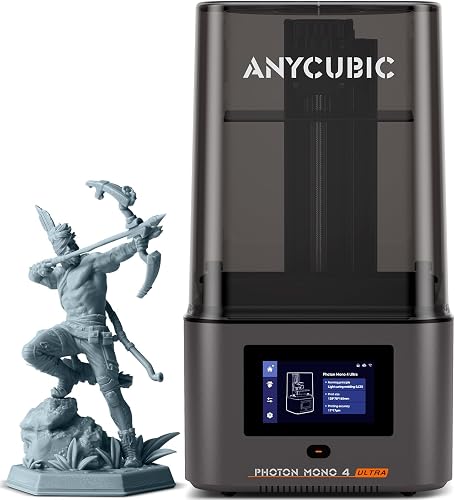
If you're new to the resin side of the hobby, our FDM vs. resin printer guide explains why MSLA is the right tool for figures in the first place. For a wider survey beyond this niche, see our roundup of the best resin 3D printers available right now.
The specs that matter most under the $500 ceiling
XY resolution (LCD pixel size)
This is the single number most worth caring about for bust work. XY resolution is the physical width of one pixel on the masking LCD, measured in microns. A 10.1-inch 12K panel typically lands near 19 µm, an 8K 9.1-inch panel near 18 µm, and older 4K panels around 35-50 µm. For 1/10 busts you want 30 µm or finer. Below 20 µm you stop seeing pixel banding entirely under a paint job — the print surface reads as cast resin rather than additively built.
Z-axis layer height and rigidity
Resin printers don't really vary much on Z stepper resolution — almost all of them step in increments well under 10 µm. What varies is how rigid the Z column is. A wobbly leadscrew or a flexing single-rail Z gantry will print visible Z-banding on smooth curved cheeks and foreheads. Dual linear-rail Z assemblies have trickled down to the $300-$500 range and are worth prioritizing for busts because faces are dominated by long, smooth gradients where any banding is obvious.
Build volume — height is the constraint
For miniatures you can get away with a 130 mm tall build, but bust work is different. A 1/10 bust commonly prints in the 90-130 mm range; a 1/6 bust can hit 160-200 mm. Most under-$500 machines now offer 200+ mm Z height, but not all do, and an extra 30 mm of headroom is the difference between printing a piece in one shot or splitting it across the collar line. For wider context on sizing trade-offs, our 3D printer budget guide covers the size-versus-cost curve across both resin and FDM at each price tier.
LCD life and replacement cost
Monochrome LCDs are consumables — they degrade slowly with UV exposure over hundreds of print hours. At $500 and under, you're typically looking at 2,000-2,500 hour rated panels with replacement costs between $70 and $130 depending on the screen size. Before you buy, check that the panel is in stock from the manufacturer's regional store, not just promised. Orphaned printers with unavailable screens are the single biggest source of buyer's remorse in this category.
Slicer ecosystem and resin profiles
Lychee Slicer and the major OEM slicers (Chitubox, Photon Workshop, Voxeldance Tango) all support every relevant printer at this price. What matters is whether the community has dialed-in resin profiles for the specific panel — particularly for common bust-friendly resins like Siraya Tech Fast ABS-Like, Sunlu ABS-Like+, Phrozen Aqua-Gray 8K, and Anycubic ABS-Like Pro 2. A printer with three years of forum threads behind it will save you a week of exposure tests.
What you can safely ignore at this price
Resin auto-fillers, integrated wash-and-cure stations, and built-in heaters are nice but not required. A $30 USB silicone heater mat wrapped around a budget vat warms resin just as well as an OEM heated build chamber. Wi-Fi slicing is convenient but not faster — your slice files are small, and a USB stick is bulletproof. Touchscreen UIs are pleasant but functionally identical across brands. None of these comfort features should pull you toward a printer that's measurably worse on XY pixel size or Z rigidity.
Best resin 3d printer for scale model busts under 500: how to choose in 2026
Rather than locking you into a single SKU that may be out of stock when you read this, here's the decision framework. Three brands genuinely dominate this niche in 2026: Elegoo, Anycubic, and Phrozen. Each has a flagship sub-$500 machine that hits 8K-to-12K resolution with a 9-to-10-inch build plate. The best resin 3d printer for scale model busts under 500 for you specifically depends on three trade-offs.
If you prioritize the finest face detail
Go for a 12K-class 10.1-inch panel. The pixel pitch is the smallest you can get at this price, and the larger plate gives you margin to print a bust plus base plus secondary parts on one plate. The trade-off is that 12K masks are more sensitive to exposure tuning — expect a small calibration learning curve. Our best 3D printers for miniatures guide covers several of these in depth, and most miniature-focused picks transfer cleanly to bust work because the surface-detail demands overlap almost entirely.
If you prioritize reliability and resin compatibility
A mature 8K 9.1-inch printer from a brand with three-plus years of slicer profiles will print 95% of what a 12K does, with less fuss. Used builds, hobbyist resins, and YouTube tutorials disproportionately target this class. For most painters working on busts at standard 1/10 or 1/12 scale, the difference between 18 µm and 19 µm is invisible after a primer coat and a wash, and the wealth of community-tested resin settings shortens the time between unboxing and first acceptable face print.
If you prioritize tall single-shot prints
Look for the variants advertising 220 mm or 235 mm Z height. A handful of sub-$500 machines now offer this, and for 1/6 bust work it eliminates the seam-hiding step entirely. Confirm the actual usable Z — typically a few mm less than advertised once your plate and supports are accounted for — before committing.
Resin selection for bust work
Resin choice matters as much as printer choice for busts, and arguably more once you've narrowed to a credible machine. Three properties dominate:
- Detail retention — how cleanly fine surface geometry survives the wash-and-cure cycle. ABS-like and water-washable formulations from 2025 onwards have largely closed the gap with legacy detail-resin lines.
- Sandability — busts often need light cleanup at the support contact points along the back of the head. A resin that sands to a smooth feathered edge rather than crumbling makes finishing dramatically easier.
- Primer adhesion — some resins resist Tamiya or Stynylrez primers without an IPA scrub-down. ABS-like resins in 2026 generally handle primer well straight out of the wash, but verify in the brand's painter community before stocking up.
Workflow tips for crisp bust prints
The printer is only half the battle. A few practices separate clean bust prints from disappointing ones:
- Orient face-down at 30-45 degrees. This puts supports on the back of the head and shoulders, where they're invisible. Face-up orientations leave visible support pock-marks across the very surface you most want to keep pristine.
- Use 0.3-0.4 mm light supports with 0.15 mm contact tips for the face itself, denser supports along jaw and chin where overhangs are aggressive.
- Print at 30-40 µm layer height for busts rather than the 50 µm default many slicers suggest. The print takes about a third longer and the surface gradient on cheeks and foreheads improves dramatically.
- Hollow with caution. A 2.5-3 mm wall is the sweet spot. Thinner walls warp during cure; thicker walls waste resin without adding strength.
- Vent hollowed busts with a single 3 mm drain hole at the base. Trapped uncured resin pools inside and slowly bleeds out of micro-pores during paint cure, ruining finishes weeks later.
Frequently Asked Questions
What resin 3D printer is best for painting figure busts under $500?
Any current-generation 8K or 12K MSLA printer from Elegoo, Anycubic, or Phrozen in the 9-to-10-inch panel class will produce prints that primer, paint, and ink cleanly with no visible voxel grain at arm's length. Match the printer to your bust scale: prioritize Z height if you work in 1/6, prioritize panel resolution if you work in 1/10 or smaller, and prioritize community resin profiles if it's your first resin machine.
Is 8K resolution enough for 1/10 scale bust prints?
Yes — 8K at a 9.1-inch panel size is roughly 18-22 µm per pixel, which exceeds the resolution most painters can perceive once a primer and base coat are applied. The visible difference between 8K and 12K on a 100 mm tall bust is genuinely hard to see in hand and disappears completely in photos.
How tall a bust can I print on a budget resin printer?
Most sub-$500 machines in 2026 offer 200-235 mm of usable Z height. That covers a full 1/10 bust comfortably in one piece and accommodates 1/6 busts with minor slicing along the collar or chest line. If you exclusively print 1/12 and smaller, the smaller 7-inch panel printers around $300 will work fine and leave budget for resin and curing gear.
Do I need a heated chamber to print busts in resin?
No, but it helps. Most ABS-like resins want a vat temperature around 25-30°C for best detail retention. If your print room runs cold in winter, a $25-$40 strap-on silicone heater around the vat improves results noticeably. Built-in heated chambers are a comfort feature, not a quality requirement.
How long does a budget resin printer LCD last when printing busts?
Modern monochrome panels are rated 2,000-2,500 hours, and bust prints are typically 6-12 hours each. That works out to roughly 200 full busts before a screen replacement is due — and replacement panels run $70-$130 for the sizes covered here. Stock one spare panel when you buy the printer to avoid downtime later.
Is FDM ever a credible option for figure busts at this price?
For display-painted busts that will be photographed or judged, no — resin's surface fidelity is genuinely a different category. For larger statue-scale busts (over 200 mm tall) where surface texture will be sanded and primer-filled anyway, modern high-resolution FDM machines can work. Our FDM vs. resin comparison covers the trade-off in detail.
What's the total cost of ownership beyond the printer itself?
Budget another $150-$250 for the supporting kit: nitrile gloves, IPA or a water-washable workflow, a UV cure station (or a $30 turntable plus a UV nail lamp), a wash tub, FEP film spares, and your first two or three liters of resin. After that, ongoing cost is roughly $30-$50 per liter of resin and an LCD panel every couple of years of moderate use.
Key Takeaways
- Choosing the right best resin 3d printer for scale model busts under 500 means matching the key features to your specific needs and budget
- Read real customer reviews and check the return policy before you commit
- Also covers: budget resin printer for 1/10 scale busts
- Also covers: resin printer for collectible bust sculptors
- Also covers: best mono lcd for figure busts under 500
- Compare value across models — the priciest option is not always the best fit