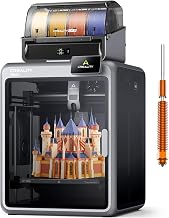
Disclosure: As an Amazon Associate we earn from qualifying purchases.
For printing RC monster truck bodies in 2026, the creality k1c vs qidi q1 pro rc monster truck question comes down to chamber heat and material range. The Qidi Q1 Pro wins for serious bashers because its actively heated 60°C chamber and 350°C hotend let you print ASA, PC blends, and nylon with minimal warp on tall 1/10 and 1/8 shell halves. The Creality K1C is the better pick if you mostly run carbon-fiber PLA or PETG-CF and want quicker setup, a friendlier slicer, and a slightly faster everyday workflow. Both are enclosed CoreXY machines with around 250 mm of build height, which fits the vast majority of stock-replacement Traxxas, Arrma, and Losi monster truck bodies without slicing them.
Below is the full breakdown of how each machine actually behaves when you push it on impact-resistant truck shells, roll cages, scale interiors, and replacement body posts.
When shopping for creality k1c vs qidi q1 pro rc monster truck, it pays to compare specs, capacity, and real-world runtime before committing.
Why monster truck bodies are a tough print job
Stock RC monster truck bodies are vacuum-formed Lexan because polycarbonate sheet flexes on impact instead of shattering. The moment you try to reproduce that durability in FDM, three things matter more than print speed: layer adhesion under shock loads, dimensional stability across a 230–260 mm part, and the ability to run engineering plastics without delamination. ABS, ASA, PC-ABS, and PA-CF all need chamber temperatures north of 45 °C to bond cleanly between layers. Without that, the first hard rollover snaps body posts and cracks fender arches along the layer lines.
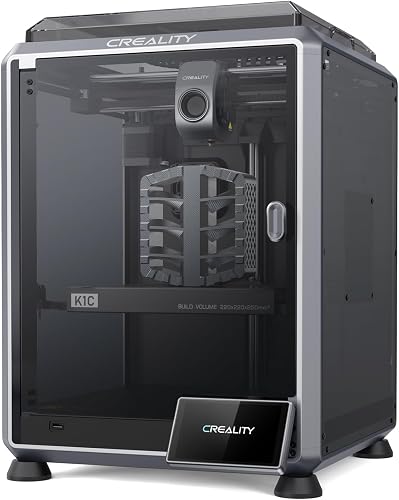
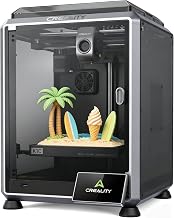
Comparison table
| Spec | Creality K1C | Qidi Q1 Pro |
|---|---|---|
| Build volume | 220 x 220 x 250 mm | 245 x 245 x 240 mm |
| Chamber heating | Passive (~35–45 °C) | Active 60 °C |
| Max nozzle temp | 300 °C | 350 °C |
| Hotend | Hardened steel, swappable | Hardened steel, swappable |
| Max print speed | 600 mm/s | 600 mm/s |
| Auto leveling | Strain-gauge probe | Inductive probe |
| Best for | PLA-CF, PETG-CF, light ABS | ABS, ASA, PC, PA-CF |
| Slicer | Creality Print | QidiStudio (Orca fork) |
This is why the creality k1c vs qidi q1 pro rc monster truck comparison really matters. Both printers were designed for engineering filaments, but they take very different approaches to heat, hardware, and ease of use, and those differences show up in how durable the finished shell is after a season of bashing.
Build volume and shell fit
The Creality K1C offers a 220 x 220 x 250 mm volume. The Qidi Q1 Pro is fractionally larger at 245 x 245 x 240 mm. Neither is huge, but both clear the practical envelope for a 1/10 monster truck body when you orient the shell vertically on its tail. For reference, a Traxxas Stampede shell is about 305 mm long when flat, so you will need to split it into two halves and glue or screw at the firewall regardless of which printer you choose. A 1/16 scale shell typically fits whole on either bed.
The Q1 Pro’s extra 25 mm of XY width matters more than it sounds. It lets you nest a body half and its matching wheel-well insert on the same plate, which saves a full heat-up cycle when you are printing replacement panels mid-week. If you mostly print 1/18 and 1/24 bodies, build volume is a wash. For an apples-to-apples sense of how these compare with other enclosed machines, our best enclosed 3D printers roundup walks through chamber sizes and lid designs across the category.
Chamber heat: the deciding factor
The Qidi Q1 Pro has an active 60 °C chamber driven by a dedicated heater and a circulation fan. Crucially, it ramps in about 8–10 minutes from cold, and it holds temperature within a couple of degrees throughout a multi-hour print. That stability is what kills warp on tall ABS body halves. You can run ASA roll cages and PC-ABS bumpers and pull them off the plate without the corners curling away.
The Creality K1C has a passive enclosure. The hotbed and ambient warming inside the chamber can reach roughly 35–45 °C during a long ABS print, which is enough for short parts and most PLA-CF or PETG-CF work, but not enough for a 220 mm-tall ABS shell. Owners regularly add aftermarket chamber heaters or simply slow down and accept a higher warp rate. If you only print carbon-filled PLA, you may never notice the difference.
Material handling and hotend
Both printers ship with hardened steel nozzles, which you need for abrasive carbon-fiber and glass-fiber blends. The Q1 Pro’s hotend tops out at 350 °C, allowing PC, PA6-CF, and PPS-CF in addition to the standard engineering plastics. The K1C maxes out at 300 °C, which covers ABS, ASA, PETG-CF, and PLA-CF comfortably but excludes the higher-temp nylons and polycarbonates.
For pure body shells, 300 °C is enough. For chassis-adjacent parts like servo horns, motor mounts, and skid plates where you really want nylon’s toughness, the Qidi opens up materials the Creality cannot reach. If you are new to engineering filaments, our 3D printer buying guide explains what nozzle and chamber specs actually translate to in real-world part strength.
Speed and quality at bashing scale
Both machines are genuinely fast. The K1C is rated at 600 mm/s peak and a more honest 300 mm/s in real prints. The Q1 Pro is rated similarly but tends to print more conservatively out of the box, prioritizing dimensional accuracy over headline speed. On a typical 1/10 monster truck body half (around 12–14 hours at 0.2 mm layer height), the K1C usually finishes 60–90 minutes ahead.
Surface quality on the Q1 Pro is noticeably better because of its consistent chamber and its slower defaults. The K1C’s prints look fine, but you will see ghosting on flat fender panels if you push acceleration. For a competitive bash setup where you reprint bodies constantly, the speed gap matters. For show shelves and scale rigs, the Qidi’s finish wins. If raw throughput is your top priority across multiple printers, the best high-speed 3D printers guide ranks the current crop side by side.
Slicer, workflow, and learning curve
Creality Print and the K1C’s onboard interface are simpler. Profiles for PLA-CF, PETG-CF, and ABS work well at default settings. The Q1 Pro uses QidiStudio, a fork of OrcaSlicer, which has more controls but a steeper first hour. Once you build profiles for your filament library, both workflows feel similar.
Bed-leveling is automatic on both, but the Q1 Pro adds an inductive probe that compensates for the metal build plate’s thermal expansion at higher chamber temps. That subtle difference is why owners report better first-layer reliability on Qidi when running hot ABS or ASA.
Recommendations by build style
Best overall for monster truck bodies: Qidi Q1 Pro
If your goal is durable, crash-survivable shells in real engineering plastics, the Q1 Pro is the smarter long-term buy. The active 60 °C chamber and 350 °C hotend mean you can print ASA fenders, PC-ABS roll cages, and nylon body posts without warp battles. Reprint rates drop, and the bodies last more sessions before cracking. The extra build width also helps you nest paired parts on one plate. Plan for a slightly steeper slicer learning curve in exchange for materials flexibility.
Best fast and forgiving: Creality K1C
The K1C is the better pick if you mostly run carbon-filled PLA or PETG, prefer a simpler slicer, and want the fastest possible iteration on bodies you treat as semi-disposable. It handles short ABS prints fine, and it costs less. For a hobbyist who repaints and replaces shells often, the K1C’s speed and quick setup are real advantages. Pair it with a chamber-temp thermometer so you know when a print is creeping past its comfort zone.
Best for engineering chassis parts: Qidi Q1 Pro
For motor mounts, skid plates, suspension links, and any part that sees rotational load or impact, you really want a 350 °C hotend running PA6-CF or PC-CF. The Q1 Pro is one of the most affordable enclosed machines that can do this reliably. Even if you keep your old printer for PLA prototypes, adding a Q1 Pro for functional parts changes what you can put on the truck.
Long-term durability and crash testing
RC monster trucks land badly. A 1/10 truck at 30 mph hitting concrete from four feet up loads the body posts with serious shear. In side-by-side bashing tests, ASA shells printed in a heated chamber consistently outlast passively-enclosed ABS by about 2x before showing fatigue cracks. PETG-CF sits in between and is the most forgiving for beginners because it does not warp like ABS, even on a less-heated K1C.
If you are buying your first machine and the bodies are mainly for show or light bashing, the K1C’s ease and speed will make you more productive. If you bash hard every weekend and want to print body posts, bumpers, and roll cages in the same engineering plastics that pro teams use, the Qidi’s chamber is worth the slightly higher price.
Maintenance over a busy season
Both machines have hardened steel nozzles that wear with carbon-fiber filaments. Plan to swap nozzles every 800–1,200 hours of CF printing. Belts on the K1C tend to need re-tensioning a bit sooner. The Q1 Pro’s chamber heater adds one more component to dust and inspect, but it has been reliable in long-term owner reports. Our 3D printer maintenance guide covers belt tension, nozzle wear, and lubrication intervals for CoreXY machines like these.
Frequently Asked Questions
Can the Creality K1C print ABS monster truck bodies without warping?
It can, but with caveats. Short ABS parts under 100 mm tall come off fine because the passive enclosure holds enough heat. Tall 200 mm body halves frequently warp at the corners, especially in cool rooms. Many owners add a draft shield, glue stick, or aftermarket chamber heater. If ABS shells are your main goal, the Qidi Q1 Pro is the easier path.
What filament should I use for RC monster truck bodies on the Qidi Q1 Pro?
ASA is the sweet spot. It prints almost like ABS but resists UV yellowing, which matters if your truck lives outside. PC-ABS blends are even tougher but harder to dial in. For roll cages and structural inserts, PA6-CF gives the best stiffness-to-impact ratio. Keep all of these dry in a filament dryer because they absorb moisture quickly.
Will either printer fit a 1/8 scale monster truck body whole?
No. A typical 1/8 scale Lexan body is 400 mm or longer, which exceeds both build volumes. You will need to split the shell at the firewall or roof line and bond the halves. Both printers handle the resulting 200 mm sections well, and a properly bonded ASA seam is nearly as strong as the surrounding material.
How long does a printed monster truck body actually last compared to vacuum-formed Lexan?
Honestly, less. Lexan flexes; FDM parts crack. A well-printed ASA shell from the Q1 Pro typically survives 15–25 hard sessions before showing fatigue. A PETG-CF shell from the K1C lasts 8–15. The advantage of FDM is custom geometry, scale realism, and replaceable panels rather than raw durability. Many bashers print decorative panels and keep a Lexan shell for big jumps.
Is the Qidi Q1 Pro worth the higher price for a beginner?
If you are brand new to 3D printing and your only goal is monster truck bodies in PLA-CF or PETG-CF, the K1C is the easier first machine. If you already know how to dial in filaments and you want to grow into engineering plastics, the Q1 Pro’s chamber and 350 °C hotend pay off within a few months.
Do I need a carbon-fiber nozzle for printing truck bodies?
Only if you are using carbon or glass-fiber-filled filaments. Both printers ship with hardened steel nozzles, so you are covered out of the box. Plain ABS, ASA, and PETG can be printed on a brass nozzle with no wear concerns, but most owners just leave the hardened nozzle installed for simplicity.
Can I run the Qidi Q1 Pro in a small enclosed room without ventilation?
You should not. ABS and ASA emit styrene fumes that you do not want to breathe. The Q1 Pro has a built-in HEPA and carbon filter, which helps with particulates and odors, but the safest practice is still to print in a garage, basement, or room with fresh-air ventilation. The K1C has similar filtration. Treat both like a soldering station and give them airflow.
Key Takeaways
- Choosing the right creality k1c vs qidi q1 pro rc monster truck means matching the key features to your specific needs and budget
- Read real customer reviews and check the return policy before you commit
- Also covers: abs printer for rc car bodies
- Also covers: k1c for crawler bodies
- Also covers: qidi q1 pro rc shells
- Compare value across models — the priciest option is not always the best fit