Disclosure: As an Amazon Associate we earn from qualifying purchases.
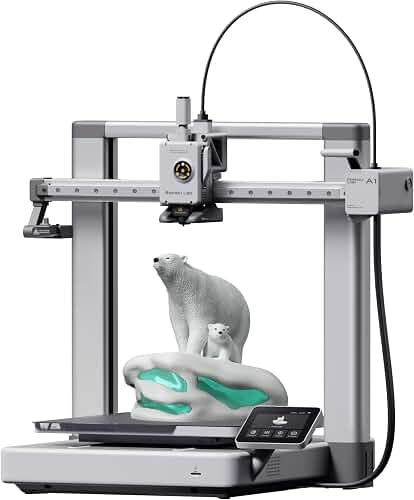
If you want to know how to print food safe cookie cutters on Bambu Lab A1, the short answer is this: use a virgin food-contact PLA or PETG filament, print with a clean stainless-steel nozzle (never brass for food work), slice at 0.20 mm layers with thick walls, and finish each cutter with a food-grade epoxy or polyurethane seal so the porous layer lines can't trap bacteria. The Bambu Lab A1 is genuinely well-suited to this job because its high-flow hotend, fast bed mesh, and bed-slinger geometry let you batch-print dozens of cutters in an afternoon without babysitting.
In this 2026 guide we walk through filament selection, nozzle swaps, Bambu Studio profiles, sealant options, and the full workflow for turning a custom cookie-cutter STL into a sanitary, dishwasher-friendly tool. We also cover the FDA's actual stance on 3D printed food contact (it's more nuanced than YouTube would have you believe) and how to design cutters that don't snap on the first batch of sugar cookie dough.
The best how to print food safe cookie cutters on bambu lab a1 for your situation depends on how you plan to use it and where.
Is the Bambu Lab A1 a good printer for food-safe cookie cutters?
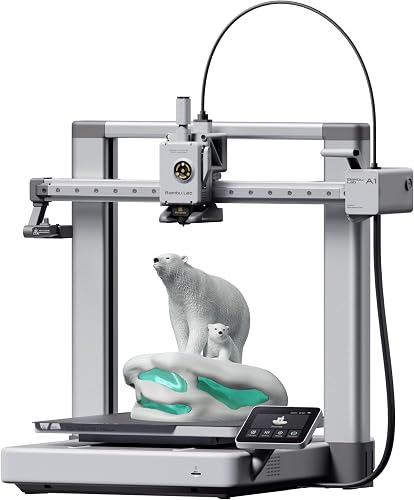
Yes — and arguably one of the best sub-$400 machines for this specific job in 2026. The A1 ships with a quick-swap hotend, automatic bed leveling, and a 256 mm³ build volume that comfortably fits a tray of 12-15 cookie cutters per print. Because the toolhead is light, the A1 can sustain 300+ mm/s on simple extrusion-style geometries like cutters, so a tray of holiday shapes that would take 6 hours on an Ender 3 prints in about 90 minutes on the A1. If you're still comparing options, our Bambu Lab A1 Mini review covers the smaller sibling, and our Bambu Lab A1 vs Creality K1 comparison shows where the A1 wins on ease-of-use.
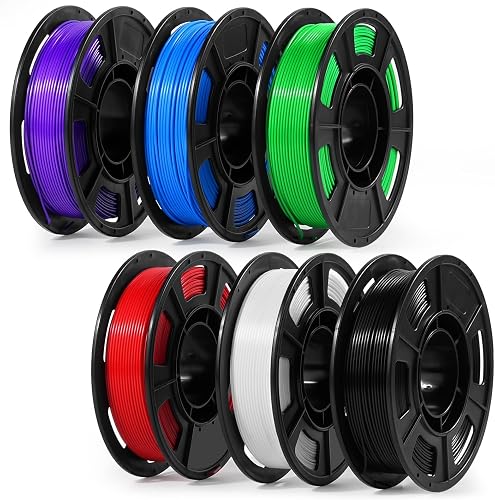
The other reason the A1 stands out for cookie-cutter work: AMS Lite multi-color support. If you sell at craft fairs or run an Etsy shop, you can print a batch of cutters with color-coded handles (red for Christmas, pastel for Easter) in a single job. That's a real production advantage over single-color machines.
The food-safety reality: what "food safe" actually means for 3D prints
Before anything else, the honest truth: a bare FDM 3D print is technically not certified food-safe, regardless of the filament. Three reasons:
- Layer lines are porous. Between every layer there are microscopic gaps where dough, butter, and bacteria can lodge. Even "watertight" prints have surface roughness invisible to the eye but enormous to a bacterium.
- Brass nozzles contain lead. The stock A1 nozzle is brass, which can leach trace lead into the melt zone. For incidental contact (cookie dough touches the cutter for 30 seconds then gets baked at 350°F) the risk is negligible, but for any commercial or repeat-use cutter you want a stainless steel or hardened steel nozzle.
- Filament additives. Colorants, plasticizers, and processing aids aren't always disclosed. "Food contact" filaments specifically use FDA-listed pigments.
The practical workaround used by every serious cookie-cutter seller: print with food-contact-rated PLA or PETG, then seal the finished cutter with a food-safe epoxy or polyurethane coating. Once sealed, the cutter behaves like any other plastic kitchen tool — wash it, dry it, store it.
Step 1: Pick the right filament
For cookie cutters, you want a stiff filament that holds an edge but won't shatter when pressed into chilled dough. The two real choices:
- PLA (food-contact grade) — Easy to print on the A1, sharp edges, low warp. Downside: PLA softens around 60°C, so you cannot put it in a hot dishwasher or leave it in a sunny car. Hand-wash only.
- PETG (food-contact grade) — Tougher, slightly more flexible, survives a top-rack dishwasher cycle. Slightly harder to dial in on the A1 because of stringing, but Bambu Studio's stock PETG-HF profile handles it well.
Look specifically for filaments marked "FDA compliant for food contact" or "food safe" by the manufacturer. Natural (uncolored) is safest because there are no pigments to worry about. If you want colored cutters, stick with named food-contact lines from established brands. Our PLA filament guide explains the chemistry in more depth if you want to understand what you're buying.
Step 2: Swap to a stainless steel nozzle
The A1's quick-swap hotend makes this a 30-second job — just unclip the silicone sock, pull the hotend assembly, and clip in a stainless replacement. Bambu sells a 0.4 mm stainless A1 hotend directly. For cookie cutters with very fine detail (initials, lace patterns) a 0.2 mm nozzle gives crisper edges but slows the print dramatically. For most batch work, 0.4 mm stainless is the sweet spot.
Why stainless over brass? Brass contains 2-3% lead by mass as a machining additive. The FDA limits leachable lead in food-contact surfaces to vanishingly small amounts, and a hot brass nozzle is exactly the kind of contact that can transfer trace lead into the polymer melt. Stainless steel eliminates the question entirely.
Step 3: Bambu Studio slicer settings for cookie cutters
Open your STL in Bambu Studio and apply these settings before slicing:
- Layer height: 0.20 mm. Goes finer if you want, but 0.20 is the durability/speed sweet spot.
- Wall loops: 4 (minimum 3). More walls = stronger cutting edge.
- Top/bottom layers: 4 each.
- Infill: 20% gyroid. The handle needs stiffness, the cutting wall is solid from the wall loops.
- Print speed: Use Bambu's default "Standard" profile (200-250 mm/s outer, slower walls). Don't crank to 500 mm/s — you'll get wavy cutting edges.
- Brim: 5 mm. Cookie cutters are tall and thin; a brim prevents tipping.
- Cooling: 100% part cooling fan after layer 3. PLA needs it for crisp overhangs.
Save this as a custom profile called "Cookie Cutter PLA" so you don't have to redo it every time. If you're new to Bambu Studio's interface, our beginner 3D printer guide walks through the basics.
Step 4: Design rules for a cookie cutter that actually works
Whether you're downloading from Thingiverse or designing in Tinkercad/Fusion 360, follow these dimensions:
- Cutting wall thickness: 1.2 mm (3 perimeters at 0.4 mm nozzle).
- Cutting wall height: 12-15 mm. Tall enough to cut 8 mm dough cleanly, short enough not to warp.
- Top reinforcement rim: 3 mm wide, 2 mm tall, all the way around the top edge. This is where you press with your palm. Without it, you'll crack the wall.
- Internal detail walls: minimum 0.8 mm — anything thinner won't survive a dishwasher or a determined toddler.
- Bottom edge: sharp 90° — don't chamfer it, you want it to cut.
Step 5: Post-processing and food-safe sealing
Once the print finishes:
- Remove the brim cleanly with a deburring tool or hobby knife.
- Lightly sand the bottom cutting edge with 400-grit to remove any elephant's foot squish.
- Wash the cutter in warm soapy water to remove dust and oils from your hands.
- Dry completely (24 hours air-dry, or a hair dryer on low).
- Seal. Apply two thin coats of a food-contact-rated sealer: food-grade mineral oil for occasional-use cutters, or a two-part food-safe epoxy (the kind sold for sealing wooden cutting boards and charcuterie boards) for cutters you'll wash repeatedly. Let cure fully per the product instructions — typically 7 days for epoxy.
Sealed cutters are top-rack dishwasher safe in PETG, hand-wash only in PLA. Either way, expect a 1-2 year lifespan with regular use — far longer than the cost of reprinting.
Step 6: A simple production workflow for batch printing
If you're printing cutters to sell, batch efficiency matters. Here's the workflow most A1 sellers settle on:
- Arrange 12-15 cutters per plate in Bambu Studio. Leave 3 mm between brims.
- Print overnight or while you're working another job.
- De-brim and inspect the next morning — toss any with visible defects (under 5% reject rate is normal on the A1).
- Wash, dry, and rack the good ones.
- Apply sealer in batches of 30-50. Hang on a drying line.
- Package after full cure.
One A1 can comfortably output 80-100 finished, sealed cutters per week running 8 hours a day. If you want to scale further, our fastest 3D printers guide covers options for adding a second machine.
Common problems and how to fix them
Wavy cutting edges: print speed too high. Drop outer wall speed to 100 mm/s.
Brim tearing the cutter: first layer over-squished. Increase first layer height to 0.24 mm or recalibrate the bed mesh.
Layer separation along the wall: PETG printed too cold, or part cooling too aggressive. Drop fan to 30% for PETG.
Cutter snaps when used: handle wall too thin, or no top reinforcement rim. Redesign with a 3 mm rim.
Sealer beading instead of coating: didn't wash off the print first. Hand oils and dust prevent adhesion.
For broader troubleshooting on the A1 platform, see our 3D printer troubleshooting guide.
Is it legal to sell 3D printed cookie cutters?
In the United States, yes — cookie cutters are considered "incidental contact" tools (they touch raw dough briefly, then the dough is baked, killing surface bacteria). Tens of thousands of sellers list 3D printed cutters on Etsy and Amazon Handmade. That said, most states require you to include a care card stating "hand wash, do not put in dishwasher, not for long-term food storage" if you're selling commercially. Check your state's cottage-food and crafts regulations before scaling up.
Frequently Asked Questions
Can I use regular PLA from any brand for cookie cutters on the Bambu Lab A1?
For personal use at home, regular PLA is fine — the contact is brief and the dough is baked. For selling, switch to a filament explicitly labeled "food-contact compliant" or "FDA approved" so you can answer customer questions honestly. The print settings are identical; only the certification differs.
Do I really need to swap the brass nozzle on the A1 to print food-safe cutters?
For occasional home use, no — the lead exposure from brief brass contact is negligible. For repeat commercial production, yes — a stainless steel hotend is cheap insurance and removes a question customers may ask. The A1's quick-swap hotend makes the upgrade a 30-second job.
What food-safe sealer works best on Bambu Lab A1 printed cookie cutters?
Two-part food-safe epoxy (the type sold for sealing cutting boards) creates the most durable, dishwasher-tolerant finish. For lighter-use cutters, food-grade mineral oil or beeswax-mineral oil blends work but need reapplication every few washes. Avoid polyurethane unless the can specifically says "food contact safe when cured."
How long do 3D printed cookie cutters last with regular use?
A properly designed, sealed PETG cutter printed on the A1 lasts 2-3 years with weekly use. PLA cutters last 1-2 years and require hand-washing. The most common failure mode is the cutting edge dulling from sanding by abrasive doughs (like cornmeal-heavy recipes), not the plastic cracking.
Can the Bambu Lab A1 print intricate detailed cookie cutters like names or logos?
Yes, but swap to a 0.2 mm nozzle for any feature thinner than 1 mm. With the stock 0.4 mm nozzle and 3 perimeter walls, your minimum reliable feature size is about 1.2 mm. For wedding monograms or company logos, the 0.2 mm stainless nozzle plus a slower 80 mm/s outer wall speed delivers crisp, readable detail.
Is PETG or PLA better for food-safe cookie cutters on the Bambu Lab A1?
PETG wins for durability and dishwasher tolerance but is slightly harder to print without stringing. PLA wins for sharp detail, easier printing, and lower cost — at the price of hand-washing only. Most hobby bakers prefer PLA; most commercial sellers prefer PETG.
How many cookie cutters can the Bambu Lab A1 print in one batch?
On the 256 x 256 mm build plate, you can fit 12-15 standard 3-inch cutters per print with a 5 mm brim and 3 mm spacing. At 0.20 mm layers, a full plate prints in roughly 90 minutes — letting one A1 produce 80-100 cutters per 8-hour workday before any post-processing.
Key Takeaways
- Choosing the right how to print food safe cookie cutters on bambu lab a1 means matching the key features to your specific needs and budget
- Read real customer reviews and check the return policy before you commit
- Also covers: bambu a1 stainless steel nozzle food safe
- Also covers: food safe pla cookie cutter settings
- Also covers: bambu a1 cookie cutter wall count
- Compare value across models — the priciest option is not always the best fit