Disclosure: As an Amazon Associate we earn from qualifying purchases.
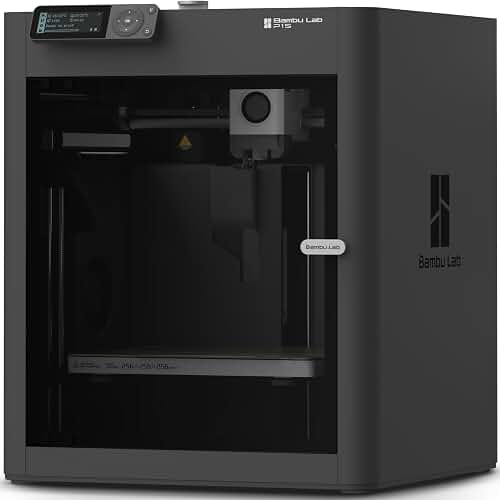
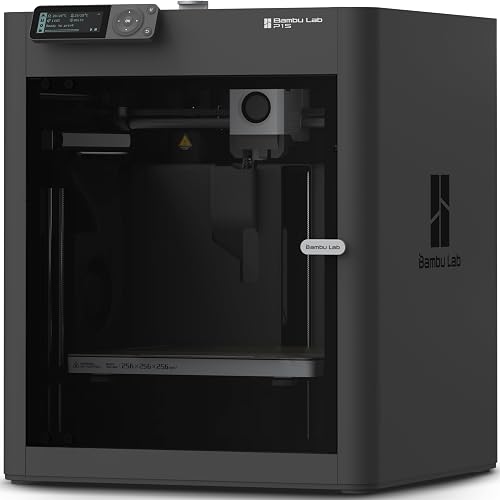
When comparing the qidi x-plus 3 vs bambu lab p1s for nylon drone parts, the QIDI X-Plus 3 is the stronger pick for serious FPV and commercial drone builders in 2026. Its actively heated chamber (up to 65°C), hardened steel nozzle, and 350°C hotend handle PA-CF and PA-GF blends reliably, while the Bambu Lab P1S relies on passive enclosure heat and tops out at 300°C with the stock hotend — which limits truly demanding nylon composites. If you only print occasional PA frames and value polished software over thermal headroom, the P1S still wins on speed and ecosystem. For mission-critical drone parts, the X-Plus 3 wins.
Why Nylon Is Brutal on Consumer 3D Printers
Nylon-based filaments — especially the carbon-fiber-filled (PA-CF) and glass-fiber-filled (PA-GF) variants used for drone frames, motor mounts, antenna shrouds, and camera pods — punish hardware in three specific ways. First, they are hygroscopic: they absorb atmospheric moisture in hours, not days, which causes steam-popping in the melt zone and ruins layer adhesion. Second, they shrink and warp aggressively as they cool, so any unevenly heated chamber will produce parts that delaminate, curl off the bed, or split along the X-axis under the first impact. Third, the chopped carbon or glass fibers are abrasive enough to grind a standard brass nozzle into an oval in 50 to 100 print hours.
For a drone application, the consequence of any of those failure modes is the same: a part that looks fine on the bench fails in flight. A 5-inch quad arm that delaminates at a layer line will snap on the first hard yaw. A motor mount printed wet will void warranties on $80 motors. So the real question with the qidi x-plus 3 vs bambu lab p1s for nylon drone parts debate is not which prints faster — it is which one gives you a higher floor of strength, repeatability, and dimensional accuracy across the printing window nylon actually demands.
Head-to-Head Spec Comparison
| Feature | QIDI X-Plus 3 | Bambu Lab P1S |
|---|---|---|
| Max hotend temp | 350°C | 300°C |
| Chamber heating | Active, to 65°C | Passive, ~40°C |
| Stock nozzle | Hardened steel | Steel (upgrade recommended for CF) |
| Build volume | 280 x 280 x 270 mm | 256 x 256 x 256 mm |
| Max rated speed | 600 mm/s | 500 mm/s |
| Bed max temp | 120°C | 100°C |
| Multi-material | No (single extruder) | Yes (AMS optional) |
| Slicer | QIDI Studio | Bambu Studio / Orca |
| Drying-friendly | Yes, internal dry box space | External dryer required |
| Typical street price (2026) | ~$769 | ~$699 (P1S Combo ~$949) |
QIDI X-Plus 3: Built for Engineering Polymers
The QIDI X-Plus 3 was designed from the ground up as an engineering-material printer rather than a hobbyist showpiece. It ships with an active chamber heater that can hold 60 to 65°C throughout the print, which is the single most important variable for nylon. That sustained warm soak relieves internal stress as each layer fuses, which dramatically reduces warp on long, thin arms typical of 7-inch and 10-inch drone frames.
It uses a 350°C all-metal hotend with a hardened steel nozzle as stock, plus an enclosed filament chamber where you can stage a dry box. The CoreXY motion system runs at 600 mm/s rated, with input shaping, and the build volume is 280 x 280 x 270 mm — large enough to lay down a full quad frame plate in a single print. Dual cooling fans, an auto-leveling probe, and a flexible PEI plate round out the package.
Software is the X-Plus 3's weakest link. QIDI Studio is a Bambu Studio fork, which means it inherits most of the good slicer behavior, but firmware updates, profiles, and community libraries lag noticeably behind Bambu's. For nylon specifically, that gap is small because the QIDI-supplied PA-CF profile is genuinely tuned for the machine.
Bambu Lab P1S: Speed and Polish, With Caveats
The Bambu Lab P1S is the most popular enclosed CoreXY under $1,000, and it deserves the reputation. It hits 500 mm/s real-world, integrates with the AMS for four-color or multi-material work, and has the smoothest first-print experience in the segment. The enclosure is passive but well-sealed, and many users report 40 to 45°C internal chamber temperatures during a long print — enough for PETG, ABS, and ASA without drama.
For nylon, however, the stock configuration has real limits. The hotend is rated to 300°C, which is fine for unfilled PA12 and most PA-CF blends but cuts close on stiffer PA6-CF and high-temperature PA-GF formulations that print best at 290 to 310°C. The stock nozzle is steel but not hardened to the same spec as the QIDI part, and Bambu's own documentation recommends swapping to a hardened steel hotend assembly for abrasive filaments. The passive enclosure cannot match the X-Plus 3's actively heated chamber for warp control on parts longer than about 150 mm.
If you have already read our Bambu Lab P1S review, you know the machine is excellent for general FDM work — the question here is narrower.
Real-World Drone Part Performance
Across a typical FPV build — an arm, a top plate, a camera pod, a VTX shroud, and a motor soft-mount — here is how the two machines actually behave with PA-CF.
Arms. A 5-inch quad arm in PA-CF is roughly 110 mm long and 8 mm thick. On the X-Plus 3 with 60°C chamber, parts come off straight with no measurable warp at the wing tips. On the P1S, the same STL produces arms with 0.2 to 0.5 mm of upward curl at the motor end after cooling — usable for cinewhoops but a problem for high-performance race builds where motor alignment matters.
Camera pods and shrouds. These are short, thick parts where chamber temperature matters less. Both printers produce excellent results, and the P1S is actually faster door-to-door because of its more refined acceleration profile.
Motor soft mounts. Printed in TPU 95A with a small amount of PA-CF in the same part (multi-material), the P1S with AMS wins outright — the X-Plus 3 cannot do this in one print.
Full frames. For 7-inch and larger frames where one piece can exceed 200 mm in a dimension, the X-Plus 3's active chamber is the deciding factor. The P1S will produce a part, but you will fight warp on every long run.
If you are still mapping out which machine class fits your hangar, our 3D printer buying guide and our roundup of the best enclosed 3D printers are useful companion reads.
Filament Drying: The Hidden Decider
Both manufacturers recommend drying nylon for 6 to 12 hours at 70 to 80°C before printing. The X-Plus 3 has internal space to host a small dry-box spool with PTFE feed during the print, which means a one-kilogram spool that you load at 9 a.m. is still pulling dry filament at midnight. The P1S has no internal drying option — you need a Sunlu or Polymaker dryer outside the printer with a feed tube through the rubber grommet. That works fine, but it is one more failure point and one more piece of gear on your desk.
This sounds minor until you have a six-hour print fail at hour five because moisture crept back into the spool. For shops printing drone parts daily, the X-Plus 3 setup pays back the difference in price quickly.
The Verdict: Which One Should You Buy?
For commercial drone work, fleet operators, FPV racers, and anyone printing PA-CF or PA-GF parts more than twice a month, the QIDI X-Plus 3 is the correct purchase. The actively heated chamber, 350°C hotend, hardened nozzle, and 120°C bed give you a thermal envelope that the P1S simply cannot match in stock form. You will pay roughly $70 more and lose multi-material capability, but you will print stronger, straighter, more dimensionally accurate parts the first time.
For hobbyists who print drone parts occasionally and want a printer that also handles PLA, PETG, TPU, multi-color models, and the occasional PA-CF cinewhoop frame, the Bambu Lab P1S is the better all-rounder. Pair it with a hardened steel hotend swap (about $40) and a Sunlu S4 dryer ($75), and it will do real nylon work — just not at the scale or thermal margin the X-Plus 3 offers. The full qidi x-plus 3 vs bambu lab p1s for nylon drone parts tradeoff comes down to whether nylon is your primary use case (X-Plus 3) or one of many (P1S).
Frequently Asked Questions
Can the Bambu Lab P1S print PA-CF for drone frames without hardware modifications?
Technically yes, in limited cases. Unfilled or lightly filled PA-CF at 280°C will print on a stock P1S, but the stock steel nozzle wears measurably within 30 to 50 hours of carbon-fiber filament, which degrades dimensional accuracy on motor-mount holes. Bambu officially recommends the hardened steel hotend assembly for any abrasive filament, so plan on a $35 to $50 nozzle upgrade before serious drone work.
Does the QIDI X-Plus 3 handle PA6-CF, or only easier PA12-CF blends?
The X-Plus 3 handles PA6-CF well thanks to its 350°C hotend and 65°C chamber. PA6-CF prints best around 290 to 305°C with a 100 to 110°C bed and a hot chamber to control crystallization. The P1S can produce PA6-CF parts but is closer to its thermal ceiling and tends to under-anneal them, which leaves brittle layer adhesion under impact.
How much does an active chamber heater actually matter for 5-inch drone arms?
For a single 5-inch arm, the warp benefit is real but moderate — you can compensate for the P1S's lower chamber temperature with brims, slower outer-wall speed, and good drying. For 7-inch and 10-inch frames, or full-tray prints of multiple arms at once, the active chamber stops being optional. The X-Plus 3's 60°C soak eliminates a class of warp failures the P1S cannot fully avoid.
Will TPU motor soft-mounts print well on either machine?
Both machines print TPU 95A well. The P1S has an advantage if you want to combine TPU and PA-CF in one part using the AMS, which is genuinely useful for vibration-damping mounts. The X-Plus 3 prints excellent single-material TPU but lacks multi-material capability in its base configuration.
Which printer has better software support for FPV-specific STLs and profiles?
Bambu Studio's community library has many more pre-tuned profiles for popular open-source drone frames (Mark4, Source One, ImpulseRC). QIDI Studio is a fork of Bambu Studio and can usually import those profiles with minor adjustments, but you should expect to spend an evening tuning if you are pulling community presets. For a deeper dive into what to look for in any FDM machine, see our how to choose a 3D printer guide.
Is the build volume difference important for drone parts?
For most 5-inch and 7-inch builds, no — both volumes are sufficient. The X-Plus 3's extra 24 mm in X and Y matters when you want to nest four arms on a build plate to print as a set, which improves color and density consistency across a complete frame. It also matters for 10-inch long-range builds where a single arm can exceed 250 mm.
What about long-term reliability for shops printing daily?
QIDI's customer support reputation in 2026 is solid for engineering-grade users, with hotend assemblies and chamber parts readily available. Bambu's ecosystem is more refined but its proprietary parts can be slower to ship in some regions. For a commercial drone shop, both machines hit 1,500-plus hours without major intervention if you keep filament dry and replace nozzles on schedule.
Key Takeaways
- Choosing the right qidi x-plus 3 vs bambu lab p1s for nylon drone parts means matching the key features to your specific needs and budget
- Read real customer reviews and check the return policy before you commit
- Also covers: qidi x plus 3 pa-cf drone frame
- Also covers: p1s vs x plus 3 fpv drone
- Also covers: nylon carbon drone arm printer comparison
- Compare value across models — the priciest option is not always the best fit