If you craft ball-jointed dolls, you already know that eyes and accessories sit at the unforgiving end of the detail spectrum. Iris domes need glassy clarity, follow-the-eye urethane pours need flawless masters, and tiny accessories — earrings, finger rings, faceplates, hand attachments — must capture sub-millimeter geometry without sanding away the charm. The best 3d printer for bjd doll eyes and accessories in 2026 is almost always a high-resolution monochrome LCD resin (MSLA) machine in the 8K to 12K range, paired with a clear or water-washable detail resin. FDM filament printers simply cannot resolve the curved, polished surfaces these tiny parts demand. Below, we break down exactly which specs matter, which printer classes to shop in, and how to pick one that won't frustrate you halfway through a custom commission.
Why Resin (MSLA) Beats FDM for BJD Eyes and Accessories
BJD eyes are usually printed as masters for clear resin or urethane casting, or printed directly in a transparent UV resin that is then polished and tinted. Either workflow requires a printing technology that can hold a hemispherical curve without visible layer stepping. MSLA printers cure an entire layer of liquid resin at once using a 4K, 8K, 10K, or 12K monochrome LCD, producing XY pixels in the 17–35 micron range and Z layers as fine as 10 microns. That resolution is what gives you the smooth iris dome, sharp pupil rim, and crisp engraved detail that defines a high-end BJD eye.
When shopping for best 3d printer for bjd doll eyes and accessories, it pays to compare specs, capacity, and real-world runtime before committing.
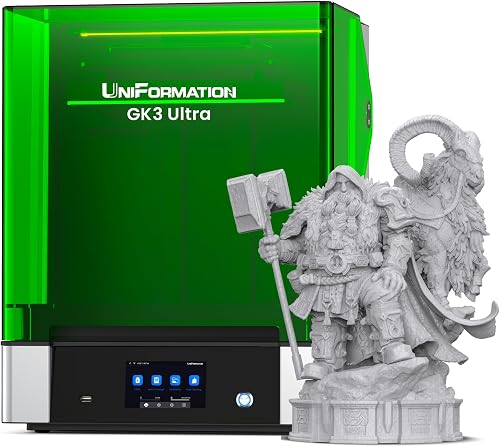
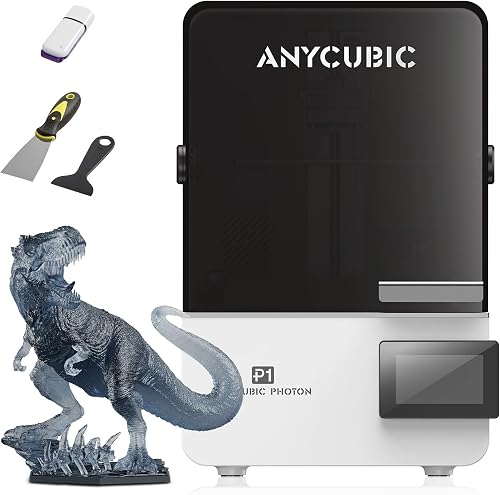
Filament (FDM) printers, even premium ones, extrude lines around 400 microns wide. They are wonderful for prototypes, doll stands, light boxes, and storage cases — but the visible layer lines and rounded extrusion profile mean they cannot produce gallery-quality eyes or jewelry-scale accessories. If you want to compare the two technologies side by side, our FDM vs resin 3D printer guide walks through every tradeoff.
How to Match Printer Class to Your BJD Workflow
Different BJD makers need different machines. Here is a quick comparison of the three resin printer classes you should be shopping in 2026.
| Printer Class | Typical LCD | XY Pixel | Best For | Approx. Price (USD) |
|---|---|---|---|---|
| Entry-level 8K mono | 7" / 8K | ~28 µm | Hobbyist eye masters, small accessories | $200–$320 |
| Mid-range 10K mono | 7"–9" / 10K | ~19–24 µm | Commission-grade direct-print eyes, jewelry, faceplates | $350–$550 |
| Prosumer 12K + heated vat | 9"–10" / 12K | ~17–19 µm | Studios, high-volume production, transparent resins year-round | $600–$1,000 |
Key Specs to Look For in a BJD-Focused Resin Printer
Picking the best 3d printer for bjd doll eyes and accessories comes down to five hard specifications. Skim past marketing copy and look at the data sheet for these numbers.
1. LCD Resolution: Aim for 8K or Higher
An 8K mono LCD on a 7-inch screen gives you roughly 28–29 micron XY pixels. A 10K or 12K screen drops that to 18–24 microns. For an iris pupil edge or a faceted accessory bezel, that difference is visible to the naked eye after curing. If your budget allows, go 10K. If you are casting eyes from masters rather than printing finals, 8K is the practical sweet spot.
2. Build Volume vs. Print Pitch
Larger build plates use bigger LCDs with the same pixel count, which actually lowers effective resolution. A 7-inch 8K printer beats a 10-inch 8K printer for tiny eye and accessory work. Unless you also plan to print MSD-sized doll heads or hand sculpts, prefer a compact mono LCD machine. A 143 × 89 × 165 mm build volume fits dozens of eyes per plate with detail to spare.
3. Light Source Uniformity
Look for COB (chip-on-board) LED arrays with integrated Fresnel collimators or a parallel light matrix. Uniform UV means the eye on the back-left corner of the plate cures identically to the one in the center — critical when you nest a full clutch of irises. Cheap printers cure unevenly and you will see soft edges on outer prints.
4. Resin Compatibility (Especially Clear and Water-Washable)
BJD makers use a lot of clear, milky white, and skin-tone resins. The printer needs an open material system or, at minimum, validated profiles for third-party clear resins from Anycubic, Siraya Tech, Sunlu, and Phrozen. Some printers have heated vats — a huge bonus in winter because clear resins are notoriously cold-sensitive and need 25–30 °C to flow off the FEP cleanly.
5. Z-Axis Stability
A linear rail (preferably dual) on the Z column eliminates the wobble that creates faint horizontal banding. On a glossy iris dome, even 5 microns of wobble shows up as a ring. This is one spec where stepping up a tier pays for itself the first time you print a commission.
If you are unsure where you fit, our best resin 3D printers roundup walks through current top models in every tier, and the best 3D printers for miniatures guide covers the same detail-first specifications from a tabletop angle — most miniature printers are equally fantastic at BJD work.
Top Resin Printer Picks for BJD Eyes and Accessories in 2026
Rather than naming specific SKUs that shift weekly, here are the model families consistently recommended by BJD artists on forums like Den of Angels and Reddit's r/BJD in 2026. Look for the latest generation of each line.
Elegoo Mars Series (5 / 5 Ultra)
The Mars line is the default starter for BJD eye work. The current generation offers a 7-inch 9K mono LCD, COB light source, and a tilt-release mechanism that nearly eliminates suction force on hollowed eye domes. It pairs beautifully with Elegoo Clear Resin or Siraya Tech Tenacious Clear. If you want a deeper writeup of the Mars family, our Elegoo Mars 4 Ultra review covers the print quality and software workflow in detail.
Anycubic Photon Mono Series (M5s / M7 Pro)
Anycubic's M5s and the newer M7 Pro bring 12K LCDs, intelligent leveling, and heated vats — the trifecta for serious eye casters. The heated vat alone is worth the upgrade if you live in a cool climate and have been fighting cloudy clear pours. Read our full Anycubic Photon Mono M5s review for a deeper dive into how it performs on high-detail work.
Phrozen Sonic Mini / Mighty 8K
Phrozen built its reputation on jewelry and dental printing, which means the Sonic Mini 8K and Mighty 8K Mk II are tuned for exactly the tolerances BJD accessory makers need. The Mighty's larger build plate lets you nest a full eye set plus matching earrings and a tiny tiara in one print. Phrozen ships excellent stock profiles for clear and castable resins.
Creality Halot-Mage S Pro
If you want a larger plate for occasional hand sculpts or doll-scale prop runs, the Halot-Mage S Pro offers a 10.3-inch 14K LCD without giving up the 28-micron pixel pitch most makers need. It is the printer to choose if your BJD work is bleeding into prop and accessory production for multiple doll sizes.
Clear Resin Tips for BJD Eyes
The printer is only half the battle. Achieving glass-clear eye masters or final iris prints depends on resin choice and post-processing discipline. Three pointers experienced eye makers swear by:
- Warm your resin to 30 °C before pouring. Cold clear resin traps micro-bubbles that show up as cloudiness. A USB resin warmer or a heated vat solves this.
- Use a long bottom exposure but a short normal exposure. Over-curing the body of the iris yellows the resin. Print a small test matrix to dial in the minimum normal-layer time.
- Wet sand and dip-coat in UV varnish. Even the smoothest printed dome benefits from progressive wet sanding (1000 12000 grit) followed by a dip in clear UV resin and a final cure. This is how artists achieve the "wet eye" look.
If you are brand new to resin printing entirely, skim our 3D printer buying guide for an overview of slicing, washing, and curing fundamentals before you commit to a machine.
Accessories Beyond Eyes: What Else Can You Print?
Once you have a high-resolution resin printer dialed in for eyes, it becomes the centerpiece of an entire BJD accessory studio. Common projects include:
- Replacement faceplates and magnetic eye mechanisms
- Articulated finger and hand parts for repair or customization
- Jewelry — earrings, pendants, tiaras, brooches — printed in castable resin for metal casting or directly in standard resin and painted
- Doll-scale props: books, teacups, swords, musical instruments
- Wig caps, eyelid inserts, and tongue/teeth inserts for custom faceups
- Stands and display dioramas (these you can FDM-print to save resin)
The pixel-perfect detail of an 8K-or-higher LCD means engraved text on a tiny book cover or filigree on a ring will actually render. That is the moment most BJD artists realize their resin printer has paid for itself.
Workspace and Safety Considerations
Resin printing requires real ventilation, nitrile gloves, safety glasses, and a wash-and-cure station. Plan on a dedicated space — a closet with a fume extractor, a garage corner, or a spare bathroom — not your dining room. Many BJD artists also invest in a small UV-blocking enclosure so cured prints can sit safely on a shelf without yellowing. None of this is expensive, but it is non-negotiable for clear resin work, where contamination instantly shows.
Frequently Asked Questions
Can I print BJD doll eyes with a regular FDM printer?
Not at gallery quality. FDM printers extrude lines 0.4 mm wide, which leaves visible layer lines on the curved iris dome. They also cannot print in truly clear material — even "transparent" PLA and PETG remain frosted. For eyes, you need an MSLA resin printer with at least an 8K mono LCD and a clear UV resin.
What resolution do I need for printing 14 mm or 16 mm BJD eyes?
An 8K mono LCD on a 7-inch screen — roughly 28-micron XY pixels and 0.02–0.05 mm layer height — is the practical minimum for direct-printed eyes. If you want to skip wet sanding and go straight to a varnish dip, step up to a 10K or 12K printer in the 17–24 micron range.
Which clear resin works best for BJD eye masters?
Popular choices in 2026 include Siraya Tech Tenacious Clear, Anycubic Clear, Elegoo Standard Clear, and Phrozen Aqua-Gray 8K for opaque masters. For final cast eyes, most artists use a urethane like Smooth-On Crystal Clear 202 poured into silicone molds taken from the printed master.
How long does it take to print a set of BJD eyes?
On a modern 8K mono LCD printer at a 0.05 mm layer height, a pair of 14 mm hollow eye domes prints in 35–55 minutes. Nest four to eight pairs on the plate and you still finish under 90 minutes total, since MSLA print time scales with height, not part count.
Do I need a heated resin vat for BJD eye printing?
Not strictly, but it helps enormously with clear resins, which become viscous below 22 °C and trap bubbles. If your workspace dips into the 60s Fahrenheit in winter, choose a printer with a heated vat or invest in a stick-on silicone resin warmer.
Can I print BJD accessories like jewelry on the same printer?
Yes — that is the whole appeal. Any printer that can resolve a crisp BJD iris will also resolve filigree, gemstone settings, and tiny clasps. Many BJD artists use castable wax-blended resin to print accessories, then send them out for metal lost-wax casting.
Is a budget 8K printer good enough or should I save up for a 12K?
For most hobbyists and even semi-pro commission artists, a good 8K mono LCD printer in the $250–$350 range produces eyes and accessories indistinguishable from a 12K once finished and varnished. Step up to 12K only if you are running a studio, selling direct-printed (unpolished) final eyes, or want the extra headroom for sub-1 mm jewelry detail.
Key Takeaways
- Choosing the right best 3d printer for bjd doll eyes and accessories means matching the key features to your specific needs and budget
- Read real customer reviews and check the return policy before you commit
- Also covers: bjd resin printer
- Also covers: ball jointed doll 3d printer
- Also covers: custom doll eye printer
- Compare value across models — the priciest option is not always the best fit