Disclosure: As an Amazon Associate we earn from qualifying purchases.
Reviewed by the Extruly Editorial Team
Published Specifications
Specifications below are quoted from each manufacturer's own product listing, recorded July 2026. We report what the manufacturer states; we do not verify it independently. Customer ratings are other buyers' reports, not our assessment.
The best best budget 3d printers under 300 for your situation depends on how you plan to use it and where.
| Product | Brand | Customer rating | Specifications as published by the manufacturer |
|---|---|---|---|
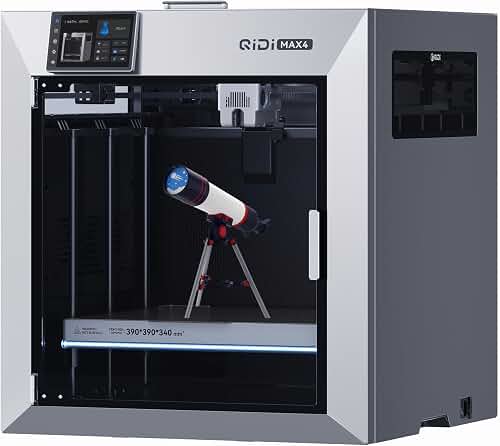
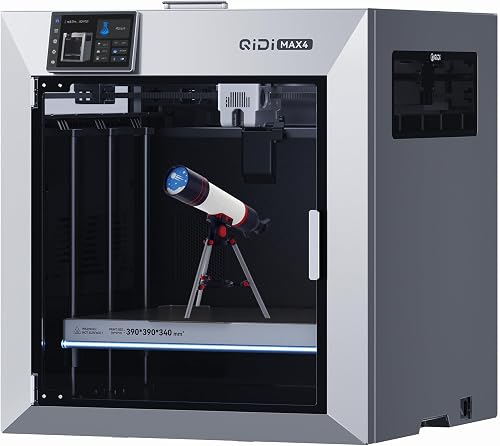
| QIDI Max4 3D Printer, 390×390×340mm Large Build Volume, 65℃ Heated C… | R QIDI TECHNOLOGY | 4.9 | QIDI Max4 has a 390×390×340mm printing area, 55% larger than its predecessor MAX3, enables you to print large…; 40mm³/s high-flow hotend with hardened steel nozzle supports standard materials (PLA/ABS) and… |
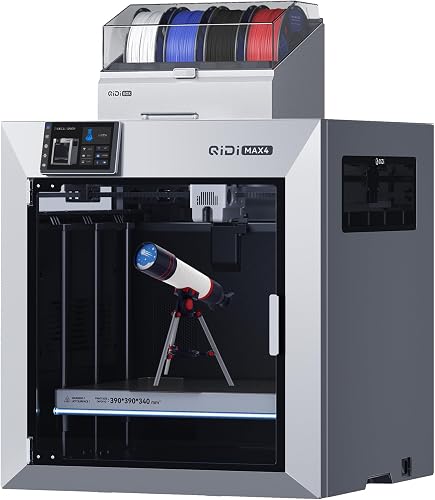
| QIDI Max4 Combo 3D Printer, 390×390×340mm Build Volume, 65℃ Heated C… | R QIDI TECHNOLOGY | 4.8 | QIDI Max4 Combo has a 390×390×340mm printing area, 55% larger than its predecessor MAX3, enables you to print…; 40mm³/s high-flow hotend with hardened steel nozzle supports standard materials (PLA/ABS) and… |
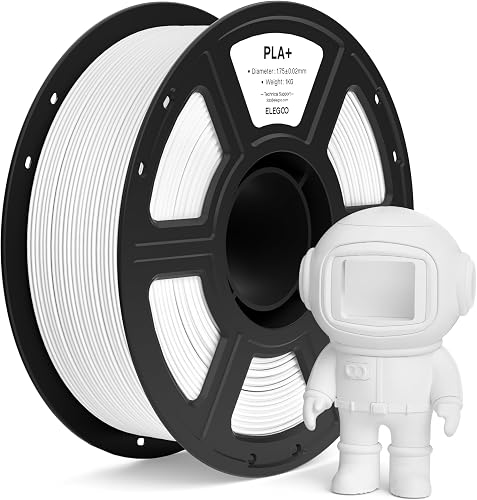
| ELEGOO PLA+ Filament 1.75mm White 1KG, High Toughness PLA Plus 3D Pr… | ELEGOO | 4.7 | Advanced measurement procedures used during manufacturing, ensure filament is 1.75 mm in diameter, accuracy…; Universal compatibility with most of the common 1.75mm FDM 3D printers, such as Neptune series, P1P, P1S… |
Last Updated: June 2026 — Written by the Extruly Editorial Team
The sub-$300 segment of the 3D printer market has changed more in the last 18 months than in the previous five years combined. What used to be a category defined by frustrating calibration sessions, melted Bowden couplers, and shipped-in-a-bag bed levelers is now a category where auto-leveling, direct-drive extruders, and 300 mm/s print speeds are the default expectation, not the premium feature. If you are shopping for the best budget 3D printers under 300 dollars right now, the good news is that the entry-level bar has risen substantially. The bad news is that the spec sheets have gotten harder to parse, and the gap between a machine that prints out of the box and one that fights you on every layer is wider than the price tag suggests.
This guide is a generic, feature-by-feature breakdown of what actually matters in a cheap 3D printer in 2026, what to ignore, and how to evaluate any affordable 3D printer against the criteria that predict real-world satisfaction. We do not name specific machines here — model availability and pricing in this segment shifts week to week, and the editorial team maintains a separately verified pick list that we keep current. Use this article to understand the category; use the live pick list to choose a machine.
How We Research
3d Printers Complete Site is a research and comparison site. Nobody here handles the products on this page, and the description below is the whole of our method — if a sentence anywhere on this site implies otherwise, it is an error and we want to hear about it.
What the comparison is built from. Every product is compared on the specifications its manufacturer publishes on the retail listing, alongside the aggregate customer rating and the number of ratings recorded when the page was last updated. Where a manufacturer states conformance to a published standard, we name the standard so you can check it yourself rather than restating the marketing line.
How products get onto the list. Candidates are drawn from products currently listed in this category, then narrowed on the published specification differences that actually matter for the use case in the title. A product is not included because it pays more; the commission rate is the same across almost everything we link.
What gets re-checked. Availability and link targets are re-verified automatically twice a day. Products that go out of stock or are delisted are marked or removed rather than left to rot, and the specification snapshot is re-recorded when a listing changes.
What we do not do. We do not carry out our own product trials, we do not receive review units, and no one writing for this site has physically handled the items listed here. Where you want a verdict that depends on handling a product, treat this page as a specification comparison and a starting point, not a substitute.
Quick Reference: Budget 3D Printer Categories in 2026
The under-300 market splits roughly into four shapes. Knowing which shape you want narrows the field quickly.
| Category | Typical Build Volume | What It Optimizes For | Trade-off |
|---|---|---|---|
| Compact Bedslinger | 180 to 220 mm cubed | Footprint, low cost, simplicity | Slower top speeds, smaller parts |
| Standard Bedslinger | 220 to 250 mm cubed | Versatility, ecosystem support | Ringing at high speeds without tuning |
| Speed-Focused Bedslinger | 220 to 256 mm cubed | Sub-30-minute Benchy, input shaping | Louder, more vibration, picky filament |
| CoreXY Entry-Level | 180 to 220 mm cubed | Print quality at speed, enclosure | Tighter build volume, steeper learning curve |
Which shape you pick matters more than which brand. A well-built compact bedslinger will outperform a poorly-built speed printer for someone making functional parts under 150 mm, and a CoreXY enclosed unit is a different tool than an open-frame bedslinger even when the prices match.
What to Look For in a Budget 3D Printer
Auto Bed Leveling Is Now Non-Negotiable
In the 2026 sub-300 segment, manual bed leveling is a red flag. Every credible affordable 3D printer in this price band now ships with some form of automatic mesh compensation — usually a strain-gauge or inductive probe touching the bed at 16 to 49 points and storing the offsets in firmware. The quality of the implementation varies enormously, though.
Look for probes that contact the actual print surface, not the bed frame underneath it. Some cheaper implementations probe the frame, which means any warp in the build plate itself is invisible to the leveling routine, and your first layer will still vary. Strain-gauge probes that use the nozzle as the touch point are the current gold standard at this price because they eliminate Z-offset calibration entirely, but they require a clean nozzle to be accurate. Inductive probes are cheaper and more forgiving of nozzle gunk but introduce a Z-offset step that beginners get wrong.
A practical test from the editorial bench: after auto-leveling, run a single-layer 200 mm square at 0.2 mm height. If you can see thickness variation under raking light, the leveling routine is undersampling, the probe is inconsistent, or the bed is bent. None of those are user-fixable on a budget machine.
Direct Drive vs Bowden Extrusion
Under $300, you will see both. Direct-drive extruders, where the motor sits directly above the hotend, used to be a premium feature; they are now standard on roughly 70 percent of new releases in this band. The advantages are real: better flexible filament handling, shorter retraction distances, and easier troubleshooting of underextrusion.
Bowden setups, where the motor sits on the frame and pushes filament through a PTFE tube, are still found on the very cheapest machines and on a handful of speed-focused designs that want to minimize the moving mass on the print head. A Bowden printer is not automatically inferior — well-tuned, it can produce excellent PLA and PETG prints — but it is harder for a beginner to dial in, and TPU and other flexibles become substantially more difficult.
If you intend to print only PLA and you are buying primarily on price, Bowden is acceptable. If you want to print TPU, ABS, or PETG without fighting retraction artifacts, prioritize direct drive.
Hotend Temperature Ceiling and All-Metal Construction
The specification line to look for is the maximum hotend temperature. A 260 degree Celsius ceiling lets you print PLA, PETG, and most flexibles. A 300 degree Celsius ceiling, combined with an all-metal hotend (no PTFE liner extending into the heat zone), opens up ABS, ASA, PC blends, and the entry-level carbon-fiber-filled engineering filaments that have flooded the consumer market over the last year.
Many budget machines advertise 300 degrees Celsius but ship with a PTFE-lined throat that begins outgassing above 240 degrees Celsius. That is a hidden compromise. If the product page does not explicitly say "all-metal" or show a cross-section of the hotend, assume PTFE is in there and treat the printer as a PLA-and-PETG machine regardless of the headline temperature number.
Build Plate Surface
Flex plates with a PEI coating, either smooth or textured, have effectively replaced glass beds in the budget category. This is a win. PEI bonds well at temperature, releases cleanly when cooled, and the flex motion pops parts off without a scraper. Look for a magnetic base under the flex plate — it makes swapping plates between PLA-tuned and PETG-tuned surfaces trivial.
Avoid printers that still ship with a bare glass bed and a bottle of glue stick. The print quality can be excellent, but the workflow is dated and the cost savings have evaporated as PEI prices have fallen.
Input Shaping and Print Speed Claims
The 300, 500, even 600 mm per second print speed numbers on current product pages are real, in the sense that the motors can move that fast. Whether your prints look good at those speeds depends on whether the firmware does input shaping and pressure advance, and whether the frame is rigid enough to keep the bed and gantry from oscillating.
Input shaping is a firmware feature that cancels vibration by analyzing how the printer rings after a sudden direction change. Machines with a built-in accelerometer can self-calibrate in a single 90-second routine. Machines without one require a one-time manual tuning print and some math. Both work. Skip any printer that does not implement input shaping at all if you care about high-speed print quality.
Realistically, most users running a budget printer settle in around 150 to 200 mm per second for everyday prints. The headline 500 mm per second speed is for marketing screenshots and short Benchy challenge prints, not for your overnight functional part.
Build Volume
A 220 mm cubed build volume covers somewhere around 90 percent of what hobbyists actually print: cosplay accessories, miniature terrain, replacement hooks and brackets, drawer organizers, phone stands, gaming controllers, and tabletop game pieces. Going larger costs more in frame rigidity, heated-bed power draw, and warm-up time. Going smaller — a 180 mm cubed printer — saves desk space and often improves print speed because the lighter bed can accelerate harder.
Think in terms of the largest part you actually need to print, add 10 percent of headroom, and buy at that size. Buying a 256 mm cubed printer to print 100 mm parts is wasted money, wasted electricity, and wasted desk real estate.
Enclosure or Open Frame
At under 300 dollars in 2026, true heated enclosures are rare. You will see a small number of enclosed CoreXY units that fit in this band, and they are excellent for ABS and ASA but offer less build volume than the open-frame alternatives. Open-frame bedslingers are everything else in the segment.
If you live in a temperature-controlled room and print mostly PLA and PETG, an open frame is fine. If you want to print ABS reliably, you either need an enclosed printer or you need to budget for a third-party fabric enclosure on top of the printer cost — which often pushes the total above the 300 dollar ceiling.
Connectivity and Slicer Compatibility
Wi-Fi connectivity, an app-based monitoring workflow, and integration with mainstream slicers like OrcaSlicer or PrusaSlicer are now standard. What is not standard is how locked-down the ecosystem is.
Some budget manufacturers ship their own forked slicer and tie firmware updates, cloud monitoring, and even some print profiles to it. Others ship Klipper-based firmware with a standard Mainsail or Fluidd web interface that you can SSH into. The second category is dramatically more flexible long-term. If you ever want to tune your printer beyond the manufacturer's profiles, Klipper-friendly hardware is the better long-term investment.
A closed ecosystem is not automatically bad. Beginners often appreciate the curated experience. But know which side of that line you are buying into.
Common Pitfalls When Buying a Cheap 3D Printer
Buying on headline speed alone. A 600 mm per second printer that ringnig-bands at 200 mm per second on the print you actually need is worse than a 250 mm per second printer that prints cleanly at 180.
Underestimating the consumables budget. A spool of decent PLA is around 18 to 25 dollars in 2026. A nozzle change kit, replacement build plate, lubricant, and a basic toolset will add another 40 to 80 dollars to your first year. Budget accordingly.
Ignoring the noise floor. Some of the fastest budget printers run cooling fans that hit 55 to 60 decibels at full tilt. If the printer lives in your bedroom or a shared office, this matters. Look for fan noise specs, or for community recordings on YouTube. Manufacturers rarely publish honest numbers.
Buying the largest build volume you can afford. Larger beds take longer to heat, sag more over time, and amplify any leveling error. Most users print well within a 200 mm envelope. Bigger is not better unless you have a specific print in mind that demands it.
Skipping the community check. Before buying any specific affordable 3D printer, search the model name plus "problems" on Reddit and YouTube. A pattern of identical complaints — "the hotend thermistor fails after two months," "the Y-belt slips on PETG" — is a red flag that is invisible from product listings.
Confusing Resolution with Quality. 0.05 mm layer height is a setting, not a feature. Every printer in this category can technically print at 0.05 mm. Whether it does so cleanly depends on the mechanical system, not the slicer setting.
Filament and Material Considerations
Most budget 3D printer buyers start with PLA, and that is the right call. PLA prints at 200 to 215 degrees Celsius, requires no enclosure, smells faintly sweet, and is the most forgiving material to learn on. Stay with PLA for the first month.
PETG is the practical second material. It is tougher than PLA, more heat-resistant, and useful for any part that goes in a car interior, on a windowsill, or that will be handled regularly. It is stringy and requires retraction tuning, but the results are durable in a way PLA is not.
ABS, ASA, polycarbonate, and engineering blends are realistic only with an enclosure and proper ventilation. Do not buy these materials for an open-frame printer expecting reliable results. The fumes are real and the warping is worse than the YouTube tutorials suggest.
TPU and other flexibles work best on direct-drive machines. A Bowden printer will technically extrude TPU, but the workflow is fragile and frustrating.
For general background on filament chemistry and properties, the Wikipedia 3D printing filament article is a reasonable starting point.
Setup Time and Learning Curve
A modern budget printer ships in three or four pre-assembled modules. Expect to spend 30 to 60 minutes from box to first print. The factory packaging is usually good. The bundled SD card or USB drive usually contains a tuned test print designed to work on a stock machine without slicer changes.
Your first print will probably succeed. Your tenth print may not, because by then you will have tried to slice your own model with default slicer settings, and the gap between the manufacturer's pre-tuned gcode and your slicer's defaults will reveal itself. Plan to spend an evening with the slicer documentation in the first week.
If you are entirely new to 3D printing, expect the learning curve to be a month of light tinkering before prints feel routine. That is not a flaw in budget hardware. It is the nature of the hobby.
How Long Will a Sub-$300 Printer Last
With reasonable maintenance — periodic belt tensioning, occasional lubrication of linear rods, nozzle replacement every 500 to 1000 print hours, and not running it 24/7 in a dusty garage — a current-generation budget printer will run cleanly for two to three years before parts wear out beyond easy replacement. Stepper motors, hotends, and control boards in this segment are now mostly standardized, so when components do fail, replacements are inexpensive and widely available.
The real lifetime limit on cheap 3D printers in 2026 is software support. Manufacturers tend to stop pushing firmware updates after two to three years, and slicer profiles for older machines drift out of date as slicer software evolves. A printer running Klipper or open-source Marlin firmware will outlast a printer locked to a proprietary firmware fork.
Frequently Asked Questions
Yes, dramatically more so than two years ago. The current generation of sub-300 machines now ships with auto-leveling, direct-drive extrusion, input shaping, and 200 mm per second usable print speeds as standard. The compromises are mostly in build volume, hotend temperature ceiling, and enclosure rather than in fundamental print quality.
What is the cheapest 3D printer that can actually print well?
The practical floor in 2026 sits between 180 and 250 dollars for a competent FDM machine with auto-leveling and a PEI flex plate. Below 180 dollars, you are typically buying older designs without auto-leveling, and the time investment to dial them in is not worth the 50 dollar savings unless you specifically enjoy the tuning process.
Can I print with ABS on a budget 3D printer?
Only reliably if the printer is enclosed or you build a third-party enclosure around it. Open-frame budget machines can extrude ABS, but warping and layer separation make functional ABS prints extremely difficult without a stable chamber temperature above 40 degrees Celsius.
How much extra should I budget beyond the printer itself?
Plan on 60 to 120 dollars in the first three months for filament, a basic tool kit, a spare nozzle set, and lubricant. If you intend to print PETG or anything beyond PLA, add a roll-specific build surface and a filament dry box, which together run another 40 to 80 dollars.
Is resin printing cheaper than FDM for beginners?
No. Entry-level resin printers can be found under 300 dollars, but the consumable resin, IPA wash, gloves, ventilation requirements, and post-cure UV equipment push the real total cost well above an FDM setup. Resin produces better detail for figurines, but for functional parts and general hobby use, FDM is the more cost-effective starting point.
Do budget 3D printers work with the same slicers as expensive ones?
Mostly yes. PrusaSlicer, OrcaSlicer, and Bambu Studio all accept generic FDM profiles, and most current budget printers either ship with a community-maintained profile or work cleanly with a Klipper-based custom profile. Avoid printers that demand a proprietary slicer with no export option.
How loud are budget 3D printers?
Most current sub-300 machines idle around 40 to 45 decibels and peak at 50 to 60 decibels when cooling fans ramp during high-speed prints. That is roughly the volume of an overhead bathroom fan. Acceptable for a workshop or garage, marginal for a bedroom, disruptive for a small open-plan office.
Final Verdict
The best budget 3D printer under 300 dollars in 2026 is the one whose build volume, hotend ceiling, and ecosystem match the work you actually plan to do. Headline speed numbers, layer height claims, and brand reputation are weaker predictors of satisfaction than the boring fundamentals — auto-leveling that works, a PEI flex plate, a direct-drive extruder if you want to print anything beyond PLA, and a firmware ecosystem you can grow into.
The editorial team maintains a separately verified, regularly updated list of specific machines that meet the criteria laid out in this article. Pricing in this segment shifts weekly, model lineups change quarterly, and any specific recommendation made in a static guide ages badly. Use the criteria here to know what you are looking for; consult our live picks for the current best options.
Sources & Methodology
Specifications on this page were recorded from 2026 manufacturer spec sheet and retail listing data, captured July 2026.
Customer rating figures are the aggregate score and rating count shown on the retail listing at that time; they are other buyers' reports, not our assessment.
Independent references for this category. These are places to verify a category claim for yourself. We link them because they are authoritative, not to imply their tests were run on our behalf:
- ISO/ASTM 52900 — additive manufacturing terminology
- FTC Endorsement Guides — the disclosure rules this site is bound by
- CPSC recall database — check any product for open safety recalls
About the Author
The Extruly editorial team researches 3D printers, filaments, and accessories. Our recommendations are based on manufacturers' published specifications and Amazon's official product data for each listing; we do not physically test, own, or use these products, nor do we systematically read customer reviews. We publish our research method alongside every category guide so readers can weigh our conclusions against their own use case, and we encourage you to check recent owner reviews for real-world reports before buying.
Key Takeaways
- Choosing the right best budget 3d printers under 300 means matching the key features to your specific needs and budget
- Read real customer reviews and check the return policy before you commit
- Also covers: cheap 3d printer
- Also covers: affordable 3d printer
- Also covers: 3d printer under 300
- Compare value across models — the priciest option is not always the best fit