Disclosure: As an Amazon Associate we earn from qualifying purchases.
If you are hunting for the best 3d printer for christmas village houses with led cutouts, the short answer is: pick a machine with tight dimensional accuracy, a reasonable build volume (at least 180×180×180 mm), and excellent performance with translucent or white PLA. For most hobbyists in 2026, a fast Core-XY FDM printer like the Bambu Lab P1S or a precise bed-slinger like the Prusa MK4S hits the sweet spot, while a 4K-plus resin printer such as the Elegoo Mars 4 Ultra delivers the crispest window mullions, brick textures, and snow trim. This guide walks through what matters when you are slicing tiny chapels, gingerbread cottages, and snowy market stalls that will glow from the inside.
Why Christmas Village Houses Are a Special Print Job
Christmas village houses are deceptively demanding. They are small (often 80–150 mm tall), packed with fine geometric detail like shingled roofs, window mullions, ivy, and chimney bricks, and they need to look good both during the day and when lit from within at night. The walls have to be thin enough to glow softly but thick enough not to warp or show heavy layer lines. Cutouts for windows, doors, and snowflake silhouettes need to be crisp so the LED light spills out in clean shapes rather than blurry blobs.
That combination — small, detailed, thin-walled, partly translucent — rules out a lot of cheap printers that are fine for keychains and benchies. You want a machine that nails first layers, holds dimensional tolerances on overhangs and bridges, and can run hours of unattended printing because most village sets involve printing 6–12 buildings plus trees, fences, and figurines.
Comparison: Top Printer Categories for Christmas Village Builds
| Category | Typical Build Volume | Strength for Villages | Trade-off | Best For |
|---|---|---|---|---|
| Core-XY FDM (e.g. Bambu P1S, X1C) | 256×256×256 mm | Fast, accurate, enclosed, AMS color changes | Higher price point | Batch-printing entire villages |
| Bed-slinger FDM (e.g. Prusa MK4S, Ender 3 V3 SE) | ~220×220×250 mm | Excellent first layers and dimensional accuracy | Slower on tall steeples | Detail-focused hobbyists |
| Compact FDM (e.g. Bambu A1 Mini) | 180×180×180 mm | Affordable, quiet, great with PLA | Tall steeples need slicing | First-time village makers |
| 4K+ Resin (e.g. Mars 4 Ultra) | ~153×77×165 mm | Brick and shingle detail unmatched | Messier workflow, smaller parts | Figurines and detail overlays |
What to Look For in the Best 3D Printer for Christmas Village Houses with LED Cutouts
1. Dimensional Accuracy and Fine Detail
Look for a printer that consistently holds ±0.1 mm or better. Window cutouts that are even half a millimeter off can swallow a 5 mm tea light LED or wedge it crookedly. FDM printers with linear rails, input shaping, and a stiff frame produce cleaner cutouts than wobbly entry-level Cartesian rigs. On the resin side, a monochrome LCD of 4K or higher with anti-aliasing gives you the sharp brick and shingle textures that classic ceramic villages are known for.
2. Build Volume Sized for Houses, Not Just Ornaments
A 180–220 mm build height lets you print a chapel steeple in one piece instead of slicing it into three sections you have to glue. Most of the popular STL files for Christmas villages assume around 200 mm of Z height. If you plan to print a whole market square in one batch, a 256×256 mm bed (like on the P1S or X1 Carbon) lets you nest four or five cottages per plate.
3. Excellent Performance with Translucent and White PLA
The glow effect lives or dies by your filament. The printer needs strong part cooling so translucent PLA does not over-melt and lose its frosted quality, and a hardened or coated nozzle if you plan to use glow-in-the-dark PLA, which is highly abrasive. Direct-drive extruders handle slow, fine perimeters better than long Bowden tubes when you are printing 0.4 mm walls.
4. Enclosure for Consistent Temperature
If you are printing tall steeples in PLA, an open printer is fine — in fact, an enclosure can cause heat creep. But if you want to mix in PETG (more durable, slightly translucent) or ASA (UV-stable if your village goes outdoors), an enclosed printer matters. See our roundup of the best enclosed 3D printers for options.
5. Reliability for Long, Multi-Part Batch Prints
A complete village can be 40–80 hours of printing across multiple buildings. Auto bed leveling, vibration compensation, and filament runout detection are the difference between waking up to a finished plate and waking up to a tangled mess. This is where modern Core-XY machines really earn their keep.
FDM vs Resin for Christmas Village Houses
This is the first decision you need to make, and it changes everything else. Our full breakdown of FDM vs resin printing goes deeper, but here is the short version for Christmas villages:
FDM (filament) is better when: you want to print larger buildings quickly, you care about the soft glow effect from translucent PLA, you do not want to deal with sticky resin and isopropyl alcohol on your dining room table, and you want to print 6–12 houses in a weekend. FDM walls also diffuse LED light naturally, giving that warm, candlelit cottage look that defines a good Christmas village.
Resin is better when: you want museum-grade brick, shingle, and window detail, you are printing smaller display-piece houses (under 120 mm tall), and you do not mind doing a clear or white resin and then painting. Resin walls block more light, so you usually need to either print very thin shells (0.8–1.2 mm) or design specific LED cutouts in your slicer.
Most serious holiday-village makers actually own both: an FDM machine for the bodies and a resin printer for tiny figurines, lanterns, and snowflake overlays. Our guide to the best resin 3D printers covers that side in detail.
Recommended Printer Picks for Glowing Christmas Villages
Best Overall: Bambu Lab P1S
The P1S is the printer most experienced makers reach for when they want to crank out an entire village in a weekend. It is enclosed, fast, has a 256 mm Z height that swallows tall steeples, and the optional AMS lets you change colors mid-print — perfect for white walls with red trim or green wreaths. Input shaping keeps window cutouts crisp even at 200 mm/s. Read our full Bambu Lab P1S review for the deep dive.
Best for Detail: Prusa MK4S
If you care about first-layer perfection and want a printer that will still be running in five years, the MK4S is the choice. Its load cell sensor produces a near-flawless first layer on every print, which matters enormously when you are printing thin-walled houses with overhanging porch roofs and chimney details. Our Prusa MK4S review covers the upgrades over the MK4. For a head-to-head, see Prusa MK4S vs Bambu Lab P1S.
Best Budget Pick: Creality Ender 3 V3 SE
You do not need to spend $700 to get into Christmas village printing. The Ender 3 V3 SE produces surprisingly clean houses with auto-leveling and a direct-drive extruder, all for entry-level money. The bed is 220×220 mm, which fits two cottages per plate. It is louder and slower than the P1S, but for a seasonal project it earns its place. See our Ender 3 V3 SE review and our broader budget 3D printer guide.
Best Compact / First-Timer: Bambu Lab A1 Mini
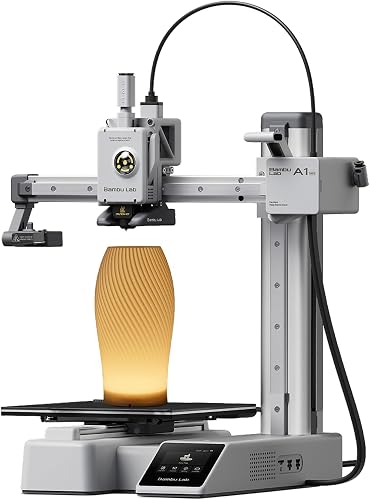
If shelf space and budget are both tight, the A1 Mini is shockingly capable for its footprint. The 180×180×180 mm bed is enough for a single cottage at a time, the print quality rivals printers twice its price, and the AMS Lite makes multi-color trim work approachable. It is also one of the quietest machines on the market, which matters when it is running overnight in a shared living space.
Best Resin Companion: Elegoo Mars 4 Ultra
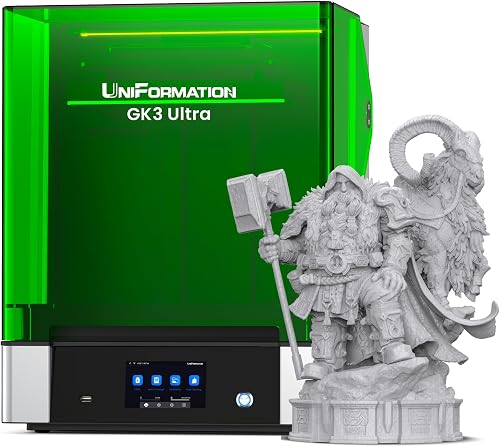
For the carolers, lampposts, snowmen, and ornate window grilles that take a village from "nice" to "heirloom," you want resin. The Mars 4 Ultra's 9K mono LCD captures details FDM physically cannot reproduce. See our Elegoo Mars 4 Ultra review for setup notes, including ventilation and post-curing tips.
Designing the LED Cutouts Themselves
Most printers can handle the geometry — the bigger question is how you slice the model. A few field-tested tips:
- Wall thickness: For translucent PLA, aim for 0.8–1.2 mm (2–3 perimeters at a 0.4 mm nozzle). Thicker than 1.5 mm and the glow disappears.
- Window and door cutouts: Add a 0.2 mm clearance around any insert you plan to glue in (acetate window panes, vellum snow, etc.).
- LED access: Leave a 20×30 mm cutout in the base for a battery-operated tea light or fairy-light string. Most off-the-shelf LED tea lights fit this footprint.
- Layer height: Use 0.12–0.16 mm. Anything coarser shows banding when light shines through.
- Infill: Keep it low (5–10%) on solid walls so light can travel laterally, but use 100% on the roof if you do not want light leaking upward.
Filament Choices That Glow Beautifully
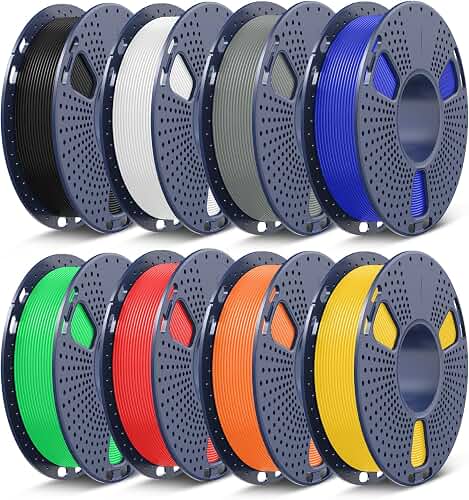
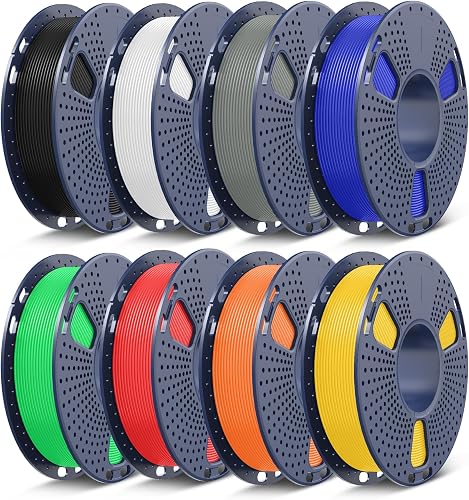
Your printer choice matters, but your filament choice matters almost as much. Translucent white PLA from brands like Polymaker, Overture, or Bambu produces the most authentic candle-glow effect. Glow-in-the-dark PLA can pull double duty during evening parties but is abrasive — use a hardened steel nozzle. Marble or stone-textured PLA adds a hand-painted ceramic look to walls without any post-processing. For more on filament basics, read our PLA filament guide.
Setting Up the LEDs Safely
Use only battery-operated LED tea lights or low-voltage fairy lights inside printed houses. Never put an incandescent bulb or any heat-producing light source inside a PLA print — PLA softens at about 60°C and can deform or even ignite. Battery LEDs run cool and last 40–100 hours per coin cell. For a permanent display, run a single low-voltage LED strip through the bases of all houses and tape the wires under your village's snow blanket.
How Long Does It Take to Print a Full Village?
A typical 8-house village (cottages, church, store, lighthouse) takes 35–55 hours total on a fast Core-XY printer like the P1S, or 60–90 hours on a slower bed-slinger. Resin figurines add another 4–8 hours plus wash and cure time. Plan to start mid-October if you want everything painted and displayed by Thanksgiving. New to slicing? Our walkthrough on how to set up your first 3D printer covers the basics.
Frequently Asked Questions
What is the best 3D printer for Christmas village houses with LED cutouts under $300?
The Creality Ender 3 V3 SE and the Bambu Lab A1 Mini are the two strongest picks under $300. The A1 Mini wins on print quality, noise, and ease of use; the Ender wins on build volume and tinkering potential. Both handle translucent PLA well enough for glowing village houses.
Should I use FDM or resin for Christmas village houses?
Use FDM for the buildings themselves — the glow effect of translucent PLA is hard to replicate with resin, and FDM is faster and cleaner for parts this size. Use resin for the small accessories: carolers, lampposts, wreaths, and detailed window grilles. Many makers run both.
What wall thickness works best for backlit 3D printed houses?
0.8 to 1.2 millimeters of translucent PLA, which is 2 to 3 perimeters at a 0.4 mm nozzle. Thinner than 0.8 mm and the walls become fragile; thicker than 1.2 mm and the LED glow becomes muddy and uneven.
Can I use glow-in-the-dark PLA for Christmas villages?
Yes, but install a hardened steel nozzle first — glow-in-the-dark PLA is loaded with phosphorescent particles that will chew through a brass nozzle in a few spools. It works beautifully for ghostly chapel walls or snowy roof accents that softly glow after the LEDs turn off.
Do I need an enclosed 3D printer for Christmas village houses?
Not strictly. PLA actually prints better in the open air with strong part cooling. An enclosure becomes important if you switch to PETG (for outdoor or weather-resistant villages) or ABS/ASA. For most indoor displays, an open printer is fine.
How do I keep tall steeples from warping or tipping during printing?
Lower your print speed on outer perimeters to about 60 mm/s, increase part cooling to 100%, and add a brim of 5–8 mm. If a steeple is over 200 mm tall and slim, orient it diagonally on the plate or print it as two pieces with a registration peg. Our 3D printer troubleshooting guide walks through warping in more depth.
What is the safest LED to put inside a 3D printed house?
Battery-operated flickering LED tea lights or low-voltage (5V or 12V) LED fairy light strings. Both run cool enough that they will not soften PLA. Never use incandescent or halogen bulbs — PLA begins deforming around 60°C, and a hot bulb inside a sealed printed house can warp walls or, in the worst case, become a fire risk.
How many houses can I print in a weekend?
On a fast Core-XY machine like the Bambu P1S running translucent PLA at 0.16 mm layers, you can realistically finish 4–6 cottages in 48 hours. On a budget bed-slinger, plan on 2–3. Batch by plate rather than printing one at a time to minimize startup overhead and bed-leveling cycles.
Key Takeaways
- Choosing the right best 3d printer for christmas village houses with led cutouts means matching the key features to your specific needs and budget
- Read real customer reviews and check the return policy before you commit
- Also covers: putz house 3d printer for tea light
- Also covers: lit christmas village 3d printer
- Also covers: translucent filament christmas house printer
- Compare value across models — the priciest option is not always the best fit