Disclosure: As an Amazon Associate we earn from qualifying purchases.
For aquarium hobbyists who want custom filter outlets, magnetic glass mounts, lily-pipe brackets, plant weights, and hood clips, the best 3d printer for aquarium accessories and fish tank mounts is a reliable FDM machine that prints PETG cleanly, has a build volume of at least 220 mm on one axis, and offers an enclosed or semi-enclosed chamber for stable extrusion. After evaluating the machines best suited to waterline-adjacent prints in 2026, our top recommendation is a modern bed-slinger or CoreXY FDM in the $300–$700 range. These printers handle the workhorse aquatic-safe materials hobbyists trust, and they cost a fraction of resin printers without the toxicity headaches that make resin a poor fit for anything touching water or livestock.
This guide breaks down why FDM wins for aquariums, which features matter most, the filament rules you must respect, and design tips that keep your prints from leaching, warping, or cracking inside a wet, lit, heated enclosure.
The best best 3d printer for aquarium accessories and fish tank mounts for your situation depends on how you plan to use it and where.
Why FDM Is the Right Technology for Aquarium Prints
Resin printers produce gorgeous detail and are excellent for miniatures, but uncured photopolymer resin is toxic to fish, invertebrates, and beneficial bacteria. Even fully post-cured resin parts can leach plasticizers and unreacted monomers in warm water over weeks. Because aquarium accessories live in 24/7 contact with water that supports living animals, FDM filaments like PETG are the safer, more proven choice. PETG is the same plastic used in food containers and water bottles, it resists hydrolysis, and it tolerates the mild UV from aquarium lights better than PLA.
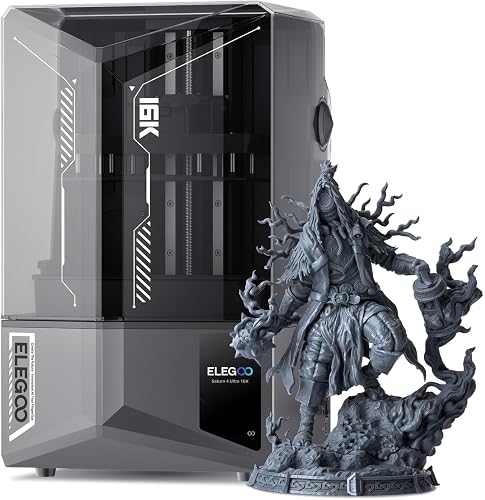
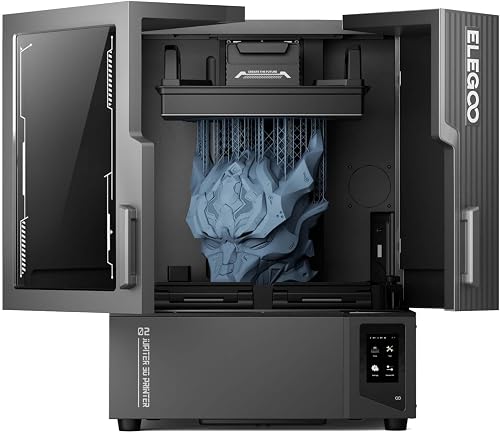
If you want a deeper comparison of the two technologies, our FDM vs resin 3D printer guide walks through the chemistry, post-processing, and safety tradeoffs in detail. For aquarium use specifically, FDM wins on cost-per-part, filament safety, and the practical ability to print larger brackets in one piece without slicing them into resin-sized chunks.
Key Features to Look For in 2026
All-Metal Hotend Rated for 280°C
PETG prints best between 230°C and 250°C, and you may want to try ABS, ASA, or PP for specialty mounts that need higher chemical resistance. A printer locked at 240°C or running a PTFE-lined hotend will limit you. Look for an all-metal hotend explicitly rated to 280°C or higher.
Heated Bed Capable of 80°C+
PETG sticks reliably to a textured PEI sheet at 75–85°C. Bed temperatures lower than 70°C cause warping on long brackets and hood clips, exactly the prints you will need most.
Direct-Drive Extruder
PETG is a slightly stringy, flexible-when-warm filament. A direct-drive extruder feeds it more cleanly than a Bowden setup, especially when retraction-heavy geometry like grids and combs (think filter media holders) are involved.
Build Volume of at Least 220 × 220 × 240 mm
Most aquarium accessories are small, but lid bracing, hood overlays, custom rim clips for a 40-gallon breeder, and lily pipe holders for tall tanks all push the 200 mm mark. A 220 mm or larger bed prevents the frustrating moment when your bracket is 4 mm too long to fit.
Auto Bed Leveling
Aquarium parts often have wide flat baselines (suction cup plates, magnet housings) where a poorly leveled first layer means a useless print. Inductive or strain-gauge probes save you hours. If you are new to this, our walkthrough on how to level a 3D printer bed covers both auto and manual procedures.
Enclosed or Semi-Enclosed Chamber
Not strictly required for PETG, but an enclosure dramatically reduces warping on longer parts and is essential if you ever move to ABS or ASA, which are more chemically inert in salt water and harder UV environments.
Printer Categories Worth Considering
Budget Bed-Slinger Under $300
For a hobbyist who needs basic filter clips, suction cup holders, and CO2 diffuser brackets, a modern budget bed-slinger like the Creality Ender 3 V3 SE or an entry Anycubic Kobra is more than enough. These machines run PETG well after a quick spring upgrade or PEI sheet, and they fit on a shelf next to the tank. We cover the value picks in our 3D printer budget guide.
Mid-Range Speed Demon, $400–$700
This is the sweet spot for serious aquascapers. Printers in this tier offer 500 mm/s travel speeds, input shaping, all-metal hotends, and reliable auto leveling. The Bambu Lab A1, Bambu Lab P1S, Creality K1, and Prusa MK4S all qualify. They cut a 4-hour bracket print to 90 minutes without sacrificing surface quality. If long print times are your bottleneck, browse our best high-speed 3D printers roundup.
Compact Enclosed Printer for Apartments
If your tank is in a small space and you want to run PETG or ASA quietly with minimal odor, a compact enclosed printer is ideal. The Bambu Lab P1S and similar boxed CoreXY units contain stray fumes (still ventilate) and keep noise reasonable. Our best enclosed 3D printers guide ranks the leading options.
Large-Format for Hoods and Canopies
Building a custom hood for a 75-gallon tank, a sump baffle set, or a full lid replacement? You will need 300 mm or more on one axis. The Creality K1 Max, Bambu Lab X1E, and Elegoo OrangeStorm Giga sit at the top of the best large-format 3D printers list.
Filament Choices for Aquarium Use
PETG: The Default
PETG is the workhorse for everything submerged or splash-exposed. It is durable, slightly flexible, hydrolysis-resistant, and the base polymer (PET) is the same food-grade plastic used in soda bottles. Buy a reputable brand (Polymaker, Prusament, eSun) and avoid mystery dyes if you can. Black and clear PETG tend to be the safest pigment choices.
PLA: Use with Caution
PLA is fine for splash-only parts above the waterline, like cable clips, light bar mounts, and feeder hoppers. It is not recommended for permanent submersion because it hydrolyzes (slowly breaks down in warm water) and can deform near heaters. Our PLA filament guide explains the chemistry.
ABS and ASA: For Sumps and UV-Heavy Setups
ABS and ASA are tougher and more chemically inert than PETG, making them excellent for sump baffles, overflow weirs, and accessories near strong reef lights. They require an enclosure and ventilation.
Polypropylene (PP): The Premium Option
PP is what professional aquarium gear is often made from. It is inert, food-safe, and chemically bulletproof, but it is notoriously hard to print and requires special build plates. Only attempt this if your printer explicitly supports it.
Avoid
Skip TPU touching fish (additives vary widely), any filament with metallic fillers (wood, copper, glow-in-the-dark phosphors), and cheap unbranded PETG with unknown pigments. When in doubt, the cleaner the polymer, the safer the tank.
Design Tips for Aquarium Accessories
Print with at Least 4 Walls and 30% Infill
Submerged parts experience constant micro-pressure changes. Thin-wall prints (2 perimeters) develop hairline gaps that wick water into the infill, creating a permanent slime habitat. Four perimeters and gyroid infill seal far better.
Orient for Watertight Walls
Lay parts so that the visible water-facing surface is a printed wall, not a top-layer infill cap. Walls have fewer micro-gaps than top fills.
Anneal PETG for Extra Strength
A 30-minute soak in 70°C water (sous vide style) anneals PETG, fuses layer lines, and dramatically reduces leak paths on critical parts like overflow boxes.
Soak New Prints Before Adding to the Tank
Even safe filaments shed dust and trace lubricants from the extrusion process. Soak finished prints in dechlorinated water for 48 hours, with a water change at the 24-hour mark, before introducing them to a stocked tank.
Use Stainless or Silicone for Fasteners
Never use steel screws or zinc-coated hardware to mount printed brackets in a tank. Stainless 316, silicone-coated magnets, and acrylic-safe adhesives are the right pairings.
Maintenance Habits That Matter for Aquarium Printers
PETG runs hotter than PLA and chews through nozzles slightly faster. Plan to swap your brass nozzle every 800–1000 hours, or upgrade to a hardened steel nozzle from day one. Keep PETG dry: open spools left near a humid fish tank will absorb moisture and pop during extrusion. A simple filament dry box solves this. Our practical 3D printer maintenance guide covers the routine in full.
Frequently Asked Questions
Is PLA safe to use in a freshwater aquarium?
PLA is acceptable for short-term, low-stress applications above the waterline, like cable clips and light mounts. For long-term submerged parts, PLA slowly hydrolyzes in warm water (above 24°C) and can soften near heaters. PETG is the better default for anything that lives in the tank for more than a few weeks.
Can I print food-safe parts for a fish tank with an FDM printer?
The polymer can be food-grade (PETG, PP), but the printing process itself introduces micro-gaps where bacteria can colonize. For most aquarium uses this is not a problem because the tank is already a biofilm-rich environment. The real concern is filament additives and dyes. Stick to reputable brands, avoid filaments with metallic or wood fillers, and rinse all parts before use.
What is the cheapest 3D printer that can reliably print aquarium accessories?
A Creality Ender 3 V3 SE or Anycubic Kobra 2 in the $200–$300 range can print PETG well after a PEI sheet upgrade. Beginners may prefer the Bambu Lab A1 Mini for its near-zero setup time. Compare options in our best 3D printers for beginners roundup.
Will my 3D-printed mount damage acrylic or glass aquarium walls?
Not if you design it correctly. Use smooth, generous radii on contact surfaces, pair the bracket with EPDM or silicone gaskets, and avoid sharp printed corners pressing against acrylic. Magnet-based mounts should sandwich a layer of neoprene or thin felt between the print and the glass to prevent abrasion when slid for cleaning.
How thick should walls be on a submerged 3D print?
Four perimeters minimum (about 1.6 mm at a 0.4 mm nozzle), 30% gyroid infill, and ideally a small fillet on every internal corner. For parts that need to be fully watertight (like overflow boxes), increase to six perimeters and consider a brushed-on epoxy coating rated for aquariums.
Is a resin printer ever a good choice for aquarium parts?
Only for decorative items that will be sealed with multiple coats of aquarium-grade epoxy before going in the tank. Even then, many hobbyists avoid it because incomplete curing can release toxins. For functional mounts and brackets, FDM with PETG is safer, cheaper, and easier.
What is the most useful first aquarium print to test a new machine?
A simple magnetic glass cleaner holder or a feeder ring is ideal. Both prints are small (under an hour), use little filament, and immediately tell you whether your PETG dial-in is right. After a successful first print, scale up to filter outlet diffusers, suction-cup-replacement brackets, and finally hood clips.
Key Takeaways
- Choosing the right best 3d printer for aquarium accessories and fish tank mounts means matching the key features to your specific needs and budget
- Read real customer reviews and check the return policy before you commit
- Also covers: aquarium safe 3d printer
- Also covers: fish tank mount 3d printing
- Also covers: aquascape accessories 3d printer
- Compare value across models — the priciest option is not always the best fit