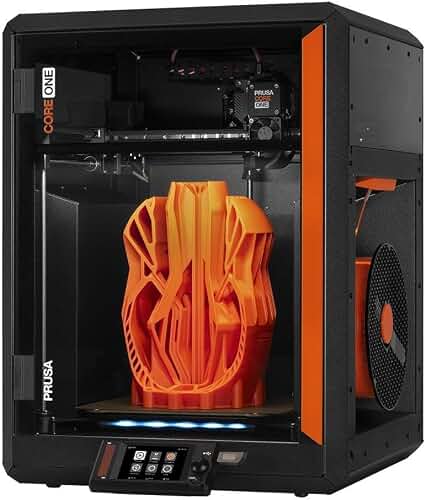
Disclosure: As an Amazon Associate we earn from qualifying purchases.
If you want to 3d print asthma inhaler spacer prusa mk4s models at home, the short answer is: the MK4S is mechanically capable of producing dimensionally accurate spacer geometry, but truly medical grade output requires biocompatible filament (USP Class VI or ISO 10993 certified), a contamination-controlled print environment, post-process annealing, and thorough cleaning. No FDM printer alone produces a certified medical device. What you can produce is a high-quality functional prototype, an emergency stand-in, or a teaching model that closely mimics commercial spacers like the AeroChamber or OptiChamber. Below is a complete 2026 workflow covering filament selection, slicer settings, sterilization, and the legal limits you must respect.
What "Medical Grade" Actually Means for a 3D Printed Spacer
A spacer is a holding chamber that sits between a metered-dose inhaler (MDI) and the patient's mouth. It slows the aerosol plume, lets large propellant droplets evaporate, and increases the fraction of medication that reaches the lower airways. Commercial spacers are injection molded from medical-grade polypropylene or polycarbonate, then validated for particle deposition, anti-static behavior, and biocompatibility.
When shopping for 3d print asthma inhaler spacer prusa mk4s, it pays to compare specs, capacity, and real-world runtime before committing.
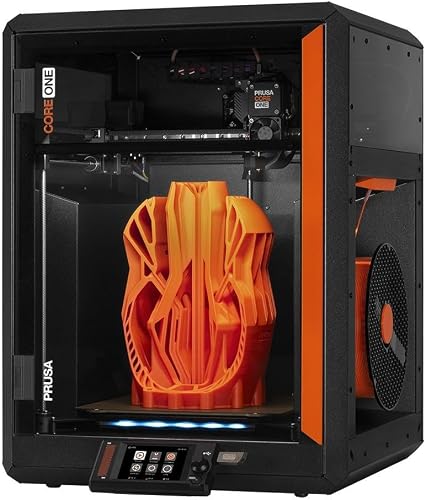
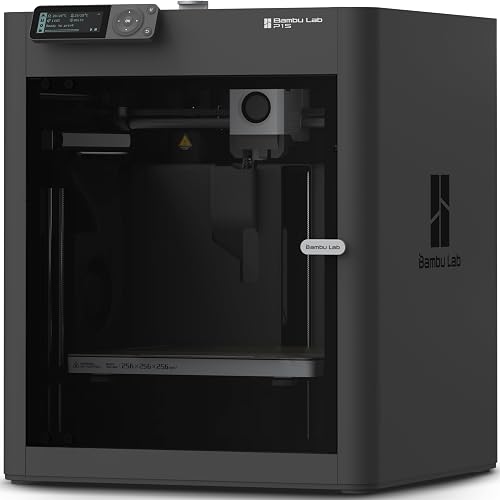
Slicer Settings for the MK4S in PrusaSlicer 2.8+
These are starting points; tune for your specific filament batch.
| Parameter | Polypropylene | Medical PETG |
|---|---|---|
| Nozzle temperature | 230 °C | 240 °C |
| Bed temperature | 95 °C (PP tape) | 85 °C (smooth PEI) |
| Layer height | 0.15 mm | 0.15 mm |
| Wall loops | 4 | 4 |
| Top/bottom layers | 6 | 6 |
| Infill | 100% (walls only) or 30% gyroid | 30% gyroid |
| Print speed | 40 mm/s outer wall | 50 mm/s outer wall |
| Cooling | 0–20% | 50% |
| Enclosure | Recommended | Optional |
When people search for how to 3d print asthma inhaler spacer prusa mk4s instructions, they usually mean one of three things:
- Emergency replacement — their commercial spacer broke and they need a working chamber today.
- Humanitarian / low-resource use — they are printing for clinics where commercial spacers are unaffordable.
- Educational prototype — they are modeling airflow or teaching respiratory therapy students.
For any of these, the MK4S can deliver tight tolerances (±0.1 mm with a 0.4 mm nozzle) and a smooth enough internal surface to behave acoustically and aerodynamically like the commercial product. What it cannot do is grant FDA 510(k) clearance. Treat every printed spacer as a prototype unless it has been independently lab-validated.
Why the Prusa MK4S Is a Strong Choice
The MK4S has several features that matter specifically for medical-style prints:
- Nextruder load-cell first-layer calibration ensures the inhaler-port collar prints to spec without elephant's foot, so the MDI seats tightly.
- 360 °C hotend handles polypropylene (PP), PETG, and even PEEK-adjacent blends — the polymers most commonly cited as biocompatible.
- Input Shaper and Pressure Advance reduce ringing on the cylindrical chamber walls, which keeps the internal volume consistent and minimizes turbulence pockets.
- Enclosed-compatible frame — you can add the Original Prusa Enclosure to keep airborne dust off the inside surface during printing, an underrated factor for anything that contacts respiratory tissue.
If you are still deciding on a printer, our Prusa MK4S review covers thermal stability and dimensional accuracy in detail, and the Prusa MK4S vs Bambu Lab P1S comparison is useful if you are weighing speed against open-source repairability.
Choosing a Biocompatible Filament
This is the single most important decision. Standard hobby PLA contains residual lactide, plasticizers, and colorants that are not certified for respiratory contact. Use one of the following instead:
Polypropylene (PP)
PP is the same family of polymer used in most commercial spacers. It is inert, hydrophobic, and dishwasher-safe. Brands like Prusament PP and BASF Ultrafuse PP GF30 print well on the MK4S with a PP-coated sheet or PP packing tape on the build plate. The chamber walls come out slightly translucent, which is a nice quality-of-life feature for checking medication mist.
Medical-Adjacent PETG
PETG (polyethylene terephthalate glycol) is chemically related to the PET used in pharmaceutical packaging. Choose an uncolored, food-contact-rated PETG — natural or clear, not pigmented. PETG is easier to print than PP and produces glass-clear walls when tuned, but it is more brittle if dropped.
Why Not PLA?
PLA can technically be food-safe in the raw resin, but it is hygroscopic, prone to bacterial colonization in moist environments, and deforms above 55 °C — which means you cannot sterilize it in boiling water or a dishwasher. Skip it for any inhaler application. If you are new to filament chemistry, our PLA filament guide explains why this matters.
Designing or Sourcing the Model
Several open-source spacer designs exist on Printables, Thingiverse, and the NIH 3D Print Exchange. Look for designs with these features:
- Tapered MDI port sized to the standard 22 mm canister stem.
- Volume of 140–250 mL — matching commercial adult spacers.
- One-way valve seat or a simple open mouthpiece (open designs print easier and are easier to clean).
- Smooth-walled chamber with no internal supports — supports leave rough surfaces that trap medication and bacteria.
If you design your own in Fusion 360 or OnShape, model the chamber as two halves with a press-fit or threaded joint so you can clean the interior. Avoid features under 0.8 mm thickness — they will not seal reliably.
The combination of four wall loops and a 0.15 mm layer height produces a chamber that is gas-tight without needing a vapor-smoothing step. If you want extra smoothness, a brief acetone vapor pass works on ABS-based spacer designs but should not be used on PP or PETG — instead, a light 600-grit wet sand followed by heat-gun annealing will polish the interior.
Print Environment and Cross-Contamination Control
Because the spacer will be inhaled through, the inside surface needs to start clean. Practical steps:
- Wipe the build plate with 70% isopropyl alcohol before printing.
- Run a 50 mm purge tower so the first walls of the chamber are not contaminated with leftover filament from earlier prints.
- Run the print in an enclosed printer or in a closed room with low foot traffic — household dust is the biggest contamination source.
- Handle the finished part with nitrile gloves until it has been washed.
If you regularly print multi-material jobs and want to dedicate your MK4S to medical-style work, consider a second printer for general hobby use. The best enclosed 3D printers list includes several options that complement the MK4S.
Post-Processing and Sterilization
FDM prints have microscopic gaps between layers that can harbor moisture and microbes. Treat the part in this order:
- Wash in warm soapy water with a soft bottle brush. Rinse thoroughly.
- Anneal PP at 120 °C for 30 minutes (or PETG at 80 °C for 60 minutes) in a clean kitchen oven. This fuses layer lines, closes microgaps, and increases dimensional stability. Place the part on a clean glass tray, not directly on the rack.
- Sterilize by boiling in distilled water for 5 minutes, then air-dry on a clean cloth. PP can also be safely run through a dishwasher's sanitize cycle.
- Inspect the inside for any visible fibers, dust, or layer delamination. Discard and reprint if you find any.
Avoid bleach, hydrogen peroxide gas, and ethylene oxide unless you have professional equipment — each can degrade plastics in non-obvious ways. UV-C sterilizers will embrittle PETG over time and should be used sparingly.
Legal and Safety Boundaries
Three rules keep you out of trouble:
- Do not sell printed spacers as medical devices. In the US, EU, UK, Canada, and Australia, this requires regulatory clearance. Selling unapproved respiratory devices is a criminal matter.
- Do not replace a prescribed spacer without telling the patient's physician or pharmacist. A 3D printed unit will not deliver the same particle distribution as the device the prescription was written for.
- Do not use for children under 5 without clinical supervision. Pediatric spacers have valve geometries that demand validated flow testing, not just dimensional matching.
For emergency use by an informed adult patient, a clean, annealed, PP-printed spacer is far better than no spacer at all — but it is a stopgap, not a long-term solution.
Cost and Time Breakdown
A typical adult spacer is 180 mL with 2 mm walls. On the MK4S, that prints in roughly 4 hours using about 35 grams of polypropylene. At current 2026 PP filament prices of around $45 per kilogram, the material cost per spacer is under $2. Annealing and sterilization add 30 minutes of attended time. By comparison, a commercial AeroChamber retails for $25–$45 in the US. The economic case only really matters at scale or in regions where commercial spacers are not available — for everyone else, this is a maker project, not a savings project.
When the MK4S Is Not the Right Tool
If you need optical clarity to a research-grade level, a resin SLA printer with a biocompatible resin (Formlabs BioMed Clear, for example) will outperform FDM. The trade-off is much higher consumable cost and mandatory UV post-cure equipment. Our FDM vs resin guide covers when to switch.
If you need to produce dozens of spacers — for a clinic or a humanitarian project — a faster printer like the Bambu Lab P1S can cut throughput in half. The trade-off is reduced control over enclosure cleanliness and harder access to the hotend for cleaning between filament types. The Prusa MK4 vs Bambu Lab P1S comparison breaks this down.
Frequently Asked Questions
Is it safe to use a 3D printed asthma spacer?
A spacer printed in polypropylene on a Prusa MK4S, annealed to fuse layer lines, and boiled or dishwasher-sanitized is safer than no spacer, but it is not a substitute for an FDA-cleared device. Use it as an emergency or educational tool and replace it with a commercial spacer as soon as one is available. Discuss any change in spacer with your prescriber.
What filament is closest to medical-grade for a Prusa MK4S spacer?
Uncolored polypropylene is the closest match to commercial spacer plastic. Prusament PP and BASF Ultrafuse PP GF30 are widely used. If you cannot print PP — it requires a PP build surface and is fussy with cooling — uncolored food-contact PETG is the second choice. Avoid PLA, ABS, and any pigmented filament for inhaler contact.
Can I print a pediatric mask spacer on the MK4S?
You can print the chamber, but the silicone face mask cannot be FDM printed — it has to be a flexible elastomer. Some makers print a PP chamber and bond it to a commercial pediatric mask harvested from a damaged spacer. This is reasonable for prototyping but not for clinical use, since the seal quality determines delivered dose.
How do I sterilize a 3D printed spacer between uses?
Wash daily in warm soapy water, rinse, and air-dry. Once a week, boil PP spacers for 5 minutes in distilled water or run through a dishwasher sanitize cycle. PETG should not be boiled — use 70 °C dish wash water only. Replace the printed spacer every 3 months even with careful cleaning; FDM layer gaps eventually harbor biofilm.
Does the spacer need an anti-static coating?
Commercial spacers are coated to reduce electrostatic drug deposition on the inner walls. Printed PP is naturally low-static once washed with detergent — the surfactant residue acts as a mild anti-static agent. Rinse with a drop of dish soap in water and air-dry; do not buff the inside dry, since friction recharges the surface.
What slicer profile should I start from for medical-style prints?
Start from the stock PrusaSlicer 0.15 mm QUALITY profile for your filament, then increase wall loops to 4, top/bottom layers to 6, and drop outer-wall speed to 40 mm/s. Disable any "detect thin walls" option, which can leave gaps on the inhaler port collar. Print one test chamber and pressure-test it by sealing one end and blowing gently — there should be no audible whistling.
Can I sell 3D printed inhaler spacers?
No. In nearly every country, an inhaler spacer is a regulated medical device. Selling unapproved devices — even at cost, even with disclaimers — can result in seizure of inventory, fines, and criminal liability. You may give a printed spacer to yourself or an immediate family member as a personal-use item, but commercial sale requires regulatory clearance you cannot obtain as an individual maker.
Where can I learn more about tuning the MK4S for precision parts?
Our 3D printer maintenance guide covers the calibration cadence — nozzle, belts, and first-layer load cell — that keeps dimensional accuracy within ±0.1 mm. Recalibrate before every batch of medical-style prints; a worn nozzle is the most common cause of leaky chamber seams.
Key Takeaways
- Choosing the right 3d print asthma inhaler spacer prusa mk4s means matching the key features to your specific needs and budget
- Read real customer reviews and check the return policy before you commit
- Also covers: medical grade inhaler spacer printing
- Also covers: prusa mk4s medical prints
- Also covers: 3d printed asthma spacer settings
- Compare value across models — the priciest option is not always the best fit