Disclosure: As an Amazon Associate we earn from qualifying purchases.
The best 3d printer for makerspace tool library rotating users in 2026 is a fully enclosed, auto-calibrating CoreXY or bed-slinger with cloud slicing, per-user accounts, hardened nozzles, and field-replaceable parts — think Bambu Lab X1 Carbon, Prusa MK4S, or Prusa XL for shared lending environments. These machines survive constant operator turnover because they remove the variables (bed leveling, flow calibration, slicer profiles) that normally break when a new patron touches the printer every shift. For a makerspace tool library, you are not buying a printer; you are buying a fleet asset that must boot, print, and recover from misuse without a staff intervention.
Below is a complete 2026 buyer's framework for choosing a 3D printer that holds up to dozens of rotating, often-untrained users — covering the hardware tradeoffs, the policy decisions that ride on top of the hardware, the consumables math, and the FAQ questions library directors actually ask before a purchase order goes through.
Why a Makerspace Tool Library Is the Hardest Environment for a 3D Printer
A consumer at home prints two or three files a week, knows the machine intimately, and notices the first sign of a clog. A makerspace tool library is the opposite: a different patron every session, no muscle memory, no incentive to clean the build plate, and a check-in process that may not catch a stripped extruder gear for days. The best 3d printer for makerspace tool library rotating users has to compensate for all of that with hardware and firmware, not staff time.
The failure modes that matter in this environment are not the same ones reviewers focus on. You do not care about top print speed in a benchmark; you care about the percentage of unattended overnight jobs that finish without a babysitter. You do not care about exotic materials; you care about whether a teenager who has never touched a slicer can produce a part within 20 minutes of orientation. Reliability under abuse is the only spec that matters, and it is the spec almost nobody publishes.
The Three Archetypes That Work for Tool Libraries
| Archetype | Strengths for Rotating Users | Weaknesses | Best Patron Profile |
|---|---|---|---|
| Enclosed CoreXY (e.g. Bambu Lab X1 Carbon) | Highest reliability, lidar first-layer check, AMS multicolor, cloud accounts, hardened nozzle stock | Closed ecosystem, cloud dependency, costlier consumables | Mixed-experience patrons who want quick turnaround |
| Open-Source Bed Slinger (e.g. Prusa MK4S) | Documented repair, load-cell leveling, runs on local network, decade-long parts supply | Slower than CoreXY, no enclosure standard, single-color by default | Education-focused libraries that teach the machine itself |
| Multi-Tool Workhorse (e.g. Prusa XL) | Five-tool head for color & material mixing, large bed, segmented heatbed reduces power draw | Higher capex, larger footprint, advanced calibration | Flagship branches with maker-in-residence staff |
The Five Non-Negotiable Features for a Lending Library Printer
1. Auto Bed Leveling and Z-Offset Calibration That Runs Every Print
Manual leveling is the single biggest cause of failed first layers, and in a rotating-user environment nobody will do it correctly. Pick a printer that probes the bed before every print and dynamically compensates — Prusa's load-cell first-layer calibration and Bambu's lidar-assisted mesh are the current gold standards. If your candidate machine asks the user to turn a knob, eliminate it from the shortlist.
2. Enclosed Build Chamber With Filtration
Enclosures are not optional in a shared space. They contain ultrafine particulate emissions, muffle noise (libraries are quiet by design), prevent burns from the hotend, and stabilize chamber temperature so ABS, ASA, and PETG print reliably. A HEPA + activated carbon filter is essential if the printer lives in the same room as patrons. See our roundup of the best enclosed 3D printers for the current shortlist.
3. Remote Monitoring, Per-User Accounts, and Queue Management
You need to know who printed what, when, and how much filament they consumed. Bambu Handy and Bambu Studio support multi-user cloud accounts; Prusa Connect supports operator profiles and remote camera monitoring. OctoPrint is still the open-source fallback for older fleet machines. Without per-user attribution, your consumables budget will hemorrhage within a quarter.
4. Hardened Steel Nozzles and Quick-Swap Hotends
Patrons will bring abrasive filaments — glow-in-the-dark PLA, carbon-fiber-reinforced nylon, glitter, wood-fill — and they will not warn you. A brass nozzle wears out in 40 hours under CF-PA. Spec a hardened steel or ruby nozzle as standard, and choose a printer with a tool-free hotend swap (Bambu's hotend assembly, Prusa's Nextruder) so a sub-30-minute repair does not become a three-day RMA.
5. Open Spare Parts Supply and Documented Repair Path
The printer must still be repairable in 2030. Prusa publishes full BOMs, sells every part, and has a decade-long parts track record. Bambu's parts catalog is younger but covers nozzles, hotends, AMS units, and motherboards. Avoid closed-ecosystem printers where a discontinued model strands your investment. Our 3D printer maintenance guide walks through the wear items you will be replacing every six months in heavy-rotation use.
Capex vs Opex: The Math Library Directors Miss
The sticker price is roughly 20 percent of three-year total cost of ownership in a tool library. The real costs are filament, nozzles, build plates, PTFE tubes, belts, fans, and staff time per print failure. A $800 printer that needs a staff intervention every five prints will cost more in payroll than a $1,500 printer that runs unattended for 80 hours between interventions.
A practical rule: budget twice the printer's purchase price for the first year of consumables and spares if you expect 30+ active borrowers. If you are comparing models, our 3D printer budget guide breaks down the per-hour cost-of-ownership math by class.
The Specific Printer Profiles Worth Shortlisting in 2026
Bambu Lab X1 Carbon
If you can only buy one printer for a busy library, this is the default 2026 recommendation. The lidar-assisted first-layer inspection rescues prints that would have failed on any other machine, the enclosed chamber prints PLA, PETG, ABS, ASA, and PA-CF without modification, and Bambu Handy lets staff monitor jobs from the circulation desk. The AMS makes multicolor patron demos a draw for new memberships. Read our full Bambu Lab X1 Carbon review for the detailed teardown.
Prusa MK4S
The MK4S is the right answer when your library cares about repairability, education, and a documented open-source pedigree more than absolute speed. Load-cell first-layer calibration is the most robust system on the market, and Prusa's spare parts pipeline means a five-year-old MK4S is still a first-class printer. Our Prusa MK4S review covers the input shaper and Nextruder details. If you are torn between the two flagships, the MK4S vs P1S comparison walks through the decision tree.
Bambu Lab P1S
The P1S is the value play. You get the enclosed CoreXY platform, AMS compatibility, and ~90 percent of the X1 Carbon's print quality at roughly two-thirds of the price. Skip it only if you need the lidar first-layer scan or the integrated chamber thermistor for engineering plastics. Our Bambu Lab P1S review has the build plate and AMS details.
Bambu Lab A1 Mini
The A1 Mini is the right "second printer" for libraries that already own a flagship. It is the smallest cost-per-failed-print machine in 2026, perfect for kid programs and library card holders who want to prototype keychains and game pieces. Skip it as your only printer — the 180mm bed is too small for most patron requests. See our A1 Mini review for the limits.
Prusa XL
The XL is for flagship branches with a maker-in-residence or paid staff time per print. The five-tool head and segmented heatbed are extraordinary, but the workflow requires more attention than a typical patron will give. Treat it as a staff-operated demo machine that patrons commission jobs on, not a self-serve borrow.
Operational Policies That Decide Whether the Printer Survives
Hardware alone will not save a poorly governed program. The libraries that report sub-10 percent failure rates standardize on a few policies: mandatory 30-minute orientation per new borrower, cloud-slicer-only workflow (no SD card uploads), staff-approved STL files for first-time users, a flat per-gram filament charge that covers spool cost plus 30 percent for spares, and a no-overnight policy for unattended prints until a patron has logged 10 successful jobs.
Layer onto that a build plate rotation schedule (PEI plates last 6-12 months under heavy rotation), a nozzle inspection log, and a quarterly belt-tension check. Our troubleshooting guide covers the failure modes you will see most often in shared service.
What to Skip Even If It Looks Like a Bargain
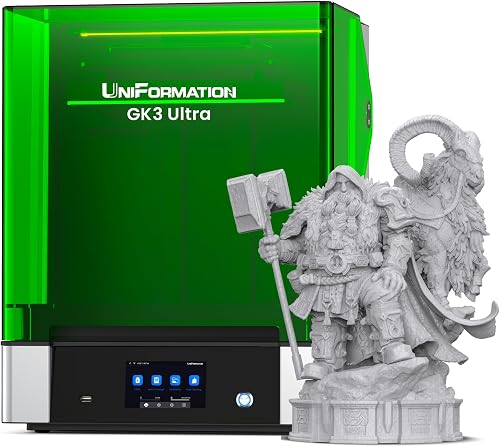
Avoid: any printer that requires manual bed leveling, any kit-form printer (assembly tolerance varies and patrons will not tell you when something falls out of spec), resin printers as a primary lending-library machine (volatile chemistry, gloves, IPA, cure stations — the liability and supervision overhead is too high for general circulation), and any printer whose vendor does not publish a five-year parts catalogue. Resin still has a place in tool libraries for miniatures and dental-grade detail, but it should be staff-operated only — see our best resin 3D printers roundup if that is a separate program.
The Software Stack Matters More Than You Think
Bambu Studio, Orca Slicer, and PrusaSlicer all support multi-user profiles and machine-specific calibration. Whichever ecosystem you choose, lock it down: disable custom G-code injection for non-staff accounts, publish a vetted profile library for patrons to download, and require all slicing through your hosted instance so you can audit settings post-incident. The best 3d printer for makerspace tool library rotating users is only as safe as the slicer profile you ship with it.
Frequently Asked Questions
How many prints should a makerspace 3D printer handle per month?
A well-maintained enclosed CoreXY in a tool library realistically completes 80-150 patron jobs per month at average 4-hour run times, or roughly 400-600 print hours. Beyond that you should add a second printer rather than push utilization, because failure rates climb non-linearly with usage between maintenance intervals.
What is the best 3D printer for a library with no dedicated staff time?
The Bambu Lab X1 Carbon is the lowest-staff-time machine in 2026 because the lidar first-layer check, AMS, and cloud queue management mean a circulation librarian can monitor prints from the desk. The Prusa MK4S is a close second if you prefer open-source software and on-site repair.
Should a tool library buy one expensive printer or two cheaper ones?
Two printers, always. Redundancy is the single most important reliability feature in a shared-use program. If your budget is $2,000, buy two Bambu Lab A1s or one P1S plus an A1 Mini, not a single X1 Carbon. A printer that is down for a week is worse for patron experience than a slightly slower printer that is always available.
What filament should a makerspace stock for rotating users?
Stock matte PLA in three or four colors as the default. PLA is forgiving, low-odor, biodegradable, and beginner-friendly. Add a single spool each of PETG (for outdoor parts) and TPU (for flexible parts) for advanced patrons. Skip ABS, ASA, and nylon for general circulation — they require enclosed-chamber discipline that rotating users will not provide. Our PLA filament guide covers the storage and humidity controls you will need.
How do we charge patrons for 3D printer use without losing money?
The sustainable model in 2026 is a flat per-gram charge of $0.08-$0.12 for PLA, which covers spool cost (roughly $0.025/gram), nozzle and build-plate wear, and a contribution to maintenance reserve. Charge a flat $5-$10 print-bed-occupancy surcharge for jobs over 8 hours to discourage marathon prints during peak demand. Track everything through per-user cloud accounts so disputes are auditable.
Do we need a resin printer for our tool library?
Probably not as a primary borrowable machine. Resin printers like the Elegoo Mars 4 Ultra and Anycubic Photon Mono M5s produce stunning detail but require gloves, IPA wash stations, UV cure boxes, and ventilation. They are appropriate as staff-operated commission machines for patrons who specifically need miniature or dental-grade detail. See our FDM vs resin comparison for the full decision framework.
How often should a heavily-used makerspace 3D printer be serviced?
Plan on a 50-print-hour quick inspection (nozzle, build plate, belt tension visual), a 200-hour intermediate service (belt tension measurement, lubrication, nozzle swap if printing abrasives), and a 1,000-hour full service (extruder gear inspection, hotend rebuild, firmware update, full calibration). In a busy tool library that means a quick check every two weeks and a full service every quarter.
Can we run the printer overnight in a closed library?
Only with an enclosed machine, a smoke detector in the same room, an automatic shutoff timer, and a remote camera feed staff can check from home. Even then, only allow overnight prints from patrons who have logged at least 10 successful daytime jobs. The fire risk from a thermal runaway is small with modern firmware but non-zero, and library insurance typically requires documented controls.
Key Takeaways
- Choosing the right best 3d printer for makerspace tool library rotating users means matching the key features to your specific needs and budget
- Read real customer reviews and check the return policy before you commit
- Also covers: library makerspace 3d printer recommendation
- Also covers: most idiot proof printer for public lab
- Also covers: durable printer for community workshop
- Compare value across models — the priciest option is not always the best fit