
Disclosure: As an Amazon Associate we earn from qualifying purchases.
If you need the best 3d printer for falconry hoods and raptor rehabilitation perches, the short answer is: use a high-resolution resin (MSLA) printer for the hood blocks, plume sockets, and decorative braces, and pair it with a sturdy mid-range FDM printer for the larger perch hardware, scale platforms, and enrichment components. Falconry hoods demand crisp curvature and a smooth interior that won't abrade a bird's cere or feathers, which is exactly what a 7K-12K monochrome LCD resin printer delivers. Perches, by contrast, must withstand bate pressure, talon impact, and frequent disinfection — strengths suited to FDM in PETG, ASA, or nylon. This 2026 buyer's guide walks through the printer specs that actually matter for raptor work, materials that pass rehab-clinic hygiene standards, and the trade-offs between resin and filament for hood blocking, falcon furniture, and aviary fittings.
Why falconry and raptor rehab are a unique 3D printing niche
Most 3D printing buyer's guides assume you're printing cosplay props or desk toys. Falconry and raptor rehabilitation impose constraints those guides never consider. A hood that fits a Harris's hawk must clear the cere by a fraction of a millimeter while sitting flush against the malar feathers — a tolerance closer to dental work than hobby printing. A bow perch holding a 1.4 kg gyr-peregrine hybrid must absorb sudden bate loads without flexing enough to slip in its base. A rehabilitation perch for a recovering bald eagle must survive daily bleach soaks without cracking or leaching plasticizers.
When shopping for best 3d printer for falconry hoods, it pays to compare specs, capacity, and real-world runtime before committing.
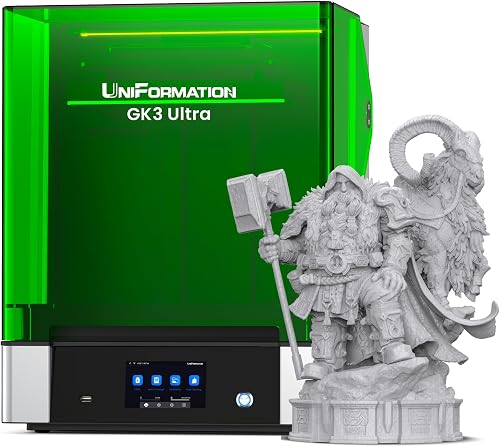
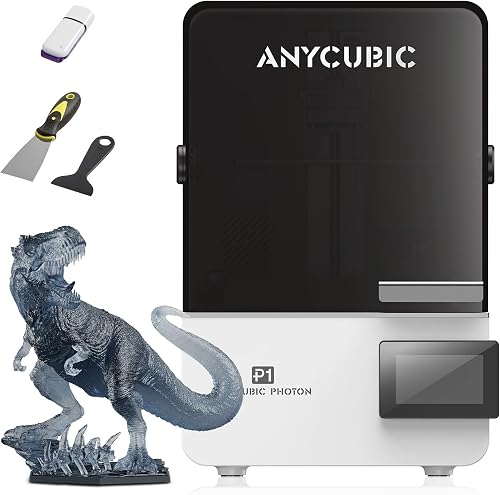
That combination — anatomical precision plus mechanical toughness plus chemical resistance — is why most falconers and rehabbers end up owning two printers rather than one. Trying to print hood blocks on a coarse 0.4 mm FDM nozzle leaves visible layer lines that chafe feathers; trying to print a kestrel-sized bow perch on a 192 x 120 mm resin vat means the perch won't even fit in the build volume. Understanding which job belongs on which machine is the single most important decision you'll make.
Resin vs. FDM for raptor equipment
For hood blocks (the form the leather is wet-molded over), beak guards, custom transmitter mounts, and the small bells, swivels, and grommet plates that finish a hood, resin wins on every axis that matters. A 7-inch 12K mono LCD prints at roughly 19-micron XY resolution, which means a Dutch-pattern hood block emerges from the vat with its eye recesses already pre-smoothed. The translucent post-cured resin also lets you check leather drape against the underlying form before glueing.
For everything that touches a live bird in service — bow perches, block perches, ring perches, scale cradles, weighing platforms, giant-hood frames, and bath pan rims — FDM is the right tool. PETG and ASA print large parts cheaply, tolerate daily F10SC or chlorhexidine disinfection, and absorb impact without shattering. Resin parts, even tough resin, tend to micro-crack under repeated talon strikes and can leach uncured monomer if disinfectant pools in crevices. The general principle is straightforward: resin for forms and decorative hardware, FDM for anything a bird actually grips or perches on.
If you're new to the format question, our FDM vs resin 3D printer guide breaks down the underlying technology differences in more depth.
Specs that matter for falconry hood blocks
When you're picking the best 3d printer for falconry hoods, four resin-printer specs deserve attention before anything else:
- LCD resolution. 8K is acceptable, 12K is better. Hood blocks live or die on smooth compound curves, and pixel density translates directly into how much sanding the block needs before it can mold leather.
- Build volume. A 7-inch screen (around 218 x 123 mm at 12K) handles every block from kestrel through large female gyrfalcon in a single print. A 9-inch screen lets you batch-print a full mews kit at once.
- Z-axis stability. Dual linear rails matter more than headline speeds. Any wobble shows up as horizontal banding across the hood crown — the worst possible place for it.
- Tilt or peel release. Tilt-release printers (now common in 2026) reduce suction forces, which means thin block features like beak-opening cutouts don't tear off the build plate.
Layer height matters too, but only down to a point. Printing hood blocks at 25 microns versus 50 microns produces a noticeable improvement in finish; going below 25 microns mostly just wastes resin and print time.
Specs that matter for raptor rehab perches
Switching over to the FDM side, the priorities invert. You want:
- Build volume of at least 256 x 256 x 256 mm. A medium-sized bow perch arch prints in one piece at this size; below it, you're gluing seams that disinfectant will eventually creep into.
- Enclosed chamber or active heated bed. Required for ASA and useful for ABS, both of which outperform PLA for outdoor mews fittings. See our roundup of the best enclosed 3D printers if you're shopping in this category.
- Hardened steel nozzle. Glass-filled nylon and carbon-filled PETG, both excellent perch materials, will eat a brass nozzle within a few spools.
- Reliable first-layer calibration. Perch bases are large and flat. A printer that needs constant re-leveling becomes maddening. Modern auto-leveling probes have largely solved this — our explainer on how to level a 3D printer bed covers the underlying mechanics.
Materials: what's safe around birds of prey
This is the section most generic 3D printing guides skip entirely, and it's the one that matters most for live-bird applications.
PLA is fine for hood blocks (the bird never touches them) and for short-life enrichment items, but it softens at temperatures that occur inside summer mews and degrades under repeated disinfection. Avoid it for any perch or aviary fitting. If you're unsure what PLA actually is, our guide to PLA filament covers the basics.
PETG is the workhorse for rehab equipment. It tolerates F10SC, Virkon, and chlorhexidine well, doesn't warp at mews temperatures, and has enough impact resistance for most perches up to red-tail size.
ASA is the right choice for outdoor weathering deck fittings, GPS telemetry housings, and anything that lives in the sun. It needs an enclosed printer.
PA-CF (carbon-filled nylon) is the answer for large-raptor perches — golden eagle, female gyr, big buteo rehab cases. It's expensive and finicky to print but produces parts that simply don't break.
Resins for hood blocks: standard ABS-like resins work fine because the block is a mold, not a wear part. Wash thoroughly, cure fully, and seal with a thin epoxy coat before molding wet leather — uncured resin can stain hood interiors.
Recommended printer categories for falconry and rehab work
Best resin printer for hood blocks: a 12K 7-inch mono LCD machine
You want a current-generation 12K monochrome LCD printer with a tilt-release mechanism and dual linear Z rails. As of 2026 this category has consolidated around several solid options — our best resin 3D printers roundup and our Elegoo Mars 4 Ultra review are good starting points if you want specific model comparisons. For the high end, the Anycubic Photon Mono M5s review covers a machine that's particularly well-suited to batch-printing a full mews kit of hood blocks for multiple bird sizes in a single run.
Best FDM printer for medium raptor perches: a CoreXY in the $600-900 range
For Harris's hawks, red-tails, peregrines, kestrels, and most rehab cases under 1.2 kg, you want a reliable enclosed or semi-enclosed CoreXY printer with a 256 mm cubed build volume. The Bambu Lab P1S review covers a machine that has become something of a default in this slot — enclosed chamber for ASA, fast enough that prototype perch iterations don't eat your weekend, and reliable enough that you can leave a 14-hour bow perch print running overnight.
Best FDM printer for large raptor and eagle work: a Prusa-class machine in PA-CF
If you're equipping a facility that handles golden eagles, large female gyrs, or owls of similar mass, the toughness of carbon-filled nylon becomes non-negotiable. The Prusa MK4S review covers a printer with the hardened hotend, input shaping, and bed reliability needed to run PA-CF without constant babysitting. For comparison shopping in this tier, our Prusa MK4S vs Bambu Lab P1S comparison walks through the trade-offs.
Budget option for falconers just starting to print their own gear
If you're a beginner austringer who wants to print a few hood blocks and maybe a transmitter mount without committing to a full dual-printer setup, a sub-$300 FDM machine plus a budget 8K resin printer covers most needs. Our 3D printer budget guide and best 3D printers for beginners roundups are the right places to start.
Workflow tips specific to falconry hoods
Even with the right printer, a few process notes will save you significant frustration:
- Print hood blocks hollow with a 2-3 mm wall and internal lattice. Solid blocks waste resin and warp during cure.
- Orient the block with the beak opening pointing down at 30 degrees. Eye recess detail improves and supports leave fewer scars on visible surfaces.
- Always sand the block lightly with 600-grit before wet-molding, even on 12K prints. Microscopic layer steps will telegraph through wet leather.
- Seal the cured block with a thin coat of two-part epoxy. This prevents leather staining and lets you wipe the block clean between hoods.
- Maintain a digital library of block files indexed by species, sex, and age — Anglo-Indian, Dutch, Bahraini, and Arab patterns all start from different base forms.
Workflow tips for rehab perches
For perches, the key insight is that disinfection survival matters more than aesthetic finish.
- Print perch bases at 4-5 walls and 40% gyroid infill. Lighter infill creates voids where bleach pools.
- Avoid horizontal seams on grip surfaces. Use vase mode or modify wall-start positions to hide seams underneath.
- Astroturf wrapping is still required on perch arches — printed texture alone doesn't provide adequate grip for a healing raptor.
- Print swappable AstroTurf retention rings as separate parts so the wrap can be replaced without scrapping the perch.
- For ground bow perches used outdoors, prefer ASA over PETG. PETG's UV resistance has improved but ASA still wins on multi-year outdoor exposure.
Frequently Asked Questions
What resin should I use for falconry hood blocks?
Standard ABS-like or tough rapid resins work well. The block is a mold, not a wear part, so high-detail standard resins are fine. Avoid water-washable resins for hood blocks — they tend to soften slightly during humid wet-molding sessions, which can deform the block. Always wash for 10+ minutes in 95%+ isopropyl, cure fully under UV, and seal with thin epoxy before contacting damp leather to prevent staining the hood interior.
Can I print falconry hoods directly instead of using a block?
Technically possible, practically a bad idea. Even flexible TPU prints don't match the comfort, breathability, or break-in characteristics of properly wet-molded leather, and direct-printed hoods can chafe the cere. Use 3D printing for the block and traditional kangaroo or calfskin leather for the hood itself. The combination of digital precision in the form and traditional craftsmanship in the leather gives you the best result.
What's the best filament for a Harris's hawk bow perch?
PETG in a darker color, printed with 4 walls and 35-40% gyroid infill, on a hardened nozzle. PETG handles routine F10SC disinfection, doesn't warp at mews temperatures, and prints reliably on most modern FDM machines without an enclosure. For larger or more powerful birds — large female red-tails, gyr hybrids, eagles — step up to PA-CF nylon, which costs significantly more but won't crack under repeated bate pressure.
Do I need an enclosed 3D printer for raptor equipment?
For PETG and PLA, no. For ASA, ABS, and PA-CF, yes — an enclosed chamber keeps the print bed environment stable and prevents the warping that's otherwise inevitable with those materials. If you're only printing hood blocks (resin) and occasional PETG perch hardware, an open-frame FDM printer is fine. If you're building out a serious mews or rehab facility kit, an enclosed machine is the better long-term investment.
How long does a printed raptor perch last in daily use?
A well-designed PETG bow perch with replaceable AstroTurf wrapping should last 3-5 years in active falconry use, longer in rehab settings where birds are present for shorter stays. PA-CF perches last essentially indefinitely under typical loads. The wear point is almost always the AstroTurf, not the printed structure, which is why designing perches with swappable wrap rings is so worthwhile.
Can I sterilize 3D printed perches in an autoclave?
No. No common 3D printing filament tolerates autoclave temperatures (121°C+). Use chemical disinfection: F10SC, Virkon S, or chlorhexidine wipes all work well on PETG, ASA, and PA-CF. If a part requires autoclave-level sterility — surgical recovery cradles, for example — you should be using medical-grade equipment, not printed parts.
What printer should I buy if I can only afford one machine?
A mid-range enclosed FDM CoreXY in the $600-900 range covers the widest range of raptor equipment needs, even though it's a compromise for hood blocks. You can print hood blocks on FDM with a 0.2 mm nozzle and ironing turned on — the finish is rougher than resin but workable after sanding. The reverse compromise (resin only) doesn't work because resin printers can't handle the build volume or material toughness needed for actual perches.
Key Takeaways
- Choosing the right best 3d printer for falconry hoods means matching the key features to your specific needs and budget
- Read real customer reviews and check the return policy before you commit
- Also covers: 3d printed raptor perch
- Also covers: falconry equipment 3d printing
- Also covers: raptor rehabilitation 3d printer
- Compare value across models — the priciest option is not always the best fit