Disclosure: As an Amazon Associate we earn from qualifying purchases.
If you're hunting for the best 3d printer for warhammer titan models over 12 inches, you need a machine with a build volume that comfortably exceeds 300mm in at least one axis, micron-level detail capability, and the structural rigidity to print tall, dense miniatures without layer shifting. For Warhammer Titans like the Warlord, Reaver, or Imperial Knight Castellan, that typically means stepping up to a large-format MSLA resin printer (such as a 10-inch class mono LCD machine) or a high-precision large-bed FDM printer with a 300x300x400mm or larger build volume. Resin wins on surface detail; FDM wins on cost-per-cubic-inch and the ability to print sectional pieces and load-bearing armatures in one go.
Below we break down what to look for, how to decide between FDM and resin for Titan-scale prints, and the specific specifications that matter when your model is over 12 inches tall. This guide focuses on 2026 hardware and assumes you'll be slicing oversized STL files into sections — because almost no consumer printer fits a fully assembled Warlord Titan in a single print volume.
When shopping for best 3d printer for warhammer titan models over 12 inches, it pays to compare specs, capacity, and real-world runtime before committing.
Why Printing Warhammer Titans Over 12 Inches Is Different
A standard Space Marine is about 32mm tall. A Warhound Titan stands roughly 8 inches assembled, a Reaver around 12 inches, and a Warlord Titan can reach 16-18 inches at proper scale. Once you cross the 12-inch threshold, three engineering problems appear at once:
Key Specifications to Compare
| Spec | Resin Target for Titans | FDM Target for Titans |
|---|---|---|
| Build Z-height | 250mm minimum, 300mm preferred | 400mm minimum |
| Build XY | 218 x 123mm (10-inch class) | 300x300mm minimum |
| XY Resolution | 19-24 microns (12K mono LCD) | 0.2mm or 0.15mm nozzle |
| Layer Height | 0.025-0.05mm | 0.08-0.12mm for detail parts |
| Enclosure | Required (fumes + temp) | Strongly recommended |
| Frame Rigidity | Steel column, dual linear rails | CoreXY preferred for tall prints |
| Estimated Cost | $500-$1,200 | $400-$1,500 |
- Build volume: Most desktop resin printers max out around 200mm Z-height. You'll need 250mm+ Z or you'll be sectioning every torso, leg, and weapon mount.
- Print time: A full Titan leg in resin can take 20-40 hours. Hardware reliability matters more than peak speed.
- Detail retention: Forge World and STL Titan files carry sub-millimeter rivets, panel lines, and Mechanicum iconography that demand sub-50 micron XY resolution.
This is why the best 3d printer for warhammer titan models over 12 inches isn't necessarily the most expensive printer — it's the one that balances Z-height, XY resolution, and the slicer ecosystem you'll actually use for hollowing, supporting, and chitubox-style auto-orientation of large sectional prints.
Resin vs FDM for Titan-Scale Models
This is the foundational decision and it shapes every other choice. Here's the honest tradeoff for Titan printing specifically.
Resin (MSLA): Detail King, Volume Bottleneck
Resin printers using monochrome LCD masking produce the surface finish Warhammer painters want — crisp panel lines, readable Mechanicum runes, and zero visible layer banding at 50-micron Z. The downsides for Titan work: build volumes are smaller, post-processing (wash, cure, support removal) scales painfully with model size, and resin cost per liter adds up fast when a single Warlord leg can drink 400-600ml.
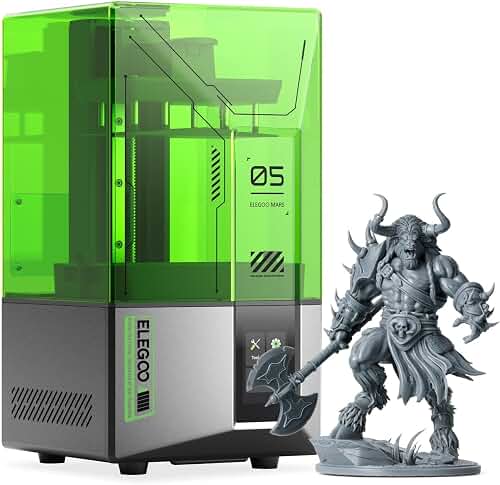
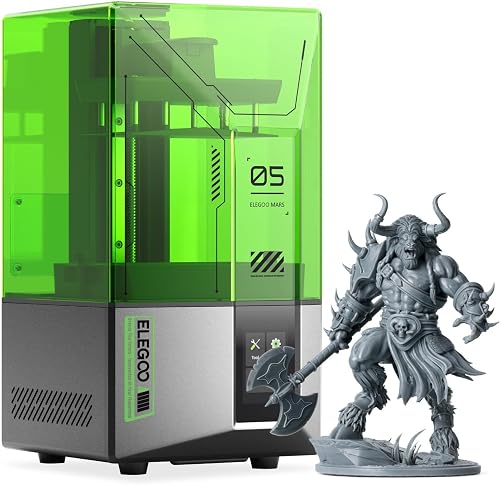
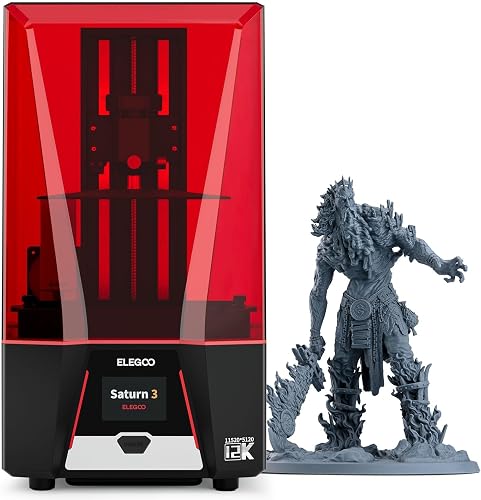
For Titans, look for a 10-inch class mono LCD with at least 12K resolution, a Z-axis of 250mm minimum, and a tilt-release or self-leveling vat to reduce peel forces on tall prints. See our roundup of the best resin 3D printers for current recommendations, and our miniature-focused buyer's guide for resolution benchmarks.
FDM: Affordable Scale, Workable Detail
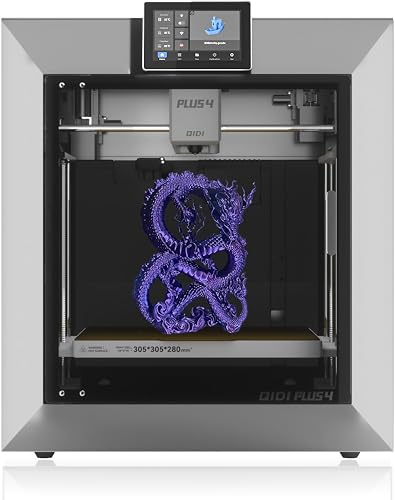
Modern high-speed FDM machines with 0.2mm or 0.15mm nozzles, input shaping, and enclosed chambers can produce surprisingly clean Titan prints — especially for armor plates, base structures, and weapon housings where you'd be priming and weathering anyway. A 350x350x400mm bed lets you print large Titan components in single pieces, and a roll of PLA+ at $20 prints multiple full subassemblies.
FDM falls short on rivet-level detail and on parts with severe overhangs (Titan toe claws, exhaust stacks, intricate cabling). But for the chassis, hip structure, and primary armor, FDM at 0.12mm layer height is honestly competitive once primed. Our large-format FDM guide covers the machines worth considering here.
The Hybrid Approach (What Most Serious Titan Builders Do)
Run both. Use a large-bed FDM for the skeleton, internal armatures, base, and bulk armor; use a 10-inch resin printer for the head, weapons, command throne, detail plates, and any pilot/crew figures. This is the workflow used by most commission painters and competition builders, and it's why the printer comparison matters less than your overall pipeline.
What to Look For in a Large-Format Resin Printer
For a Titan-capable resin machine, the spec sheet line that matters most is the Z-height combined with the LCD generation. A 12K monochrome LCD at 10 inches gives you roughly 19-micron XY pixel pitch — that's fine enough that you cannot see individual pixels on a painted miniature even under magnification. Pair that with a 250-300mm Z column on dual linear rails and you can print a Reaver Titan leg in one shot.
Tilt-release vats (sometimes marketed as ACF or anti-suction film systems) dramatically reduce peel forces, which matters because tall prints generate enormous suction during the lift cycle. A failed lift at hour 25 of a 40-hour print is the most demoralizing failure mode in this hobby, and it's almost always a peel-force problem.
Heated vats keep resin viscosity consistent across long prints — important in cold workshops. And a built-in air filtration system isn't a luxury when you're running 40+ hour print cycles in an enclosed space.
What to Look For in a Large-Format FDM Printer
For FDM, prioritize frame stiffness over raw speed. Tall prints amplify any frame wobble into visible ringing on the print surface, and a Titan leg printed vertically is essentially a 400mm-tall lever arm acting on every accelerating toolhead movement. CoreXY architectures with linear rails on all axes outperform bedslingers here.
Input shaping is now standard on quality machines and effectively cancels resonance — meaning you can run 200-300mm/s on detail parts without the print quality penalty older Ender-class machines suffered. Active chamber heating (or at minimum, a passive enclosure) helps with PLA dimensional stability on long prints and is essential if you ever want to print ABS or ASA armor sections for a Titan you'll be transporting to events.
Auto bed leveling, filament runout detection, and power-loss recovery aren't optional on multi-day prints. Check our enclosed printer roundup for machines that tick all these boxes, and the general buying guide for a framework on matching specs to use case.
Sectioning Strategy: The Real Skill
No consumer printer prints a full 16-inch Warlord Titan in one piece. The skill that separates great Titan builds from mediocre ones is intelligent sectioning in software like Meshmixer, Blender, or PrusaSlicer's cut tool.
Good sectioning principles for Titans:
- Cut along natural panel lines so seams disappear into the model's existing aesthetic.
- Add registration pins or keyed joints at every cut — 3-5mm dowels printed into one half work better than CA glue alone.
- Hollow large pieces with 2-3mm walls and 3mm drainage holes; this saves resin and reduces print time dramatically.
- Print weight-bearing joints in resin or PETG, not standard PLA — Titan legs carry serious mass at full assembly.
- Orient for support minimization on visible surfaces; hidden interior surfaces can tolerate aggressive supports.
Resin Choice for Titan Prints
For models this size, standard ABS-like resin is a mistake — it's brittle and shatters on impact during transport. Tough or impact-resistant resins (often marketed as ABS-like 2.0, tough resin, or nylon-blend) absorb shock far better. Some builders blend 70% standard resin with 30% flexible resin to get a slightly forgiving final material that still holds detail.
Pigmented gray resin shows detail best during the build process, which matters when you're inspecting hour-30 supports for warning signs. Save the clear, white, or beige resins for parts where you want to test painting effects.
Total Cost of Ownership
A serious Titan build will run you well beyond the printer cost. Budget roughly:
- Printer: $500-$1,500
- Wash and cure station: $150-$300
- Resin (per Titan): $80-$200
- PLA+ (per Titan, if hybrid): $40-$80
- Supplies (IPA, gloves, masks, paper towels): $50-$100 per build
- Failed-print waste tax: budget 15-20% over the above
Our 3D printer budget guide breaks down ongoing costs in more detail. If you're new to the hobby, our how to choose a 3D printer guide walks through the decision tree from scratch.
Common Mistakes Builders Make
Buying for peak specs instead of build reliability. A printer that fails 1 in 5 prints will cost you more in resin and time than a slower, more reliable machine. Read user reports specifically about long-print reliability before you buy.
Ignoring the post-processing pipeline. A 10-inch resin printer with no wash station means hand-washing 12-inch parts in IPA buckets, which is miserable and dangerous. Buy the wash/cure station with the printer.
Underestimating ventilation. Resin printers produce VOCs and an enclosed room with a printer running 40 hours straight is a health concern. A dedicated workspace with active extraction is the right setup.
Trying to print one giant piece. Even if your printer technically fits a part, the failure risk on a 30-hour single-piece print is much higher than two 15-hour sectioned prints. Section aggressively.
Frequently Asked Questions
What size 3D printer do I need to print a Warlord Titan in one piece?
You cannot print a Warlord Titan in one piece on any consumer printer. A scale Warlord is roughly 16-18 inches tall and 12+ inches wide at the shoulders. Even industrial printers struggle with this. Every serious builder sections the model into 15-40 pieces, prints them on a printer with 250mm+ Z-height, and assembles with pinned joints. Plan your build around sectioning from day one.
Can a Bambu Lab printer handle Warhammer Titan prints?
Yes, with caveats. The X1 Carbon and P1S have 256x256x256mm build volumes which fit most sectioned Titan parts comfortably, and their input shaping plus enclosed chambers produce excellent FDM detail. They're not ideal for the smallest Titan details (rivets, command throne interior, pilot figures) where resin still wins — but for the bulk armor and chassis, they're among the fastest and most reliable options. See our X1 Carbon review for specifics.
How long does it take to print a full Warhammer Titan?
Expect 100-300 hours of total print time for a Warlord Titan across all sections, depending on layer height, resin vs FDM choice, and how much you hollow. A Reaver runs 60-150 hours. A Warhound or Knight class machine runs 30-80 hours. Most builders spread this across 2-6 weeks of overnight prints to manage failures and post-processing throughput.
Is FDM detail good enough for Warhammer Titans?
For armor plates, base structures, weapon housings, and chassis components — yes, especially at 0.12mm layer height with a 0.2mm nozzle. For heads, pilots, command interiors, intricate Mechanicum iconography, and small weapon details, resin is meaningfully better. The hybrid approach (FDM bulk, resin detail) is the standard among competition-level builders for good reason.
What's the best layer height for printing Titan armor in resin?
0.05mm is the sweet spot for most Titan armor — it's fast enough to keep print times reasonable on tall parts and fine enough that no layer banding shows after priming. Drop to 0.025mm only for the head, command throne, and pilot figures where surface detail is paramount. 0.1mm is acceptable for hidden interior structures where you're trying to save time.
Do I need a heated chamber to print large Titan parts in FDM?
For PLA and PLA+, a passive enclosure is sufficient. For ABS, ASA, or PC blends — which you might want for transportable Titans that travel to events — yes, active chamber heating is essential to prevent warping and layer separation on tall parts. If you plan to print engineering filaments, budget for a printer with active chamber heating from the start.
What's the cheapest viable setup for printing a Warhammer Titan over 12 inches?
A budget large-format FDM printer (around $400-$500) paired with a mid-tier 10-inch resin printer (around $400-$500) gives you the full hybrid pipeline for about $1,000 before consumables and wash/cure equipment. Going FDM-only saves money but sacrifices the head/pilot/detail quality. Going resin-only means a lot of sectioning and 40+ hour prints. The hybrid pipeline is the most cost-effective path to a competition-quality Titan.
Key Takeaways
- Choosing the right best 3d printer for warhammer titan models over 12 inches means matching the key features to your specific needs and budget
- Read real customer reviews and check the return policy before you commit
- Also covers: large resin printer for warhammer titans
- Also covers: 12 inch warhammer titan 3d printer
- Also covers: best printer for imperial knight models
- Compare value across models — the priciest option is not always the best fit