Disclosure: As an Amazon Associate we earn from qualifying purchases.
For small business print farms, the bambu lab a1 vs prusa mk4s print farm decision usually comes down to one trade-off: raw throughput per dollar versus long-term reliability and serviceability. The Bambu Lab A1 wins on initial cost-per-unit, multi-color batching with the AMS lite, and out-of-the-box speed, making it the right choice for farms that prioritize fast ROI and high-volume PLA/PETG production. The Prusa MK4S wins on uptime, parts availability, open-source repairability, and consistent dimensional accuracy across long production runs, making it the better pick for farms producing functional parts, engineering prototypes, or jobs requiring traceability. Below we break down how each machine actually performs in a multi-unit production environment.
Why the A1 and MK4S Are the Two Real Contenders in 2026
Walk into any small commercial print farm in 2026 and you'll see the same two machines on the racks again and again. The reason is simple: both printers hit a sweet spot of price, reliability, and print quality that the cheap clones never quite match, and both come from companies that actually support their hardware. For farm operators running 4 to 40 machines, that ongoing support matters more than spec-sheet bullet points.
The best bambu lab a1 vs prusa mk4s print farm for your situation depends on how you plan to use it and where.
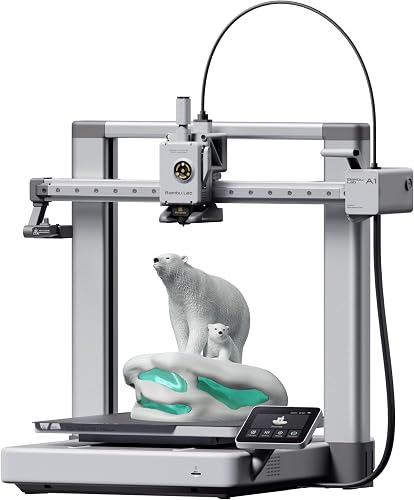
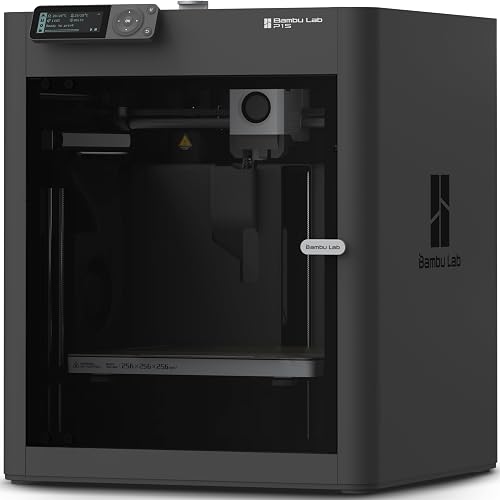
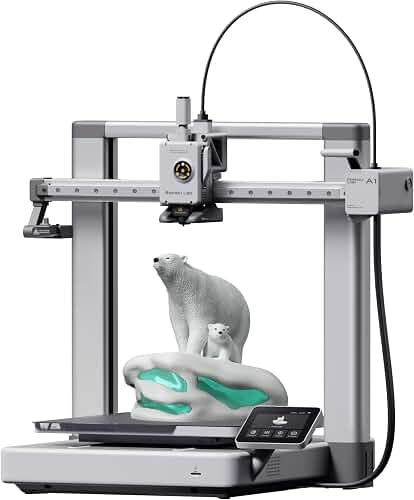
The Bambu Lab A1 launched as the company's bedslinger answer to the more expensive P1S, bringing CoreXY-class speed to a Cartesian frame at roughly half the price. The Prusa MK4S, meanwhile, is the latest evolution of a printer line that has been the de facto workhorse of professional desktop FDM for nearly a decade. They are aimed at different philosophies of farm management, and choosing between them shapes how your operation runs for years.
Head-to-Head: Bambu Lab A1 vs Prusa MK4S for Print Farms
Here is how the two stack up across the metrics that actually matter when you are running multiple machines simultaneously:
| Metric | Bambu Lab A1 | Prusa MK4S |
|---|---|---|
| Build volume | 256 x 256 x 256 mm | 250 x 210 x 220 mm |
| Max real-world print speed | ~300 mm/s (typical 150-250) | ~200 mm/s (typical 120-180) |
| Hotend max temp | 300 C | 300 C |
| Multi-color system | AMS lite (4 spools) | MMU3 (5 spools, sold separately) |
| Enclosed | No | No (enclosure sold separately) |
| Open-source firmware | Partial | Fully open-source |
| Spare parts availability | Bambu only | Prusa + extensive third-party |
| Typical assembly time | 15-20 min (pre-built) | 1 hour (semi-kit) / pre-built option |
| Best for | High-volume PLA/PETG, multi-color batches | Engineering parts, ABS/ASA, long unattended runs |
Throughput: Parts Per Day Per Machine
Throughput is the single number most farm operators care about, and on paper the A1 wins. In practice, the gap is narrower than Bambu's marketing suggests. A well-tuned A1 will outpace a stock MK4S on simple, large prints (think phone stands, cookie cutters, vase-mode geometry) by roughly 20-30 percent. But once you introduce small features, overhangs, or dimensional tolerances that matter, both machines slow down to nearly identical effective speeds because the bottleneck becomes cooling and accuracy, not motion.
For a print farm running 12-hour shifts with attended start/stop cycles, expect roughly 3-5 small parts (under 50g) per hour from either machine, with the A1 pulling ahead on larger single prints. If you're producing miniatures or detailed display models, also see our guide to the best 3D printers for miniatures since FDM may not be the right tool at all.
Uptime: The Metric That Actually Pays the Bills
Throughput is only useful if the machine is running. Here the MK4S has a significant edge that becomes more apparent the longer your farm operates. Prusa's input shaping, load-cell-based first-layer calibration, and mature firmware mean fewer failed prints per thousand started. Industry chatter from farm operators in 2026 puts the MK4S failure rate at roughly 1-2 percent on production-tuned profiles, versus 3-5 percent on the A1, particularly when the AMS lite is in heavy multi-color rotation.
The A1 also has one notorious operational quirk: in late 2024 Bambu issued a recall for early units due to a heater cable failure mode. Current production units have a redesigned cable, but it is a reminder that the A1 is a newer platform than the MK series. The MK4S has the design DNA of five prior generations, and that maturity shows in long unattended runs.
Maintenance Cost Per Year
For budgeting purposes, here's roughly what you should expect to spend per machine per year on consumables and replacement parts in a moderate-duty farm (8-hour shifts, 5 days a week):
- Bambu Lab A1: $80-150 per year. Nozzles, PEI sheets, occasional belt or PTFE tube. Bambu's parts are reasonably priced but you're locked into their ecosystem.
- Prusa MK4S: $60-130 per year. Nozzles, PEI sheets, occasional Nextruder gear. Prusa parts cost slightly more individually, but third-party clone parts (Bondtech, E3D) work flawlessly, which can cut costs in half.
The hidden cost on the A1 side is that when something breaks outside warranty, you almost always need an OEM part. The MK4S can be repaired with parts from any reputable extruder or hotend vendor, which matters when you need a printer back online before Monday and Prusa's shipping queue is two weeks deep. For a deeper look at routine upkeep, our 3D printer maintenance guide covers the schedules we recommend for farm machines specifically.
Multi-Color and Multi-Material at Scale
If your farm produces multi-color products (board game inserts, branded keychains, layered art prints), the A1 plus AMS lite has a meaningful advantage. The AMS lite is open-frame, fast to swap spools, and works reliably with PLA and PETG. Running four A1s with AMS lites gives you 16 simultaneous color channels and is a popular configuration for Etsy-scale farms doing custom-color batch work.
The Prusa MMU3 supports five spools per machine and works with more materials (including ABS and ASA), but it has a steeper learning curve and slower color changes due to the purge and toolhead-park process. For engineering parts where you need a single-material support interface (PETG breakaway support on a PLA part), the MMU3 actually outperforms the AMS lite. For consumer color batches, the AMS lite is faster.
Materials: What Each Machine Can Realistically Produce
Both printers have 300 C hotends, but materials capability differs in practice. The A1 is an open-frame bedslinger, which means it struggles with high-warp materials like ABS, ASA, and polycarbonate. You can print PLA, PETG, PLA-CF, and PETG-CF reliably; anything more aggressive needs an enclosure you'll have to build yourself.
The MK4S also ships open, but Prusa sells an official enclosure (and many third-party options exist) that turn it into a competent ABS and ASA machine. If your farm produces functional parts that need to survive outdoors or in hot cars, the MK4S in an enclosure is the better long-term bet. If you only need PLA and PETG, the A1 saves you the cost of the enclosure.
If you're new to filament selection, our PLA filament guide covers the basics of why PLA dominates consumer print farm work despite its thermal limitations.
Software, Slicing, and Farm Management
Bambu Studio (forked from PrusaSlicer) is the slicer for the A1 and includes built-in farm management via Bambu Handy and Bambu Farm Manager. You can monitor every machine on the network from a single dashboard, get camera feeds, and queue prints from your phone. This is a genuinely impressive package and is one of the strongest arguments for going all-in on Bambu for a farm.
PrusaSlicer is the gold standard for slicing quality and is fully open-source. PrusaLink and PrusaConnect provide remote monitoring and queueing across machines, though the polish is a step behind Bambu's solution. The advantage on Prusa's side is that you can integrate with OctoPrint, Klipper-based monitoring tools, or roll your own dashboard via Prusa's open API. For a custom-tooled farm with engineering staff, this flexibility wins.
Which Machine Should Your Farm Buy?
Here is the honest decision matrix:
- Buy the Bambu Lab A1 if you produce consumer goods, hobbyist parts, or multi-color batches in PLA/PETG; if you want the fastest path from unboxing to printing money; and if you're comfortable with a closed ecosystem.
- Buy the Prusa MK4S if you produce functional or engineering parts, need ABS/ASA/PC capability, want full repairability with third-party parts, and value uptime over peak throughput.
- Buy both if your farm is large enough to specialize. Many successful farms in 2026 run a row of A1s for consumer work and a row of MK4Ss for B2B engineering jobs.
Final Pick for Most Small Business Farms
If we had to pick one for a brand-new 5-to-10-machine small business farm starting in 2026, we'd lean Bambu Lab A1 for the speed of capital deployment and lower per-unit cost. The Prusa MK4S is the better machine in many ways, but the cost differential lets you buy more A1 units for the same budget, and more units means more parallel throughput and more resilience against any single machine going down.
The exception: if you are bidding on engineering or B2B contracts where dimensional accuracy and material certification matter, buy the MK4S. The cost of one failed batch of customer parts exceeds the price difference between the two machines several times over.
Going Deeper
For more detail on each platform individually, see our Prusa MK4S review, our Bambu Lab A1 mini review (which shares much of the A1's architecture in a smaller footprint), and our broader roundup of the best high-speed 3D printers for production work. If you're still in the early stages of farm planning, our 3D printer buying guide walks through the broader category trade-offs.
Frequently Asked Questions
How many Bambu A1 or Prusa MK4S printers do I need to start a small print farm?
Most profitable small farms start with 4-6 machines. Below four, you can't absorb a single machine failure without missing deadlines; above six, you start needing dedicated staff time for prep, removal, and quality control. A 5-machine A1 cluster or a 4-machine MK4S cluster is a common starting point that one operator can manage part-time.
Can I mix Bambu A1 and Prusa MK4S printers in the same farm?
Yes, and many farms do exactly this. The two share a similar build volume so you can route most jobs to either machine. The main complication is slicer management, since you'll be running both Bambu Studio and PrusaSlicer profiles. Some operators keep parts segregated by machine type to avoid version-control headaches with sliced files.
Is the Bambu A1 reliable enough for unattended overnight runs?
Yes, on current production hardware (post-recall units shipped after early 2025) the A1 is reliable for unattended overnight prints with PLA and PETG. Best practice for any unattended farm operation is a smoke detector in the room, a smart plug per machine for remote power-cut, and camera monitoring. The MK4S has a slightly stronger track record for multi-day unattended runs but both are production-grade.
What's the real cost difference between an A1 farm and an MK4S farm?
For an equivalent throughput target, an A1 farm typically runs 30-40 percent cheaper in capital costs than an MK4S farm. Add the AMS lite to each A1 and the gap narrows to about 20 percent. Over a three-year operating window, the total cost of ownership (capital plus consumables plus electricity) is roughly 15-25 percent lower for the A1 farm in most scenarios.
Do I need an enclosure for a Bambu A1 or Prusa MK4S print farm?
Not if you're printing PLA, PLA-CF, and PETG, which covers about 90 percent of consumer print farm output. You will need enclosures if you print ABS, ASA, polycarbonate, or other high-warp materials. The MK4S is the better candidate for adding enclosures because Prusa sells an official one and the design is documented for third-party builds. For an overview of enclosed alternatives, see our list of the best enclosed 3D printers.
Which is easier to repair when a printer breaks down mid-production?
The Prusa MK4S is significantly easier to repair. Every part has documented assembly steps, full schematics are public, and you can source equivalent components from third-party vendors if Prusa is backordered. The Bambu A1 is repairable but most parts are proprietary, meaning you're dependent on Bambu's shipping times and inventory. For farms that can't tolerate a week of downtime, the MK4S is the safer choice.
Is the Bambu Lab P1S a better choice than the A1 for a print farm?
If your budget allows, the P1S is meaningfully better for ABS, ASA, and other engineering materials because it's enclosed and uses a CoreXY motion system. For pure PLA/PETG consumer work, the A1 delivers similar throughput at lower cost. See our Prusa MK4S vs Bambu Lab P1S comparison for the higher-tier matchup, which is the next logical step up from this A1 vs MK4S decision.
Key Takeaways
- Choosing the right bambu lab a1 vs prusa mk4s print farm means matching the key features to your specific needs and budget
- Read real customer reviews and check the return policy before you commit
- Also covers: best printer for print farm
- Also covers: a1 vs mk4s for business
- Also covers: print farm 3d printer comparison
- Compare value across models — the priciest option is not always the best fit