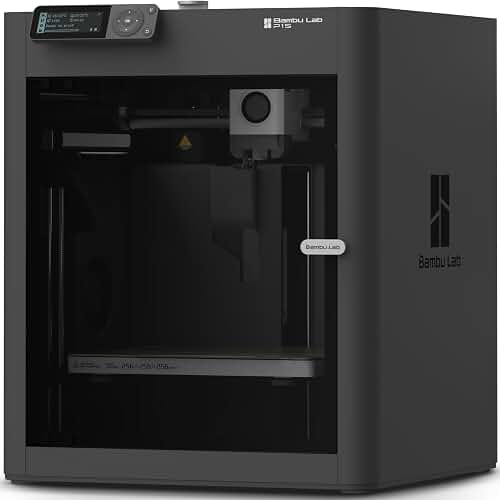
Comparison: top 3D printers for telescope eyepiece adapters in 2026
| Printer | Technology | Build Volume | Best For | Skill Level |
|---|---|---|---|---|
| Bambu Lab P1S | FDM (enclosed Core-XY) | 256 x 256 x 256 mm | ASA/ABS dew-resistant adapters | Beginner to advanced |
| Prusa MK4S | FDM (open bedslinger) | 250 x 210 x 220 mm | Reliable PETG threaded parts | Beginner to advanced |
| Bambu Lab A1 Mini | FDM (open bedslinger) | 180 x 180 x 180 mm | Small 1.25" adapters on a budget | Absolute beginner |
| Elegoo Mars 4 Ultra | Resin (MSLA) | 153 x 77 x 165 mm | Precision filter holders, reticles | Intermediate |
| Bambu Lab X1 Carbon | FDM (enclosed Core-XY) | 256 x 256 x 256 mm | Carbon-fiber reinforced adapters | Intermediate |
The best 3d printer for astronomy telescope eyepiece adapters is one that balances dimensional accuracy, repeatable tolerances on cylindrical parts, and a build volume large enough to handle 2-inch focuser drawtubes. For amateur astronomers printing custom adapters, T-rings, dust caps, finder shoe brackets, and Barlow extension tubes, a well-tuned Core-XY FDM printer with linear rails (like the Bambu Lab P1S) or a high-resolution mono LCD resin printer (like the Elegoo Mars 4 Ultra) will produce parts that thread, slip-fit, and hold collimation reliably. This guide walks through what actually matters when choosing a printer for telescope accessories, and which machines amateur astronomers are buying in 2026.
Why telescope eyepiece adapters demand a precise 3D printer
Eyepiece adapters live in a world of tight tolerances. A standard 1.25-inch barrel is 31.7 mm with very little wiggle room, a 2-inch barrel is 50.8 mm, and SCT rear cell threads (2"-24 TPI) and T2 threads (M42x0.75) require sub-0.2 mm accuracy or they simply will not engage. Add to that the fact that an eyepiece sitting in a poorly printed adapter can tilt, ruining star tests and introducing coma at the edge of field, and you can see why a generic hobby printer is not always enough.
The good news is that modern consumer 3D printers, both filament (FDM) and resin (MSLA), have reached a level where they can reliably produce astronomy-grade adapters when properly calibrated. The bad news is that not every printer is equally suited. Bed-slinger printers with wobbly Z-axes, machines without input shaping, or budget resin printers with old monochrome panels will all struggle in different ways. If you are new to the hobby of 3D printing itself, our 3D printer buying guide is a good companion read before you commit to a machine.
When shopping for best 3d printer for astronomy telescope eyepiece adapters, it pays to compare specs, capacity, and real-world runtime before committing.
FDM vs resin for telescope adapters
This is the first decision you need to make, and it shapes everything else. Both technologies can print useful astronomy parts, but they shine in different scenarios.
FDM (filament) printers are the workhorse choice for most amateur astronomers. They handle larger parts like 2-inch focuser drawtubes, dew shields, finder scope brackets, and full T-ring adapters without issue. Filament parts are also tougher, which matters when you are tightening thumbscrews or threading metal eyepieces into plastic. PETG and ASA are popular materials because they tolerate cold dewy nights better than PLA. If you are new to filament types, our guide to PLA filament explains the basics.
Resin (MSLA) printers produce far finer surface detail and tighter dimensional accuracy on small features, which is brilliant for things like custom eyepiece end caps, finder reticle holders, filter wheel inserts, or detailed astrophotography mount adapters under about 150 mm. The downside is build volume, brittleness, and the messy workflow involving IPA and UV curing. For a deeper comparison, see our FDM vs resin printer guide.
Most serious astronomy makers end up owning one of each. If you can only buy one, start with FDM and add resin later when you start designing tiny precision parts.
Our top picks for astronomy eyepiece adapter printing
Best overall: Bambu Lab P1S
The P1S is the printer most amateur astronomy makers are recommending in 2026, and for very good reasons. It is an enclosed Core-XY machine with hardened steel gears, an all-metal hotend capable of 300 C, and active chamber temperature retention that makes ASA, PETG-CF, and even ABS straightforward to print. For telescope accessories that sit outside on damp 5 C nights, ASA is dramatically better than PLA because it does not creep or sag, and the P1S handles it without warping issues. Input shaping at 500 mm/s means you can iterate three or four prototype adapter designs in an afternoon, which is exactly what you want when dialing in a friction fit on a focuser drawtube. Read our full Bambu Lab P1S review for the deep dive.
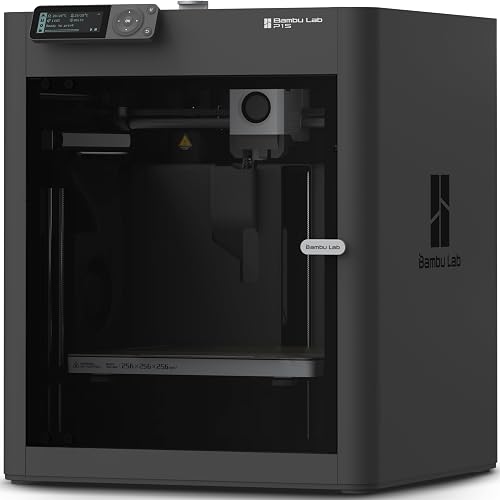
Check current price on Amazon: https://www.amazon.com/dp/B0CHDM8VVZ?tag=extruly-20
Best for precision and longevity: Prusa MK4S
If you value open-source repairability, top-tier print quality, and a printer that will still be supported in 2036, the Prusa MK4S is the discerning choice. The input-shaped Nextruder, load-cell first-layer calibration, and the segmented heatbed all contribute to remarkably consistent dimensional accuracy, which is exactly what threaded eyepiece adapters need. PETG runs beautifully on this machine, and Prusa's slicer profiles are second to none for getting threads that actually engage on the first try. The trade-off is that it is an open bedslinger, so printing pure ABS for dew shields is harder than on an enclosed printer. See the full Prusa MK4S review, or compare the two head-to-head in our MK4S vs P1S comparison.
Best budget pick: Bambu Lab A1 Mini
For amateur astronomers who mainly print 1.25-inch adapters, dust caps, finder shoe accessories, and small brackets, the A1 Mini is astonishing value. The 180 mm cube build volume comfortably fits almost every common 1.25" eyepiece adapter design on Thingiverse and Printables. Its active flow control and full auto-calibration mean even total beginners get usable parts on the first print. The catch is that it is open and ships with PLA-focused tuning, so it is not the ideal choice for ASA. Pair it with PETG for outdoor parts. Our A1 Mini review covers the full picture.
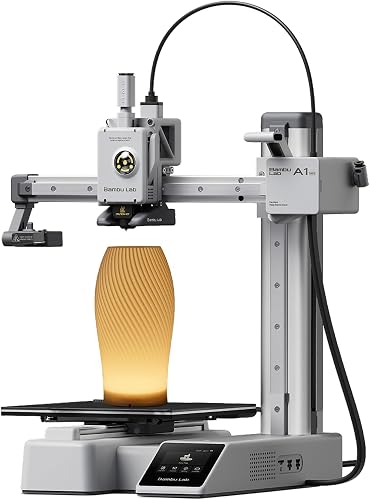
Check current price on Amazon: https://www.amazon.com/dp/B0GQMJ8QQT?tag=extruly-20
Best resin printer for tiny precision parts: Elegoo Mars 4 Ultra
When you need a custom 1.25-inch filter cell, an illuminated reticle holder, a tiny diopter eye-guard, or a precise off-axis guider mask, no FDM printer can match a good MSLA machine for surface finish and fine detail. The Mars 4 Ultra has a 9K mono LCD, robust build plate, and prints astronomy-grade detail in about half the time of older Mars models. Print in a tough resin (ABS-like or nylon-blend) and you can produce 1.25" adapter parts that look injection-molded. Build volume is the constraint, so this is not your machine for 2-inch drawtube adapters. See the Mars 4 Ultra review for full details, and our best resin 3D printers roundup for alternatives.
Best for advanced makers: Bambu Lab X1 Carbon
If you intend to print carbon-fiber reinforced filaments for stiff, lightweight finder brackets, Bahtinov mask holders, or astrophotography rigs that need to stay rigid in the cold, the X1 Carbon's hardened nozzle and lidar-based first layer inspection make it the most capable consumer FDM printer in this list. The AMS multi-material system also lets you mix functional materials with cosmetic colors for branding parts. It is overkill for someone only making the occasional eyepiece adapter, but if 3D printing is a serious hobby alongside astronomy, you will get years out of it. Our X1 Carbon review goes into full detail.
What to calibrate before printing eyepiece adapters
The best 3d printer for astronomy telescope eyepiece adapters is only as good as its calibration. Three things matter most:
1. Horizontal expansion / X-Y compensation. FDM printers tend to print holes slightly undersized and pegs slightly oversized due to filament shrinkage and slicer offset. Print a 31.7 mm test cylinder, measure it with calipers, and adjust X-Y compensation in your slicer until you hit 31.7 +/- 0.1 mm. Resin printers need the equivalent setting tweaked in their slicer.
2. First layer squish. A squashed first layer makes the base of the adapter slightly larger than the rest, which prevents clean insertion into a focuser. Use a properly leveled bed; our walkthrough on how to level a 3D printer bed covers manual and automatic methods.
3. Layer adhesion in the thread direction. Threads printed with the axis vertical (so layer lines run perpendicular to the thread) will be much stronger than threads printed lying down. Always orient threaded adapters vertically when you can.
Material recommendations for telescope accessories
PETG is the default. It tolerates cold, dewy conditions, has low warping, and threads beautifully. Print at 235 C with a 70 C bed.
ASA is the upgrade material for parts that live outside. UV resistant, dimensionally stable, and tougher than PLA. Requires an enclosed printer for best results.
PLA works for indoor parts (dust caps, storage holders, finder reticles) but will creep and sag if left in a warm car or warped by sunlight on the OTA.
Tough or ABS-like resin is the go-to for resin-printed adapters. Standard brittle resin will snap the first time you tighten a thumbscrew on it.
Frequently Asked Questions
What tolerance do I need for a 1.25-inch eyepiece adapter to fit properly?
Aim for an internal diameter of 31.85 to 31.95 mm for a slip fit, and 31.7 to 31.75 mm for a snug press fit. Any tighter and the eyepiece will not insert, any looser and it will rock and tilt. Calibrate your printer's horizontal expansion using a hollow test cylinder before printing the real adapter, and you will hit this window on the first or second attempt.
Can I 3D print T2 threads (M42x0.75) accurately enough for astrophotography?
Yes, but with caveats. On a well-tuned FDM printer like the Prusa MK4S or Bambu Lab P1S, printed M42x0.75 threads will engage and hold a DSLR or astronomy camera, especially if printed vertically in PETG. For long-term use or heavy cameras, most amateurs print a recessed pocket and epoxy in a metal T2 ring instead, which combines plastic flexibility with metal thread durability.
Is resin or FDM better for a 2-inch focuser adapter?
FDM is the better choice for 2-inch (50.8 mm) adapters because most consumer resin printers do not have the build volume, and resin parts at that size are also more brittle. A 256 mm Core-XY FDM printer like the P1S or X1 Carbon prints 2-inch adapters comfortably, and PETG or ASA give you the toughness needed to hold a 2-inch diagonal under load.
What filament should I use for telescope parts that sit outside in cold and dew?
PETG is the best all-around choice because it tolerates moisture, does not warp at low temperatures, and has minimal long-term creep. ASA is the upgrade if you also need UV resistance for parts permanently mounted on an OTA. Avoid PLA for outdoor parts: it will deform in direct sunlight on a warm summer scope and can become brittle in deep winter cold.
Do I need an enclosed 3D printer for astronomy accessories?
Not strictly, but it helps if you want to print ASA or ABS. PETG and PLA print fine on open printers like the Prusa MK4S or A1 Mini. If you anticipate printing many outdoor or UV-exposed parts, an enclosed Core-XY like the P1S is worth the extra cost. See our best enclosed 3D printers roundup for more options.
How long does it take to print a typical eyepiece adapter?
A simple 1.25-inch to 2-inch step-up adapter takes about 1 to 2 hours on a modern high-speed FDM printer like the Bambu Lab P1S or A1 Mini. A full T2 to 2-inch adapter with threads takes 2 to 4 hours. Resin prints of small adapters typically take 1 to 3 hours plus wash and cure time. For more on print speed, see our best high-speed 3D printers guide.
Are there ready-made adapter models I can download, or do I have to design my own?
There are thousands of free designs on Printables, Thingiverse, and Cults3D covering common adapters for Celestron, Sky-Watcher, Meade, Orion, William Optics, and Takahashi telescopes. Search by your specific focuser model and eyepiece barrel size. If you cannot find an exact match, free CAD tools like Fusion 360 and OnShape make parametric adapters approachable even for beginners, and most adapters are simple enough to design in an evening.
Will printed adapters affect my telescope's optical performance?
Only if they tilt the eyepiece. A well-printed adapter with good concentricity and a snug fit will hold the eyepiece exactly as well as a stock metal one for visual use. For astrophotography, where backfocus distance matters to the millimeter, measure your printed adapter with calipers and verify the optical train length before a long imaging session. For demanding imaging trains you may prefer a hybrid approach with printed bodies and metal threaded inserts.
Key Takeaways
- Choosing the right best 3d printer for astronomy telescope eyepiece adapters means matching the key features to your specific needs and budget
- Read real customer reviews and check the return policy before you commit
- Also covers: telescope focuser 3d printer
- Also covers: astrophotography adapter 3d printer
- Also covers: dovetail mount 3d printer astronomy
- Compare value across models — the priciest option is not always the best fit