Disclosure: As an Amazon Associate we earn from qualifying purchases.
The best 3d printer for model rocket nose cones and fins in 2026 is a fast, accurate FDM machine with a heated chamber or enclosure that can handle engineering-grade filaments like PETG, ASA, PA-CF (nylon carbon fiber), and PC blends. For high-power rockets you want a build volume of at least 250 x 250 x 250 mm, a hotend rated to 300 C, and a hardened nozzle so abrasive composite filaments don't chew through brass. For sport and mid-power kits, a reliable Core-XY or bed-slinger running PLA+ or PETG is plenty. Resin printers are a strong secondary tool for ultra-smooth, dimensionally precise nose cones up to about 150 mm tall.
This guide walks through the technologies, materials, slicer settings, and specific printer categories you should evaluate, so you can pick the right machine whether you fly Estes A-impulse kits in the backyard or build Level 2 high-power birds for Tripoli and NAR launches.
When shopping for best 3d printer for model rocket nose cones and fins, it pays to compare specs, capacity, and real-world runtime before committing.
Why 3D printing nose cones and fins makes sense
Stock balsa fins crack on hard landings, and injection-molded plastic nose cones limit your design to whatever the kit manufacturer ships. With a 3D printer you can iterate on ogive, conical, parabolic, von Karman, and elliptical nose profiles in CAD (OpenRocket, Fusion 360, or Onshape), then print the geometry exactly. You can also dial in fin thickness, airfoil cross-sections, and through-the-wall (TTW) tabs that bond directly to motor mount tubes for far stronger joints than surface-mounted balsa.
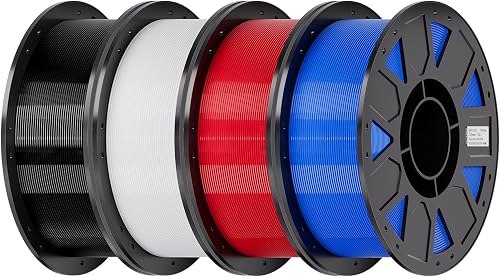
For motor-eject altitudes under 1,000 feet, PLA+ is fine. Above that, friction heating during high-Mach descents and ejection-charge gas can soften PLA, so the best 3d printer for model rocket nose cones and fins in higher-impulse classes should be one that comfortably prints PETG, ASA, or carbon-fiber-reinforced nylon.
FDM vs resin for rocket parts
Both technologies have a place in a rocketry workshop, but they solve different problems.
FDM (filament) printers excel at fins and structural nose cones because the layered extrusion produces tough, semi-flexible parts that absorb impact. Fin shear strength comes from wall count and infill pattern, both of which FDM controls well. FDM also handles the larger build volumes most mid- and high-power rockets need.
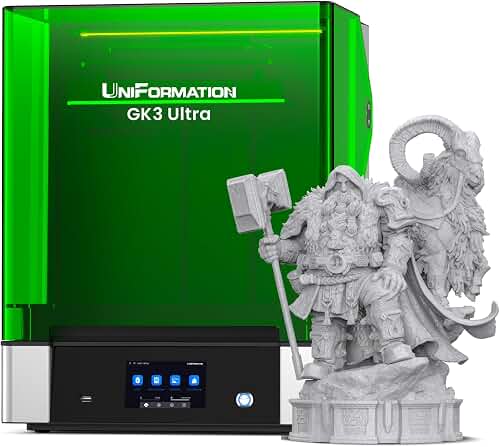
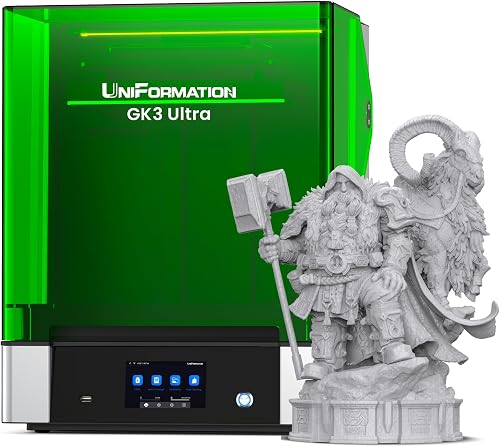
Resin (MSLA) printers produce mirror-smooth surfaces and capture sub-0.1 mm detail, which is ideal for scale model nose cone tips, payload bay couplers, camera shrouds, and decorative shoulders. The downside is brittleness: standard resins shatter on hard landings, though ABS-like and tough resins close some of that gap. For a deeper comparison, see our FDM vs resin 3D printer guide.
What to look for in a 3D printer for rocketry
Build volume
A 220 x 220 mm bed handles BT-50 and BT-60 class nose cones (roughly 24 mm and 41 mm diameter) standing upright in one piece. For 54 mm, 75 mm, and 98 mm high-power airframes, you'll want a Z height of at least 250 mm so you can print a full ogive without splitting it into glued sections. Large-format printers like the Prusa XL or Bambu Lab X1E open up single-piece cones for 4-inch rockets. See our roundup of the best large format 3D printers if you're flying L1/L2 birds.
Hotend temperature and nozzle material
A 260 C hotend covers PLA, PETG, ABS, and ASA. To unlock PA (nylon), PA-CF, PC, and PPS-CF for serious high-power work you need a 290–320 C all-metal hotend and a hardened steel or ruby-tipped nozzle. Composite filaments are abrasive and will eat a brass nozzle in a few spools.
Enclosure and chamber heating
ABS, ASA, PC, and nylon warp without an enclosed chamber. An active or passively heated enclosure keeps the part above the polymer's glass transition during the print so layers don't delaminate. For PLA and PETG-only workflows, an open frame is fine. Our best enclosed 3D printers guide compares the top options.
Print speed
Modern Core-XY machines hit 300–500 mm/s with input shaping, which means a typical BT-60 nose cone prints in two to three hours instead of overnight. If you iterate designs frequently, speed matters — see the best high speed 3D printers for current benchmarks.
Dimensional accuracy
Coupler tubes and motor mounts need ±0.15 mm tolerance to slide into body tubes without play. Linear rail Core-XY systems with auto-bed-leveling deliver this consistently. Bed slingers can match it, but require more tuning.
Best 3D printer categories for rocketry
Best all-around pick: Core-XY enclosed FDM
For most hobbyists, an enclosed Core-XY printer with a 300 C hotend and around 256 x 256 x 256 mm build volume is the sweet spot. It prints PLA+ for sport rockets, PETG for mid-power, and ASA or PA-CF when you step up to L1/L2. The Bambu Lab P1S and X1 Carbon both fit this profile — read our Bambu Lab P1S review and Bambu Lab X1 Carbon review for the differences. The X1 Carbon's hardened hotend and built-in lidar make it the more rocket-friendly of the two if you plan to run abrasive composites.
Best workhorse for engineering filaments: Prusa MK4S
If you want repeatability above all else and don't mind a slightly smaller build volume (250 x 210 x 220 mm), the Prusa MK4S is hard to beat for ASA and PETG rocket parts. Open-source firmware, a nextruder with a hardened-tip option, and excellent documentation make it the go-to for makers who want to tune every parameter. Our Prusa MK4S review covers the upgrades over the MK4, and the Prusa MK4S vs Bambu Lab P1S comparison helps you choose between the two ecosystems.
Best budget pick for sport rockets: bed slinger under $300
If you're flying A through D motor kits in PLA, a Creality Ender 3 V3 SE or Bambu Lab A1 Mini will print fins and small nose cones beautifully. They lack enclosures, so skip them for ASA, but for backyard rockets they're perfect. See the Creality Ender 3 V3 SE review and Bambu Lab A1 Mini review, or browse the 3D printer budget guide for more sub-$300 options.
Best for scale-model nose cone detail: resin printer
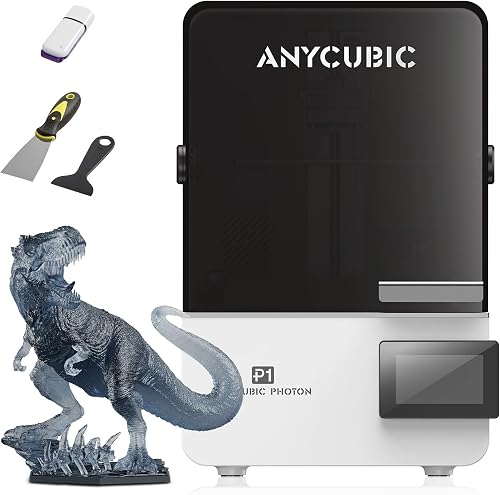
For scale Saturn V or Mercury Redstone replicas where surface finish matters, an 8K or 10K mono LCD resin printer at the 7- to 10-inch class will print nose cones up to about 200 mm tall in a single piece with stunning detail. Pair it with an ABS-like resin for impact tolerance. The Anycubic Photon Mono M5s and Elegoo Mars 4 Ultra are both worth a look — see the Anycubic Photon Mono M5s review, the Elegoo Mars 4 Ultra review, and the broader best resin 3D printers list.
Filament choices for nose cones and fins
PLA and PLA+
Cheap, stiff, easy to sand and prime. Perfect for low-power (Estes A–E) rockets where flight temps stay cool and ejection charges are mild. PLA's glass transition is around 60 C, so it softens in a hot car. For a primer on PLA grades, read our what is PLA filament guide.
PETG
Tougher than PLA, more heat resistant (around 80 C), and far better at absorbing impact. PETG is the default mid-power material for fins because it bends rather than shatters on hard landings. It needs a tuned retraction profile to avoid stringing on nose cone tips.
ASA and ABS
UV-stable, heat-resistant to about 100 C, and machinable. ASA is the better outdoor choice because ABS yellows in sunlight. Both require an enclosure to print warp-free.
PA-CF (carbon-fiber nylon)
The gold standard for L1/L2 high-power fins. Stiff, strong, heat-resistant to 150 C+, and dimensionally stable. Requires a 300 C hotend, hardened nozzle, and dry filament — nylon absorbs water aggressively and prints poorly when wet.
Polycarbonate (PC) blends
PC blends offer exceptional impact resistance and heat tolerance for ejection bay components and motor retainers. Needs a 270–290 C hotend and an enclosure.
Slicer settings that matter for rocket parts
The printer is only half the equation. Slicer setup decides whether your fin survives a 200-foot tumble or snaps on the first flight.
- Wall count: Use 4–6 perimeters on fins. The walls do the structural work, not the infill.
- Infill: Gyroid or honeycomb at 25–40 percent for nose cones, 30–50 percent for fins. Higher infill adds weight without proportional strength gains past 50 percent.
- Layer height: 0.16–0.2 mm for fins (balance between speed and layer adhesion). Drop to 0.12 mm for nose cone tips if you want a smooth ogive.
- Print orientation: Print fins flat on the bed with TTW tabs vertical, then add a 5 mm brim. For nose cones, print tip-up with a small support touchpoint or use a vase mode for hollow lightweight cones.
- Top and bottom layers: 5–6 layers minimum on fins to prevent print-through with infill patterns.
Maintenance for reliable rocket printing
Composite filaments wear nozzles, and high-temp materials stress hotends. Plan on swapping a hardened nozzle every 2–3 kg of PA-CF, lubricating linear rails monthly, and replacing the PTFE-lined section of a Bowden tube if you run nylon. Our how to maintain 3D printer walkthrough covers the full schedule.
Frequently Asked Questions
Can I 3D print a nose cone strong enough for high-power rockets?
Yes. PA-CF (carbon-fiber nylon) and PC blends produce nose cones that survive Mach 1+ flights and hard landings. The key is a 300 C hotend, an enclosed chamber, and printing with 4+ walls and 35 percent gyroid infill. Many L1 and L2 fliers now run fully 3D-printed nose cones on 54 mm and 75 mm airframes.
What infill percentage should I use for 3D printed fins?
30–50 percent gyroid or honeycomb infill, paired with 4–6 perimeters. Past 50 percent you mostly add weight without meaningful strength gains because fin strength comes primarily from the wall stack, not the infill core. For thin fins under 3 mm, bump to 100 percent infill since perimeters dominate the cross-section anyway.
Is PLA strong enough for model rocket fins?
For low-power motors (A through D impulse) and altitudes under 500 feet, PLA+ fins work fine and many flyers use them successfully. For E motors and above, switch to PETG or ASA — PLA's 60 C glass transition means it can deform from solar heating on a hot launch day, and it shatters on hard landings rather than flexing.
Should I print nose cones solid or hollow?
Hollow with 3–4 perimeter walls and no infill (vase mode or thin-wall mode) keeps the nose cone light, which lowers the center of gravity and improves stability. For payload-carrying cones or those that house a tracker, print with a solid 6 mm thick base and hollow shoulder. Add a small vent hole to prevent pressure-induced wall collapse on high-altitude flights.
Do I need a resin printer for scale model rockets?
Not strictly, but resin produces much smoother nose cone surfaces straight off the printer, which saves hours of filler-primer-sand cycles for show-quality scale builds. For functional sport and high-power rockets, FDM with PETG or ASA is the better choice because resin parts are brittle and crack on landing. Many builders use both: FDM for fins and airframe parts, resin for detailed scale shrouds and tips.
What's the best print orientation for 3D printed fins?
Print fins flat on the build plate with the leading edge horizontal. This puts the layer lines perpendicular to bending stress, which maximizes strength. Add a brim of 5–8 mm for adhesion, and orient TTW tabs vertically so the bonding surface to the motor mount has continuous, uninterrupted layers.
How long does it take to print a model rocket nose cone?
A BT-60 (41 mm diameter) PLA nose cone at 0.2 mm layers prints in roughly 2–3 hours on a modern Core-XY printer running 200 mm/s. A 4-inch (98 mm) high-power cone in PA-CF can take 12–18 hours due to slower speeds required for composite filament. Fins typically print in 30–90 minutes per set depending on size and infill.
Can a budget 3D printer handle rocket parts?
Absolutely, for low- and mid-power rockets. A sub-$300 bed slinger printing PLA+ or PETG produces flight-ready fins and nose cones for Estes-class kits. You'll hit limits when you want ASA or composite materials, since those need enclosures and 290 C+ hotends. See our best 3D printers for beginners guide for entry-level options that still handle PETG well.
Key Takeaways
- Choosing the right best 3d printer for model rocket nose cones and fins means matching the key features to your specific needs and budget
- Read real customer reviews and check the return policy before you commit
- Also covers: 3d printer for high power rocketry parts
- Also covers: lightweight rocket fin 3d printer
- Also covers: model rocket body tube coupler printer
- Compare value across models — the priciest option is not always the best fit